
How to Adjust the Tension Springs on an Attic Hatch Door That Won’t Stay Closed
If you are dealing with a hatch that refuses to seal properly, you likely understand the frustration of losing conditioned air through the ceiling. Properly adjusting the tension springs on an attic hatch door that won’t stay closed is a manageable task that restores both energy efficiency and home safety. By modifying the resistance of your ladder hardware or door panel hinges, you can ensure a flush, airtight fit.
This process typically involves calibrating the counterweight system to overcome spring fatigue or structural misalignment. Following these steps will help you regain control over your attic access point without needing to replace the entire assembly.
Identifying the Source of the Problem
Before you begin turning bolts, you must determine why the door fails to stay shut. Often, the issue is not the springs themselves but rather an accumulation of debris or damaged weatherstripping that prevents a flush seal.
Inspect the perimeter of the hatch door for any obstructions or compressed seals that might be pushing the panel back down. If the door panel itself is warped or sagging, no amount of spring tension will keep it closed against the framing.
Check the mounting brackets and the pivot point of your ladder frame for signs of loose fasteners. If the ladder hardware is skewed, the door will sit at an angle, preventing the latch mechanism from engaging correctly.
You should also look for signs of spring fatigue, where the metal coils have stretched over time and lost their ability to hold the weight of the door. If the springs appear visibly overstretched or show signs of oxidation, they may have reached the end of their service life.
Safety Precautions and Necessary Tools

Working with attic ladder hardware requires caution because these systems are under high mechanical stress. Always wear safety goggles to protect your eyes from falling dust, insulation particles, or snapping metal fragments.
Ensure you have a stable stepladder nearby to reach the hatch comfortably; never attempt to hang from the attic frame while making adjustments. Clear the area below the hatch of any furniture or breakables that could be damaged if the door drops suddenly.
For the actual adjustment process, you will need a basic set of hand tools. An adjustable wrench is essential for gripping nuts on various bolt sizes, while a socket set provides better leverage for stubborn fasteners.
Having a pair of pliers can help if you need to manipulate a spring hook or a safety cable. Keep a flashlight or a headlamp handy, as working in an attic opening often creates shadows that make it difficult to see the specific mounting points.
Adjusting Torsion Springs on Attic Hatch Doors
Torsion springs are common in heavy-duty attic ladder systems and rely on rotational force to assist with opening and closing. If your door won’t stay closed, the spring tensioner might be set too high, effectively pushing the door open against the latch.
You need to reduce the tension by loosening the adjustment bolt located at the base of the spring assembly. Always make small, incremental changes—perhaps a quarter-turn at a time—to avoid over-correcting.
After each adjustment, test the door by pulling it down and slowly releasing it. If it still wants to spring back open, continue to decrease the tension slightly.
Conversely, if the door is too heavy to lift, you may need to increase the tension to help the counterweight system perform its job. Always ensure the spring hook is properly seated in its mounting hole before you let go of the door panel.
Managing Coil Springs and Tension Rods
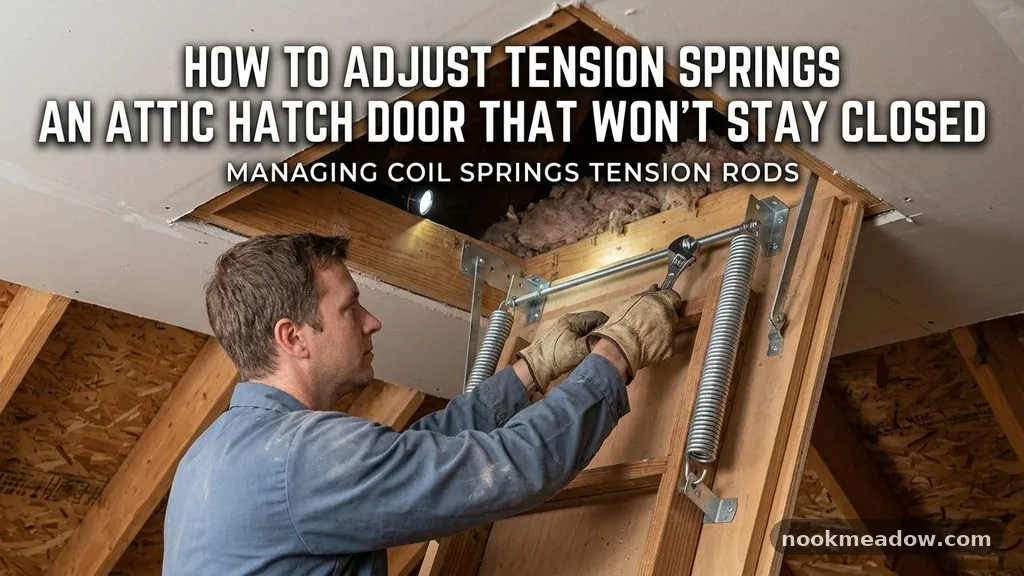
Many standard attic hatch doors utilize coil springs attached to tension rods to provide the necessary force for smooth operation. When these springs lose their elasticity, the door panel may sag, preventing the latch from clicking into place.
Adjusting these often involves moving the spring hook to a different hole on the ladder frame or the door panel itself. Moving the hook further away from the pivot point increases tension, while moving it closer decreases it.
Check the tension rod for signs of bending or misalignment, which can cause the spring to bind rather than pull cleanly. If the rod is bent, it might be preventing the door from reaching the fully closed position.
You can sometimes straighten a slightly bent rod with a wrench, but if the metal is fatigued, replacement is the only permanent fix. Ensure that all fasteners are tightened securely after you find the “sweet spot” for your door’s weight.
Solving Issues with Latch Mechanisms
Sometimes, the springs are perfectly fine, but the latch mechanism is failing to engage with the frame. This occurs if the door panel is not sitting flush against the ceiling due to poor structural alignment.
Inspect the latch to see if it is catching on the strike plate or simply sliding past it. If the latch is loose, tighten the mounting screws holding it to the door panel.
If the door is still sagging, consider adding a thin strip of adhesive weatherstripping to the frame. This fills the gap and creates a tighter seal, which can sometimes provide enough resistance to keep the latch engaged.
If the latch itself is broken, you can often find universal replacement kits at most hardware stores. Replace the entire latch assembly to ensure that the hook and strike plate align perfectly every time you close the hatch.
Evaluating the Impact of Attic Insulation
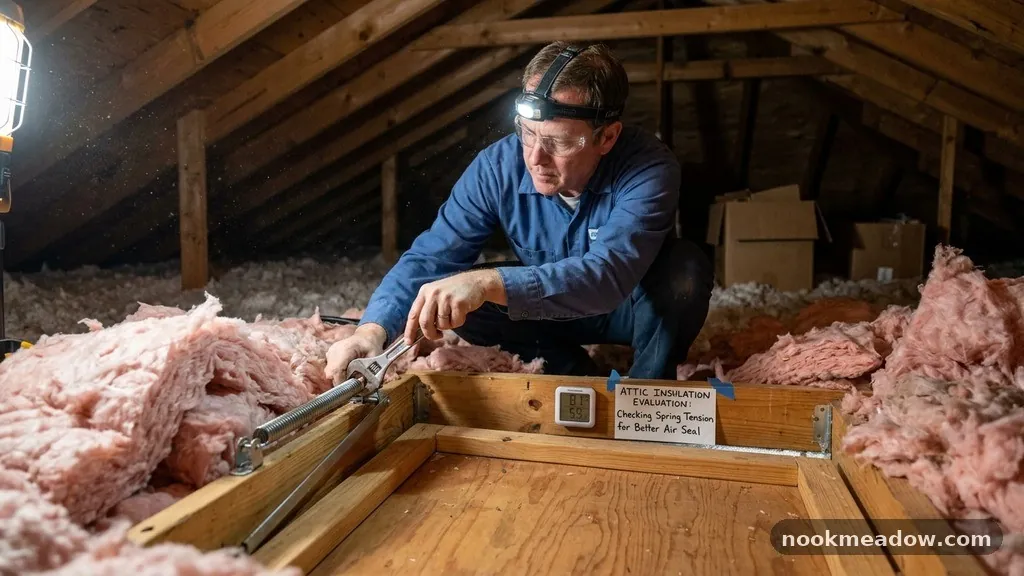
Heavy insulation batts placed too close to the hatch door can exert downward pressure, forcing the door open. If you have recently upgraded your attic insulation, check to see if it is pushing against the back of the door panel.
You may need to install a baffle or a small dam around the opening to keep the insulation material away from the hardware. This prevents the weight of the insulation from fighting against the tension springs.
Additionally, extreme temperature fluctuations in the attic can affect the performance of some pneumatic struts or metal springs. In colder climates, metal can become more brittle, while heat might cause certain components to expand.
If your hatch door feels significantly different during summer versus winter, you are seeing the effects of thermal expansion on your hardware. Adjusting your tension settings to a middle ground can help maintain functionality throughout the changing seasons.
Comparison of Common Attic Hatch Hardware
Different systems require specific approaches to maintenance and tensioning. Understanding the type of hardware you have will dictate how you perform your adjustments.
| Hardware Type | Adjustment Method | Common Failure Point |
|---|---|---|
| Torsion Spring | Rotate adjustment nut | Loss of coil elasticity |
| Coil Spring | Reposition spring hook | Stretched or broken coils |
| Pneumatic Strut | Replace strut unit | Seal failure/gas leakage |
| Counterweight | Add or remove weights | Cable fraying or snapping |
Replacing Damaged Springs and Components

If you have tried adjusting the tension and the door still won’t stay closed, the hardware may simply be worn out. Springs have a finite lifespan and will eventually succumb to metal fatigue, especially in humid attic environments.
When this happens, look for a replacement kit that matches your specific ladder model. Trying to use generic springs can be dangerous if they do not match the load-bearing capacity of your door.
When replacing springs, always work with the ladder in the open position to remove the load from the assembly. Follow the manufacturer’s instructions carefully to ensure the new springs are installed with the correct orientation.
Once installed, perform a “dry run” by slowly closing the door to see how the new tension feels. Never stand directly beneath the hatch during your first few test cycles in case a spring slips or fails.
Improving the Seal with Weatherstripping
Even with the springs adjusted perfectly, a hatch door can leak air if there is no seal between the door and the frame. Installing high-quality foam or rubber weatherstripping around the interior edge of the hatch is a highly effective way to keep the door closed and improve home energy efficiency. The compression of the weatherstripping creates a slight, constant upward pressure that can help keep the latch engaged.
Choose a self-adhesive, closed-cell foam tape that is thick enough to fill the gap but soft enough to allow the door to close fully. Clean the surface of the attic frame thoroughly with rubbing alcohol before applying the adhesive to ensure a long-lasting bond.
If the gap is irregular, you may need to double up the weatherstripping in certain areas to achieve a uniform, airtight seal. This simple addition often solves the “won’t stay closed” problem without needing further mechanical adjustments.
Common Troubleshooting Questions
Why does my attic door pop open after I close it?
This usually happens because the tension springs are set too high, creating an outward force that overcomes the latch. Try loosening the tension on your springs by a small increment until the door remains flush against the frame.
Can I fix a sagging attic door without replacing the hardware?
Yes, you can often fix a slight sag by tightening the mounting screws or adding weatherstripping to the hatch frame. If the door panel itself is warped, however, you might need to install a small brace to restore its rigidity.
How often should I lubricate my attic ladder hinges?
You should lubricate all moving parts, including hinges and pivot points, at least once a year. Use a silicone-based lubricant rather than oil, as oil can attract dust and grime, which eventually leads to binding.
Is it dangerous to adjust torsion springs myself?
Torsion springs are under significant tension, so you must use caution. If you are not comfortable using a wrench on high-tension components, it is safer to contact a professional, as a snap can cause serious injury.
What if my attic door has no springs at all?
If your hatch relies solely on a latch and gravity, it may simply be too light to stay closed or the latch may be worn out. Installing a stronger magnetic catch or a simple turn-latch can often keep these doors securely shut.
Final Thoughts on Hatch Maintenance
Maintaining your attic access is essential for both the longevity of your home and the efficiency of your heating and cooling systems. By regularly checking the tension of your hardware and ensuring that the latch mechanism is clean, you can prevent many common issues before they start. If you find yourself frequently adjusting the tension springs on an attic hatch door that won’t stay closed, take the time to inspect the entire assembly for structural wear.
Taking these steps early will save you time and ensure that your home remains sealed and secure. If you encounter hardware that appears beyond simple adjustment, do not hesitate to replace worn parts with high-quality components to ensure your long-term peace of mind.