

How to Decorate a Bedroom Using Designer Secrets
A bedroom can have beautiful furniture and still feel unfinished. Often, the difference between an ordinary bedroom and one that feels thoughtfully designed comes down to small decisions: the scale of the furniture, how the lighting is layered, where artwork is placed, how bedding is arranged, and whether the colors and textures actually work together.
Professional designers rarely rely on one expensive piece to make a room look polished. Instead, they build the space in layers. They create a visual focal point, balance large and small elements, repeat materials or colors, and use lighting to make the room feel comfortable at different times of day. These techniques can be surprisingly easy to adapt at home.
I’ve noticed that one of the biggest decorating mistakes is buying individual pieces without considering the room as a whole. A beautiful nightstand may look great by itself, but if it’s too large for the bed or leaves no room for a lamp, the finished space won’t feel balanced.
The good news is that you don’t need a professional renovation to borrow these designer techniques. Whether you’re refreshing a primary bedroom, guest room, apartment bedroom, or small space, thoughtful styling can make a major difference.
Below are ten designer-inspired decorating secrets that focus on practical decisions you can actually use. From creating a strong focal point and choosing the right rug size to layering lighting and styling the bed, these ideas can help your bedroom feel more cohesive, comfortable, and intentionally designed.
Table of Contents
1. Create a Focal Point
Give the bedroom one strong visual anchor.
2. Balance Furniture Scale
Choose pieces that fit the room proportionally.
3. Layer the Bedding
Build a comfortable and polished bed.
4. Choose a Cohesive Palette
Connect every element through color.
5. Layer the Lighting
Create atmosphere at multiple levels.
6. Hang Curtains Higher
Make windows and ceilings feel taller.
7. Size the Rug Correctly
Use flooring to anchor the room.
8. Style the Nightstands
Combine function with intentional decoration.
9. Add Natural Texture
Warm the room with organic materials.
10. Edit the Accessories
Create a polished look without clutter.
1. Create a Focal Point
Quick Benefits
- Gives the room visual direction
- Makes decorating easier
- Creates a memorable first impression
- Helps organize furniture
- Adds designer-level polish
Why It Works
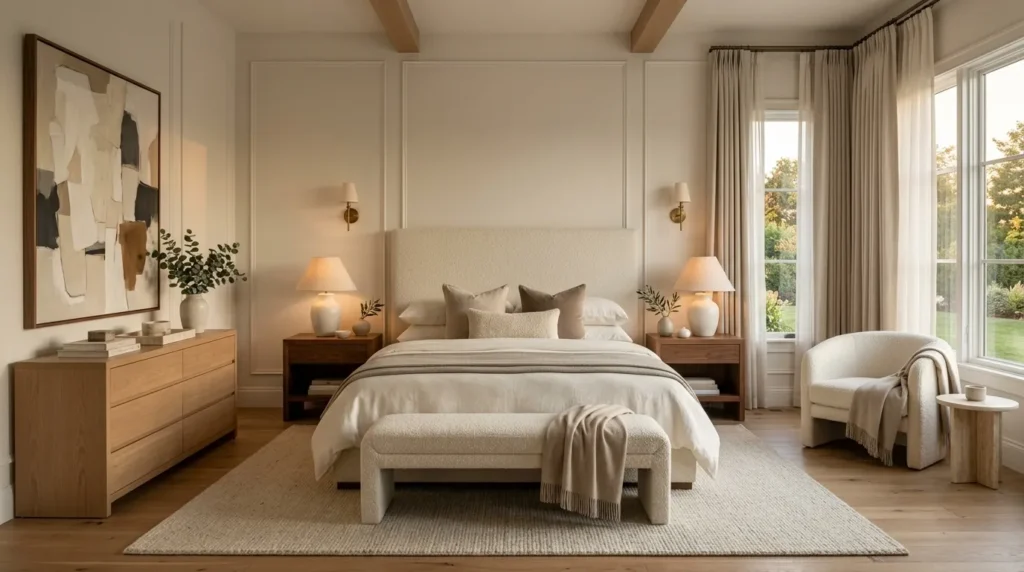
Every well-designed bedroom benefits from a clear focal point. Without one, the eye tends to move randomly around the room, and even attractive furniture can feel disconnected. The bed is usually the natural focal point because of its size and position, but the wall behind it can be enhanced with an upholstered headboard, artwork, architectural molding, or a carefully chosen paint color.
One of the most useful designer secrets is deciding on the focal point before adding decorative accessories. Once you know where you want attention to go, the rest of the room becomes much easier to balance.
How To Style It
Start by positioning the bed where it has the strongest visual presence, ideally on the room’s most prominent wall. Then reinforce that position with a substantial headboard, large-scale artwork, or a pair of balanced bedside lamps.
Keep competing elements relatively quiet. If you have a dramatic headboard, choose simpler artwork. If the wall has bold wallpaper, let the bedding and accessories remain understated.
2. Balance Furniture Scale
Quick Benefits
- Prevents cramped layouts
- Makes furniture feel intentional
- Improves movement
- Creates visual harmony
- Helps small rooms feel more comfortable
Why It Works
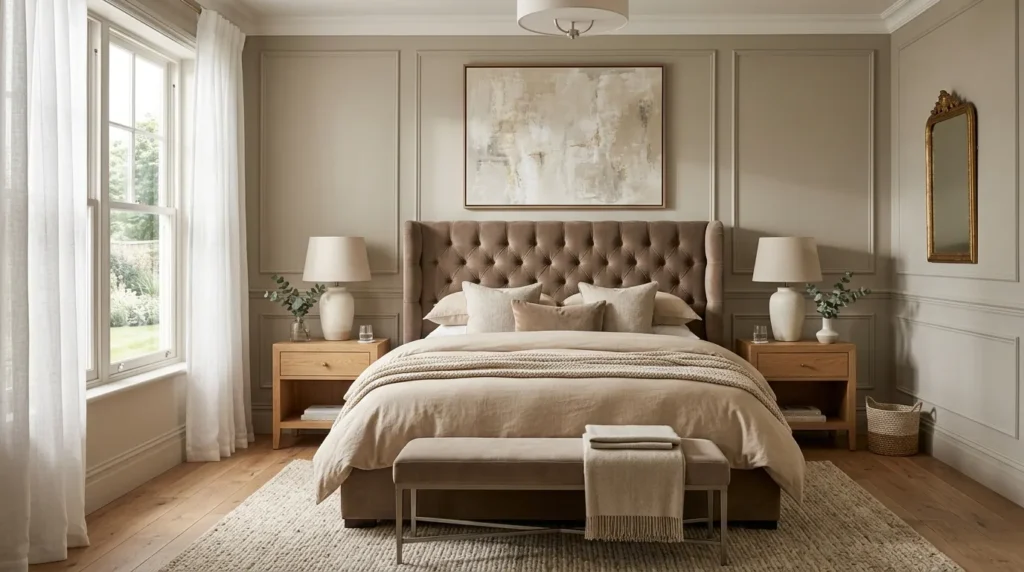
Furniture scale is one of those details that can make a room feel professionally designed even when you can’t immediately explain why. A king-size bed with tiny nightstands may look unbalanced, while oversized furniture in a small bedroom can quickly make the room feel crowded.
I’ve noticed that homeowners often choose furniture based on how attractive it looks individually rather than how it relates to the room. Designers typically consider the proportions of every piece in relation to the others.
How To Style It
Measure the room before buying major furniture. Consider the bed width, nightstand height, dresser depth, and available walking space together.
Pair a substantial bed with appropriately scaled nightstands and lamps. In a smaller bedroom, choose furniture with slimmer profiles and visible legs. Leave comfortable pathways around the bed rather than filling every available corner.
3. Layer the Bedding
Quick Benefits
- Makes the bed look inviting
- Adds texture
- Creates visual depth
- Improves comfort
- Gives the room a finished appearance
Why It Works
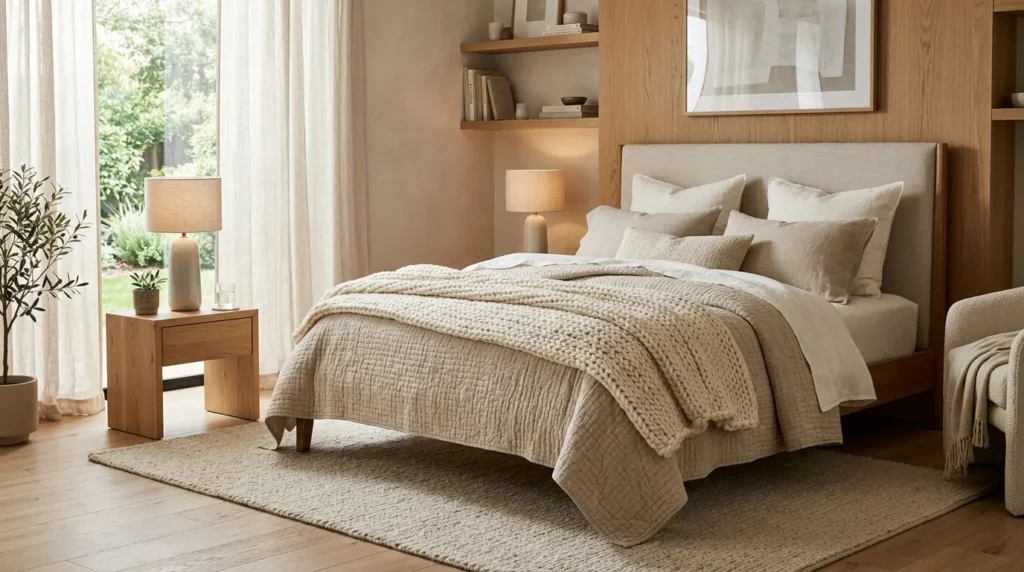
Designers often treat the bed as a layered composition rather than a single piece of furniture. Sheets, duvet covers, quilts, blankets, pillows, and a headboard all contribute different textures and proportions.
A perfectly flat bed can sometimes make a bedroom feel overly formal, while a thoughtfully layered bed creates a more relaxed sense of luxury. The secret isn’t using dozens of pillows—it’s combining a few materials and tones that complement each other.
How To Style It
Begin with quality sheets, then add a duvet or comforter in a neutral or softly colored fabric. Fold a quilt or coverlet across the lower portion of the bed and add one textured throw.
Use pillows in different sizes rather than arranging every pillow identically. Combine linen, cotton, boucle, velvet, or woven fabrics depending on the style you want.
4. Choose a Cohesive Palette
Quick Benefits
- Creates visual harmony
- Makes decorating easier
- Prevents random-looking pieces
- Highlights textures
- Feels more sophisticated
Why It Works
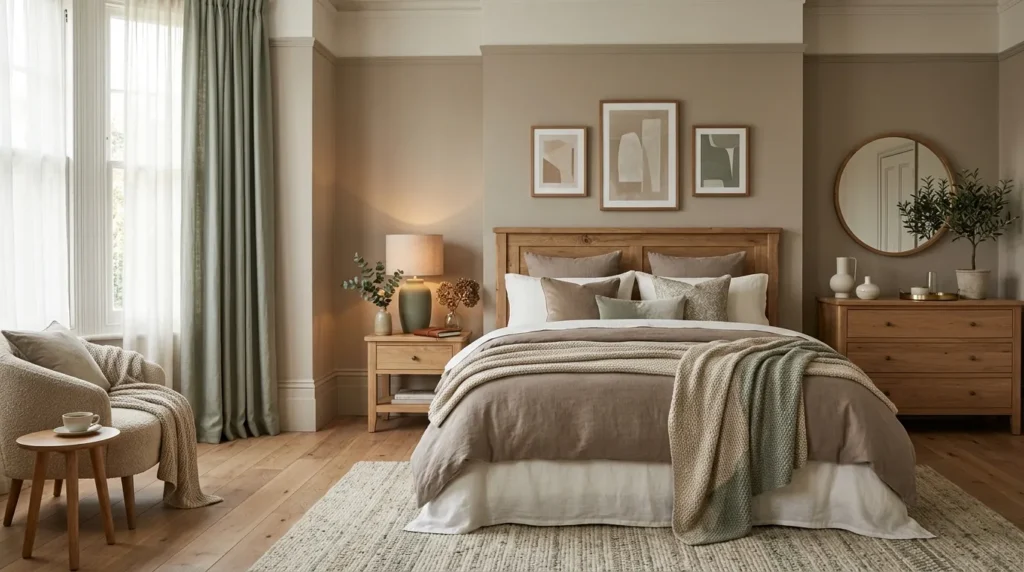
A cohesive color palette allows different furniture and accessories to feel like part of the same room. This doesn’t mean everything has to match. Designers often work with several related colors, then repeat them in different materials throughout the space.
For example, warm beige might appear in the rug, ivory in the bedding, muted brown in the wood furniture, and soft taupe in the curtains. The colors are different but connected.
How To Style It
Choose a dominant color, a secondary shade, and one or two accent tones. Use the dominant color on larger surfaces such as walls, bedding, or curtains.
Repeat the secondary and accent colors through smaller elements like pillows, artwork, lamps, and accessories. If you’re unsure, warm neutrals provide a flexible foundation that works with almost any decorating style.
5. Layer the Lighting
Quick Benefits
- Creates a relaxing mood
- Improves functionality
- Adds visual depth
- Highlights design features
- Makes evenings more comfortable
Why It Works
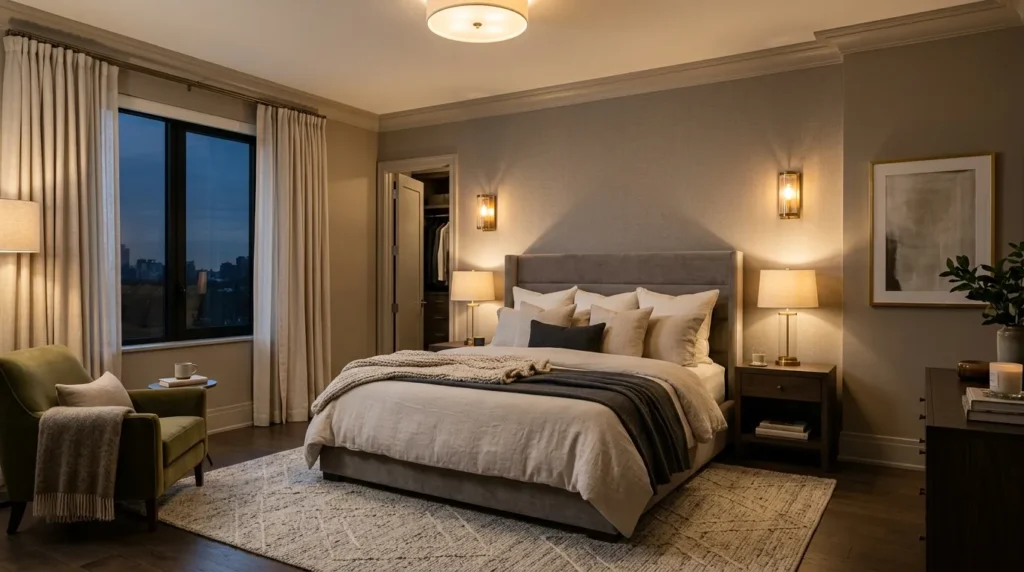
One ceiling light rarely creates the atmosphere associated with a professionally designed bedroom. Designers typically combine several lighting sources so the room can function differently throughout the day.
Ambient lighting illuminates the overall room, task lighting supports activities such as reading, and accent lighting highlights architectural or decorative features. Together, these layers create a much more flexible environment.
How To Style It
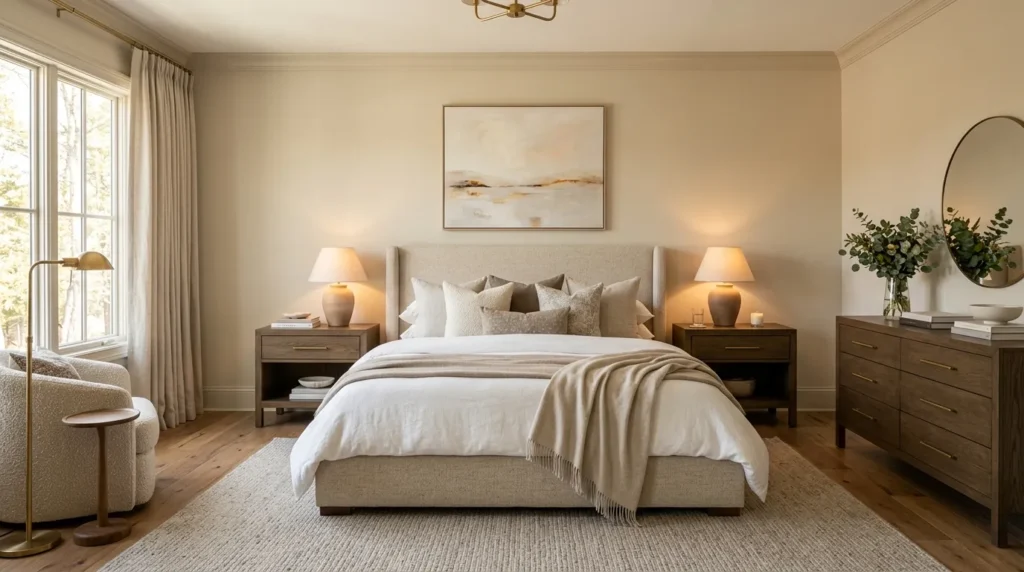
Start with the main ceiling fixture, then add bedside lamps or wall sconces. Include a floor lamp if there is a reading chair or darker corner.
Choose fixtures with finishes that relate to the room’s hardware and furniture. Use warm-toned bulbs for a softer evening atmosphere, and consider dimmable fixtures whenever possible.
6. Hang Curtains Higher
Quick Benefits
- Creates the illusion of taller ceilings
- Makes windows appear larger
- Adds softness
- Improves privacy
- Gives the room a finished appearance
Why It Works
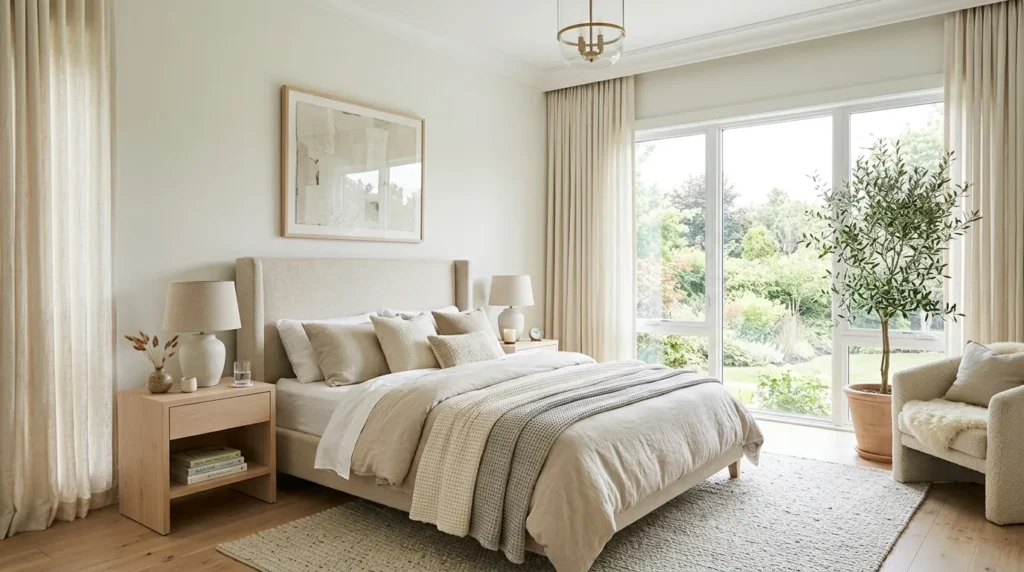
The placement of window treatments can dramatically affect how tall and polished a bedroom feels. Hanging curtain rods immediately above the window frame can visually shorten the wall, while positioning them higher encourages the eye upward.
This is a simple technique that can make an especially noticeable difference in rooms with standard-height ceilings.
How To Style It
Install the curtain rod several inches above the top of the window and extend it beyond the window frame when appropriate. Choose panels long enough to reach close to the floor.
Linen, cotton, velvet, and quality linen-look fabrics can all work beautifully. For a relaxed bedroom, choose ivory, cream, beige, or another shade that coordinates with the bedding and walls.
7. Size the Rug Correctly
Quick Benefits
- Anchors the furniture
- Adds warmth
- Makes the room feel finished
- Improves comfort
- Creates visual cohesion
Why It Works
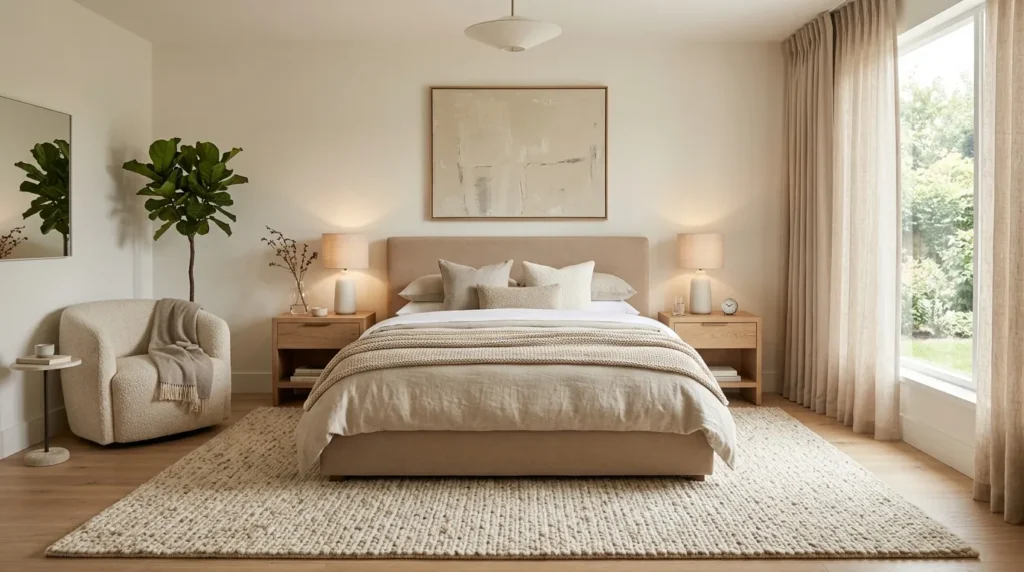
A rug that is too small can make even an expensive bedroom look unfinished. Designers use rugs to visually connect the major furniture pieces and create a comfortable transition between the bed and floor.
The rug doesn’t necessarily need to cover the entire room. It simply needs to be large enough to relate to the bed and surrounding furniture.
How To Style It
For a larger bedroom, choose a rug that extends generously beyond the sides and foot of the bed. In smaller rooms, a rug positioned beneath the lower portion of the bed can still provide warmth and texture.
Wool, cotton, jute, and performance rugs are all practical choices. Select a texture and color that complement rather than compete with the bedding.
8. Style the Nightstands
Quick Benefits
- Adds personality
- Keeps essentials accessible
- Creates balance
- Makes the bed area feel complete
- Provides practical function
Why It Works
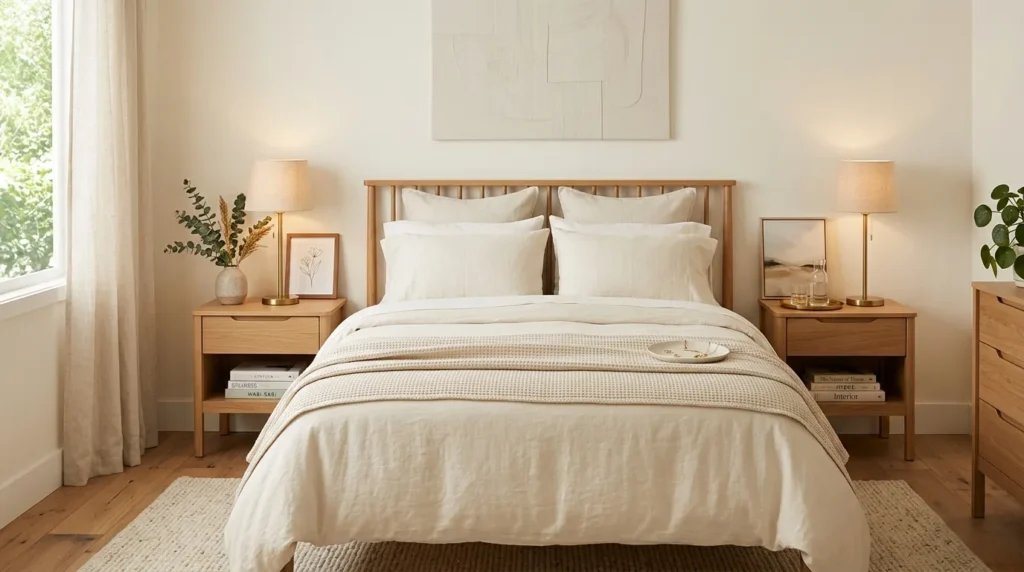
Nightstands are small surfaces, but they have a major influence on the appearance of the bed area. Designers often treat them as miniature compositions, combining practical items with a few decorative details.
The secret is restraint. A nightstand packed with books, candles, electronics, and accessories can quickly look messy. A carefully edited arrangement feels much more intentional.
How To Style It
Start with a functional lamp, then add one or two smaller elements such as a ceramic vase, framed photograph, candle, or small stack of books.
If you have two nightstands, they don’t have to be identical. Matching lamps can create symmetry while allowing the decorative objects to vary slightly.
Keep chargers, medications, remote controls, and other everyday necessities organized in drawers whenever possible.
9. Add Natural Texture
Quick Benefits
- Makes the room feel warmer
- Adds visual interest
- Softens modern furniture
- Creates an organic atmosphere
- Works across decorating styles
Why It Works
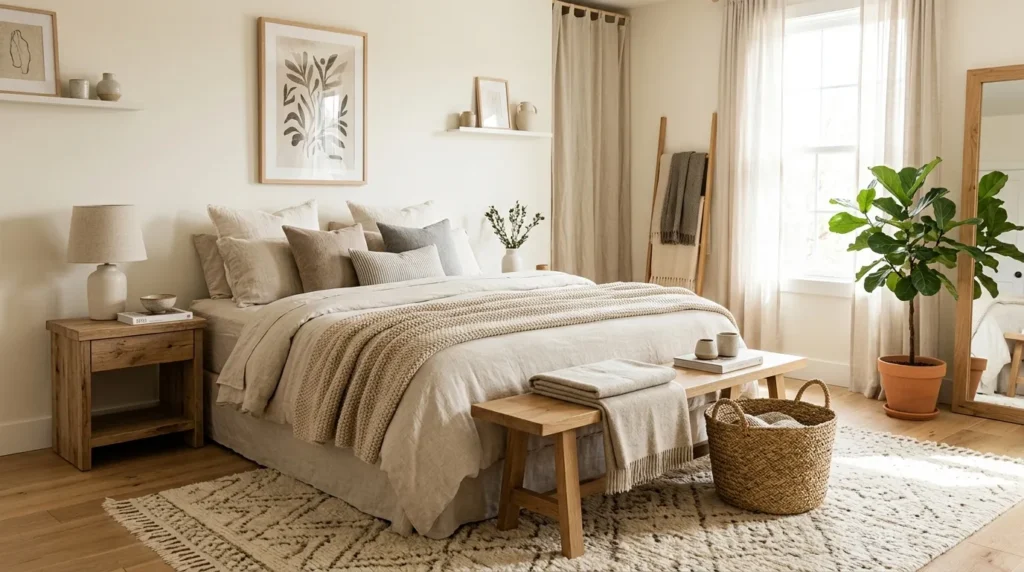
Natural materials are an easy way to give a bedroom depth without relying on bold colors. Wood grain, woven baskets, linen, wool, rattan, stone, and ceramics each introduce subtle texture.
I’ve found that rooms with several natural textures often feel more sophisticated than rooms that depend heavily on decorative objects. The materials themselves become part of the design.
How To Style It
Add a woven basket beside the dresser, a wood bench at the foot of the bed, linen bedding, or a ceramic lamp on the nightstand. A small plant can introduce another organic element.
Try to combine different textures while keeping the color palette coordinated. This creates richness without visual chaos.
10. Edit the Accessories
Quick Benefits
- Reduces visual clutter
- Makes favorite pieces stand out
- Simplifies cleaning
- Creates a polished look
- Makes the room feel more spacious
Why It Works
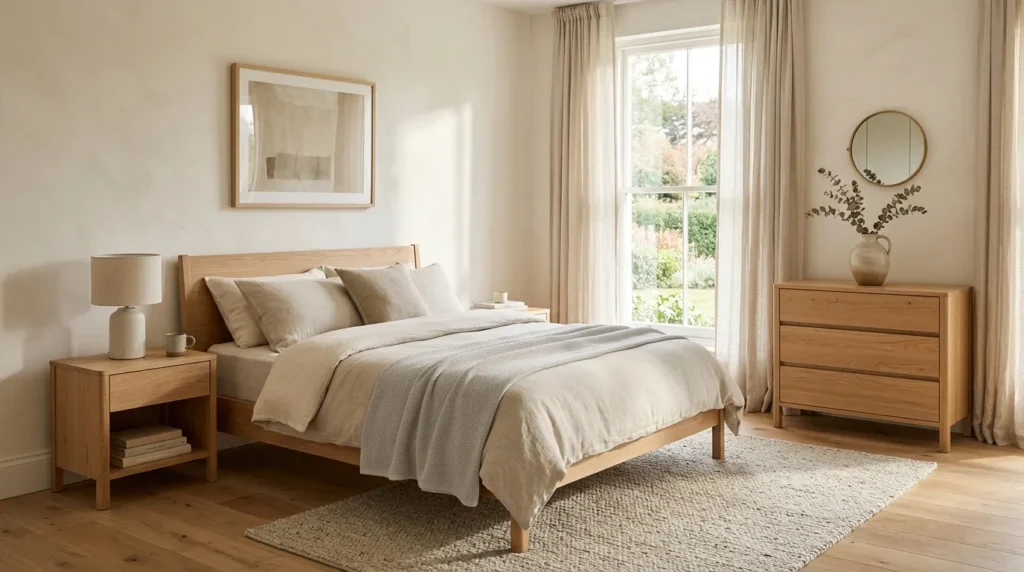
One of the most valuable designer secrets is knowing when to stop decorating. Adding more objects doesn’t necessarily make a bedroom feel more finished. In many cases, removing unnecessary accessories creates stronger visual impact.
Every item should ideally have a purpose, provide beauty, or contribute to the overall atmosphere. When there are too many competing objects, the room loses its sense of calm.
How To Style It
Walk around the room and remove anything that feels unnecessary, repetitive, or out of place. Leave breathing room on dressers, shelves, and nightstands.
Group accessories in small collections rather than scattering individual objects everywhere. A vase, a few books, and one framed piece can create a more effective arrangement than a crowded display.
Frequently Asked Questions
What is the most important designer trick for decorating a bedroom?
Creating a clear focal point is one of the most effective techniques. Usually, this means making the bed and the wall behind it visually intentional. A strong headboard, artwork, lighting, or architectural detail can establish the direction for the rest of the room.
How many colors should a bedroom have?
There is no strict rule, but working with a dominant color, secondary shade, and one or two accents can make the room feel cohesive. The colors don’t have to match exactly; they simply need to relate visually.
How can I make my bedroom look more expensive?
Focus on proportion, lighting, textiles, and consistency. Properly sized furniture, layered bedding, floor-length curtains, a substantial rug, warm lighting, and coordinated finishes can create a more polished appearance without requiring expensive furniture.
Should bedroom nightstands match?
Matching nightstands can create symmetry, but they aren’t required. If you prefer different pieces, use matching lamps or repeat colors and materials to maintain balance.
How can I make a small bedroom look professionally designed?
Prioritize appropriately scaled furniture, clear walking paths, vertical curtains, layered lighting, a cohesive color palette, and carefully edited accessories. Avoid filling every corner simply because space is available.
What makes a bedroom feel cozy but still modern?
Combine streamlined furniture with soft textures. Linen bedding, wool rugs, upholstered furniture, warm wood, woven accessories, and ambient lighting can soften contemporary forms without making the room look overly traditional.
Conclusion
Decorating a bedroom like a designer isn’t about following a rigid formula or buying the most expensive furniture. It’s about understanding how individual choices work together.
Start by establishing a focal point, then pay attention to proportion, color, texture, lighting, and negative space. Layer the bed, choose a rug that actually fits the furniture, hang curtains high, and bring in natural materials to soften the overall look.
Most importantly, resist the temptation to fill every surface. A beautifully designed bedroom usually has breathing room. When the accessories are thoughtfully edited and the major elements are balanced, the room feels calmer, more intentional, and easier to live in.
You can use these designer techniques whether you’re starting from scratch or simply refreshing the bedroom you already have. Begin with the change that will make the biggest difference—perhaps new lighting, better bedding, or a properly sized rug—and build from there.
A well-decorated bedroom should ultimately feel like your own retreat: beautiful enough to inspire you, comfortable enough to relax in, and practical enough to support everyday life.
Related Articles
- 10 Modern Bedroom Ideas with Cozy Layers
- 10 Modern Bedroom Ideas with Elegant Details
- 10 Bedroom Wall Decor Ideas That Add Instant Character
- 10 Neutral Bedroom Ideas with Timeless Style
- 10 Cozy Bedroom Ideas for a Relaxing Retreat