How to Organize a Small Bedroom Without a Closet System
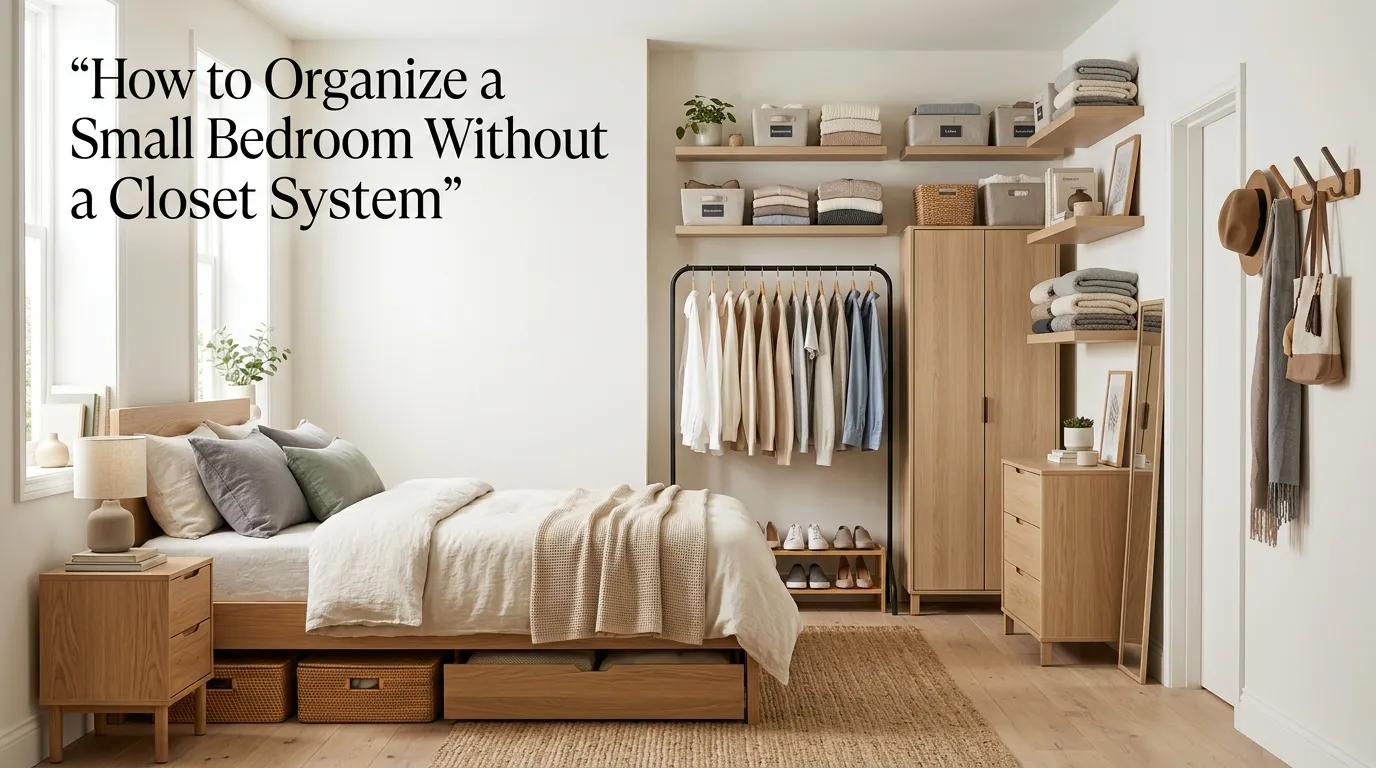
A small bedroom without a built-in closet system can feel challenging, especially when clothing, shoes, bedding, accessories, and everyday essentials all need a place to live. But you don’t need an expensive custom closet to create a bedroom that feels organized and easy to maintain.
The secret is to treat every available area as potential storage while keeping the room visually calm. An empty wall can become a clothing zone, the space under the bed can hold seasonal items, and a narrow corner can accommodate a compact garment rack or vertical shelving.
In my experience, the biggest difference comes from combining open storage, hidden storage, and vertical storage rather than relying on one solution. You also want to avoid filling every inch of the room. A small bedroom needs breathing room so it remains comfortable rather than turning into a collection of storage containers.
Before buying anything, take inventory of what you actually need to store. Measure unused walls, the space beneath the bed, corners, and the area behind the bedroom door. Then choose storage pieces that fit those measurements.
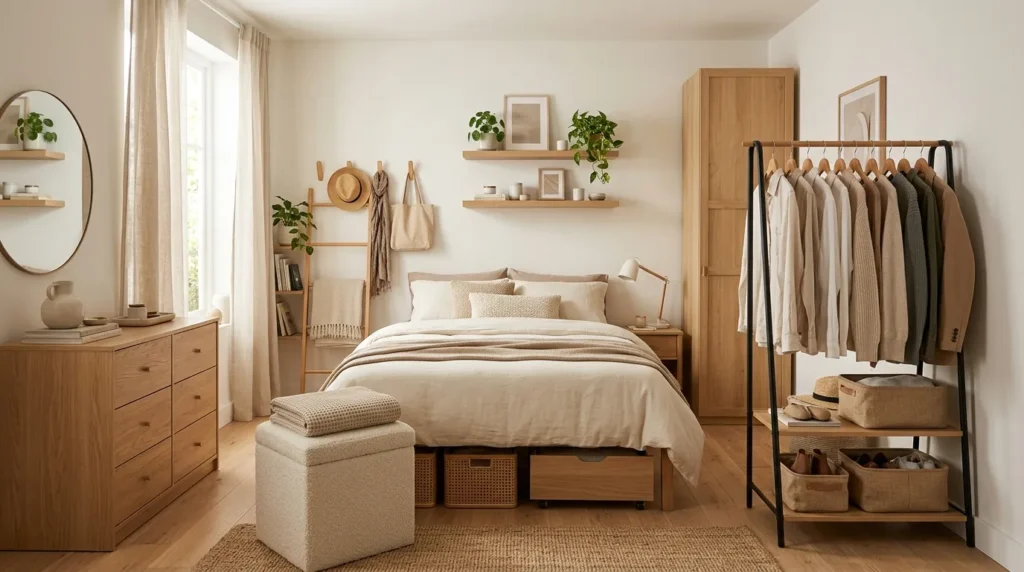
From clothing racks and under-bed containers to over-the-door organizers and multifunctional furniture, these ideas can help you build a practical storage system from scratch—even if your bedroom has no traditional closet.
Table of Contents
1. Create a Clothing Wall
Turn unused wall space into practical storage.
2. Use Under Bed Storage
Make hidden space work harder.
3. Add a Garment Rack
Create flexible hanging storage.
4. Install Floating Shelves
Use vertical space without bulky furniture.
5. Maximize Door Space
Turn overlooked areas into storage.
6. Choose Storage Furniture
Combine furniture and organization.
7. Use Rolling Carts
Create flexible storage for small items.
8. Organize With Baskets
Hide everyday clutter attractively.
9. Build a Corner Station
Turn awkward corners into useful zones.
10. Simplify Your Belongings
Make storage easier by reducing excess.
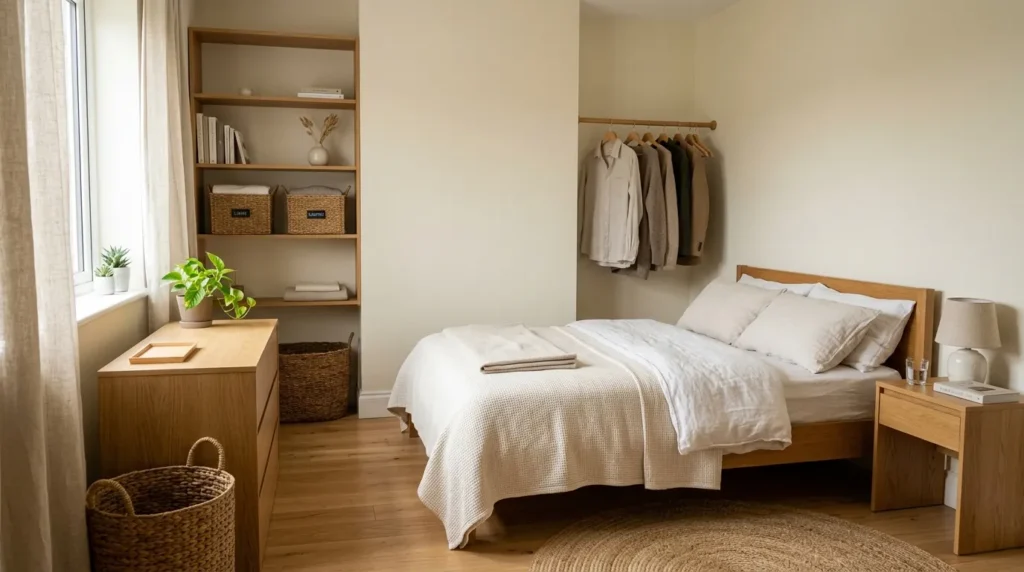
1. Create a Clothing Wall
Quick Benefits
- Adds hanging space
- Uses vertical areas
- Keeps clothes accessible
- Works without a closet
- Creates a defined storage zone
Why It Works
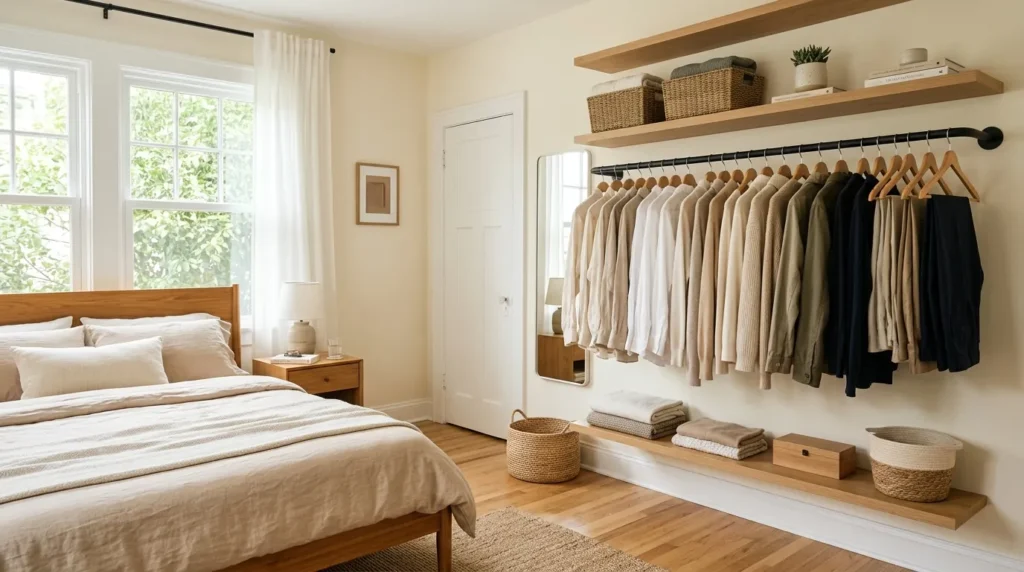
When a bedroom has no closet, one of the easiest solutions is to intentionally dedicate part of a wall to clothing. Rather than scattering garments across chairs, doors, and furniture, a designated clothing wall creates visual order.
This approach is especially useful when the bedroom has one long unused wall or a narrow section near the entrance.
How To Style It
Use a sturdy wall-mounted hanging rail, shelving system, or combination of shelves and hanging storage designed for the intended load. Measure carefully before installation.
Keep frequently worn clothing within easy reach and use the upper shelves for folded sweaters, bags, or seasonal belongings. Matching hangers can create a more cohesive appearance, while a simple curtain can conceal the clothing area if you prefer a cleaner look.
2. Use Under Bed Storage
Quick Benefits
- Uses hidden space
- Keeps seasonal items contained
- Doesn’t consume walking space
- Works in very small rooms
- Keeps belongings accessible
Why It Works
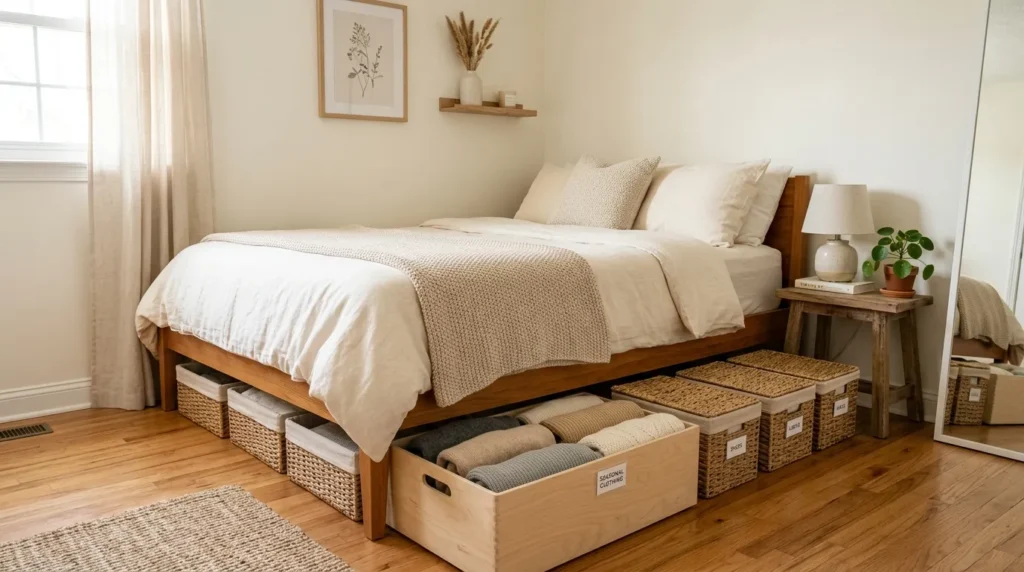
The space beneath a bed is often one of the largest unused storage areas in a small bedroom. Instead of allowing it to become a place where random items disappear, turn it into an organized storage zone.
It’s particularly useful for items you don’t need every day.
How To Style It
Choose shallow storage containers that fit comfortably underneath the bed and can be pulled out without damaging the floor. Use them for off-season clothing, extra bedding, shoes, or other suitable belongings.
Label containers so you don’t have to pull everything out when looking for one item. If dust is a concern, choose containers with secure lids.
3. Add a Garment Rack
Quick Benefits
- Provides immediate hanging space
- Doesn’t require permanent installation
- Works for renters
- Easy to move
- Can become part of the décor
Why It Works
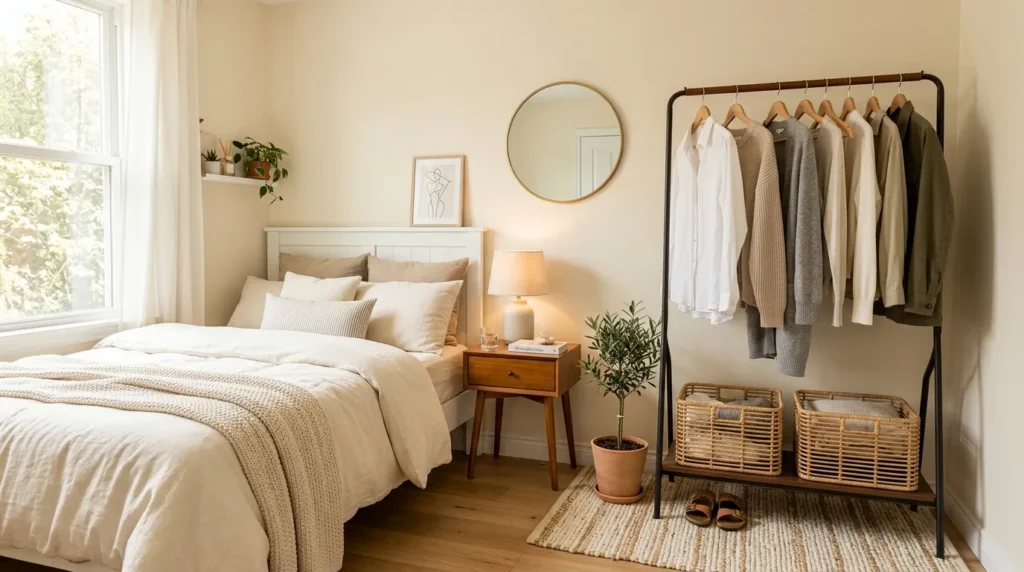
A garment rack is one of the simplest alternatives to a traditional closet. It can provide hanging storage while remaining flexible enough to move if your needs change.
The key is to treat the rack as a curated clothing zone rather than allowing it to become an overflowing collection of garments.
How To Style It
Choose a stable rack with dimensions appropriate for your room. Keep only frequently worn clothing on display and store less-used pieces elsewhere.
You can place baskets or boxes on a lower shelf if the rack includes one. A small rug underneath can visually define the clothing area while making it feel more intentional.
4. Install Floating Shelves
Quick Benefits
- Uses vertical space
- Keeps floors open
- Provides flexible storage
- Works for accessories
- Creates a lighter visual appearance
Why It Works
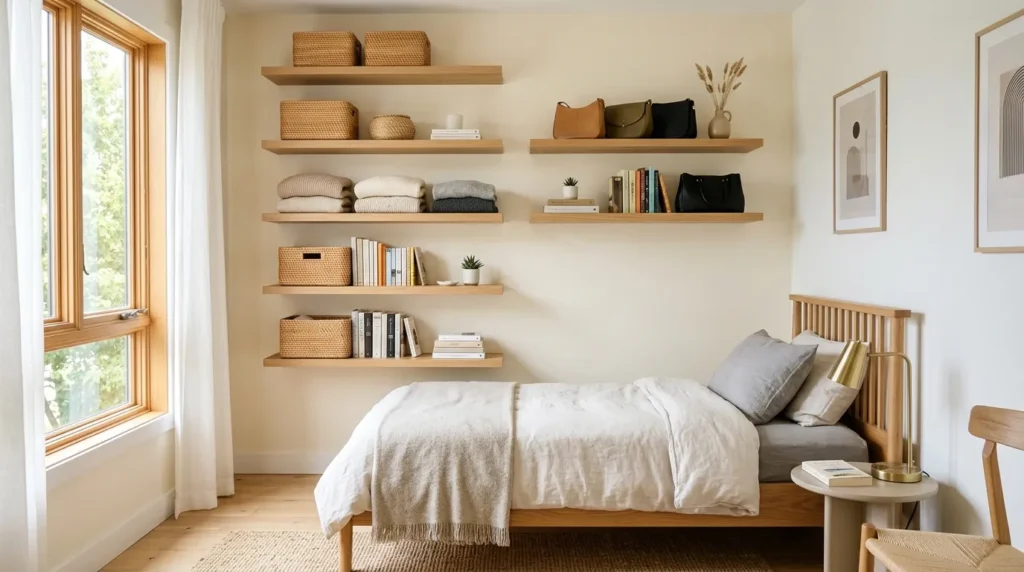
Floating shelves are valuable in small bedrooms because they provide storage without requiring a large cabinet footprint. They can hold folded clothing, books, handbags, jewelry boxes, or decorative objects.
They also make use of wall space that might otherwise remain empty.
How To Style It
Install shelves securely into appropriate wall structures and follow the manufacturer’s load recommendations. Place everyday items at comfortable heights and less-used belongings higher up.
Use baskets or matching boxes for smaller objects so the shelves don’t become visually cluttered. Leave some open space between groups of belongings to maintain a calm appearance.
5. Maximize Door Space
Quick Benefits
- Uses overlooked space
- Requires little floor area
- Works for accessories
- Helps organize small items
- Useful for renters
Why It Works
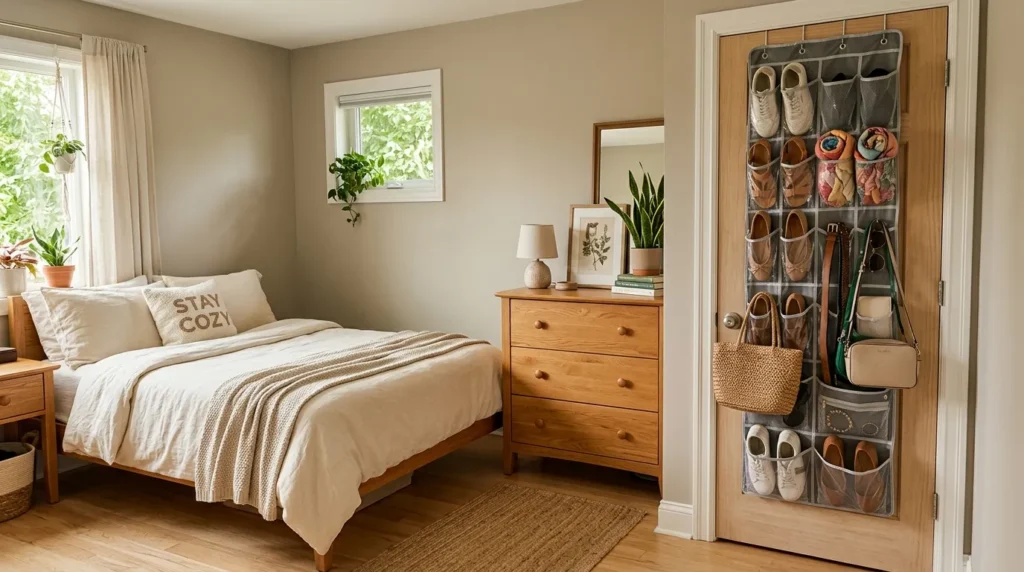
The back of a bedroom door can provide valuable storage without taking up floor space. It’s especially useful for smaller belongings that are otherwise difficult to organize.
Accessories, shoes, scarves, belts, and small bags can all benefit from vertical door storage.
How To Style It
Use an over-the-door organizer or approved hooks designed for the door type. Check that the hardware doesn’t prevent the door from closing properly.
Keep heavier items distributed evenly rather than placing excessive weight in one location. Use smaller compartments for accessories and reserve larger pockets for shoes or folded items.
6. Choose Storage Furniture
Quick Benefits
- Combines function and furniture
- Adds concealed storage
- Reduces visual clutter
- Works in multipurpose bedrooms
- Provides a polished appearance
Why It Works
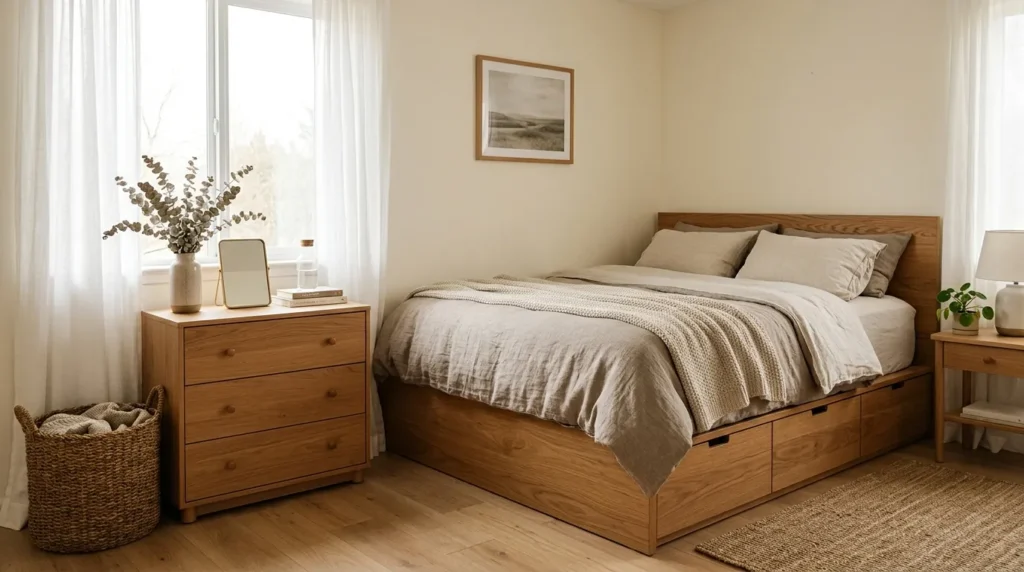
When floor space is limited, furniture needs to work harder. A bed with drawers, a storage bench, a narrow dresser, or a nightstand with multiple drawers can provide valuable organization without requiring separate storage pieces.
This approach can also make the room feel more intentional.
How To Style It
Choose furniture based on your most difficult storage category. If clothing is the main issue, prioritize drawers. If blankets and bedding are the problem, consider a storage bed or bench.
Avoid oversized furniture. Measure carefully and choose pieces that preserve comfortable walking paths around the bed.
7. Use Rolling Carts
Quick Benefits
- Easy to move
- Fits narrow gaps
- Creates flexible storage
- Works for accessories
- Doesn’t require permanent installation
Why It Works
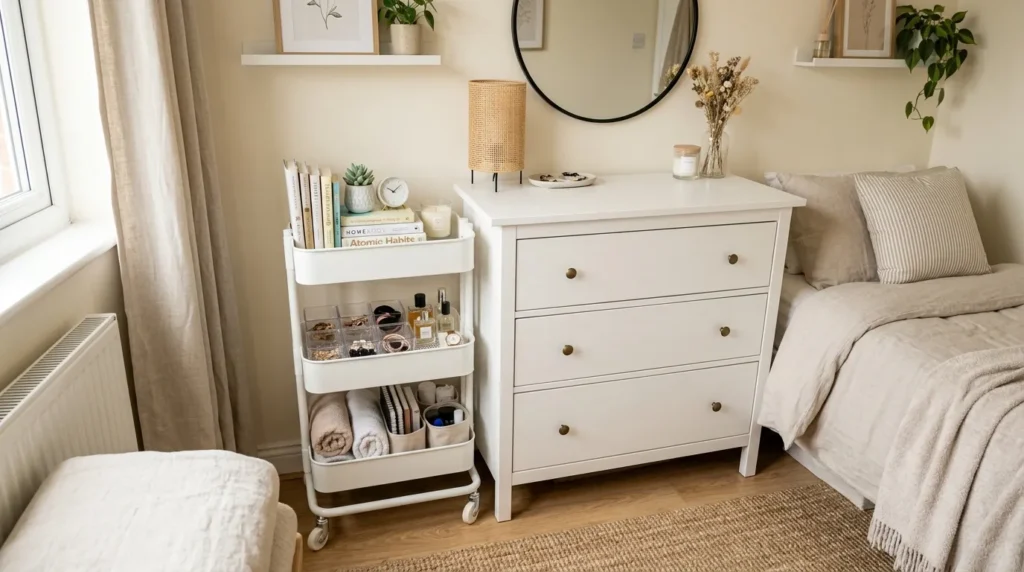
A slim rolling cart can fit into spaces that are too narrow for conventional furniture. It can become a small station for hair accessories, skincare, books, craft supplies, or everyday essentials.
Its mobility is particularly helpful in rooms where the layout may change.
How To Style It
Choose a cart with several levels and assign each shelf a specific category. Use small containers to prevent tiny items from spreading across the shelves.
Keep the cart beside a dresser, desk, or vanity if convenient. When you need more floor space, simply move it to another suitable location.
8. Organize With Baskets
Quick Benefits
- Hides visual clutter
- Adds texture
- Makes categories easy to manage
- Works on shelves
- Fits many decorating styles
Why It Works
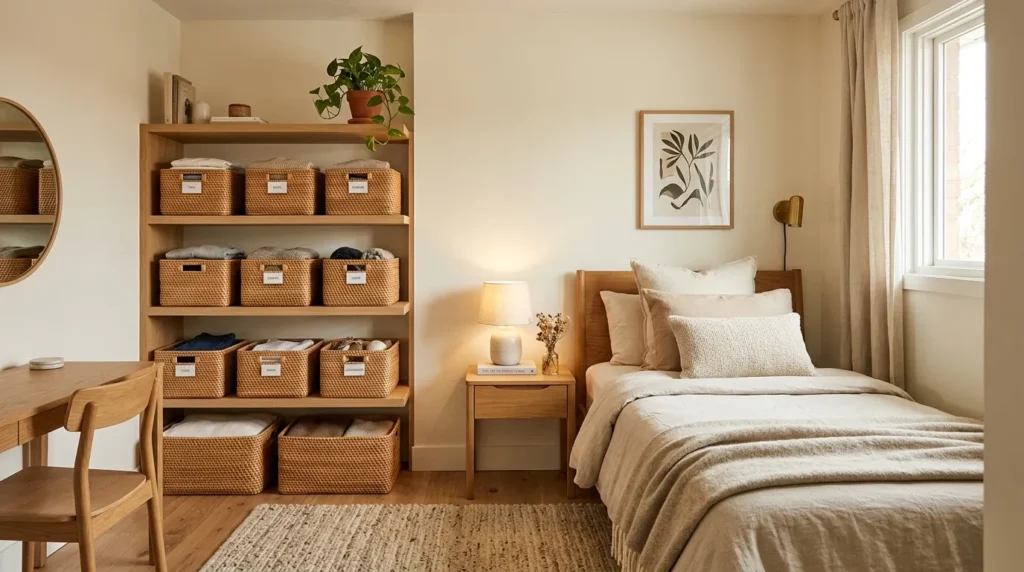
Open shelves can quickly become messy when they hold many small items. Baskets provide a simple way to contain belongings while maintaining an attractive appearance.
Natural woven baskets can also introduce warmth to a room filled with furniture and hard surfaces.
How To Style It
Choose baskets that fit your shelving dimensions before buying them. Use each basket for a defined category rather than creating miscellaneous catch-all containers.
Place everyday categories within easy reach and less frequently used items higher up. Simple labels can help if several baskets look similar.
9. Build a Corner Station
Quick Benefits
- Uses awkward space
- Creates a dedicated zone
- Adds storage and function
- Works in tiny rooms
- Keeps categories together
Why It Works
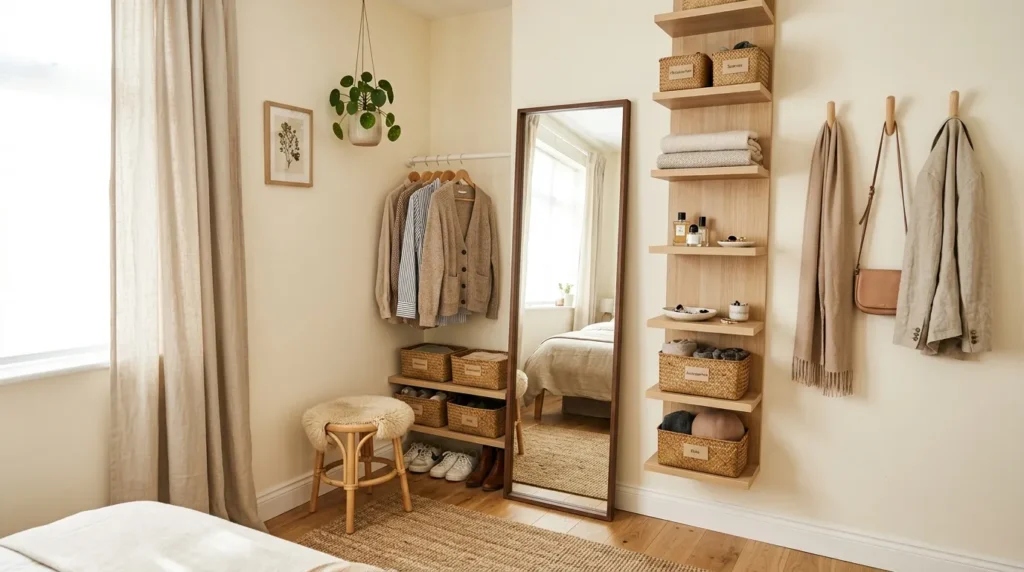
Corners are often difficult to furnish, but they can become useful storage zones when approached vertically. A narrow shelving unit, compact dresser, garment rack, or combination of shelves can transform an unused corner.
Creating a dedicated station also reduces the tendency to scatter belongings throughout the room.
How To Style It
Choose one purpose for the corner, such as clothing, accessories, reading materials, or getting-ready essentials. Use a narrow vertical piece rather than a deep cabinet.
Add one or two baskets for small items and keep the remaining surfaces relatively open. A mirror can make a dressing corner more functional without adding much bulk.
10. Simplify Your Belongings
Quick Benefits
- Reduces storage pressure
- Makes organization easier
- Creates more breathing room
- Makes cleaning faster
- Helps prevent clutter
Why It Works
The most effective storage system can only do so much if the room contains more belongings than it can comfortably hold. Without a closet system, reducing unnecessary items becomes even more important.
Decluttering doesn’t mean owning very little. It means making sure the things you keep deserve the space they occupy.
How To Style It
Start with clothing, shoes, accessories, and duplicate items. Remove pieces that no longer fit, are damaged beyond reasonable use, or haven’t suited your lifestyle for a long time.
Then organize what remains by frequency of use. Keep everyday essentials accessible and move seasonal or occasional items into higher shelves or under-bed storage.
Frequently Asked Questions
How do I organize a bedroom without a closet?
Create separate storage zones using a garment rack, wall-mounted hanging rail, dresser, shelves, under-bed containers, and over-the-door organizers. Combining several smaller solutions is often more practical than relying on one large piece of furniture.
Where should I store clothes without a closet?
Frequently worn clothes can go on a garment rack or wall-mounted hanging system, while folded clothing can go in a dresser, shelving baskets, or storage cubes. Seasonal clothing can be stored under the bed or in higher storage areas.
How do I make a small bedroom look less cluttered?
Reduce unnecessary belongings, use vertical storage, keep floors as clear as possible, and choose furniture with concealed storage. A consistent color palette for baskets and storage containers can also make the room feel visually calmer.
Is a garment rack a good alternative to a closet?
Yes. A sturdy garment rack can provide practical hanging storage when used thoughtfully. Keep the number of displayed garments manageable and use additional drawers, shelves, or baskets for folded clothing and accessories.
How can I store shoes in a small bedroom?
Use under-bed shoe containers, an over-the-door shoe organizer, narrow shelving, or designated baskets. Keep frequently worn pairs accessible while moving seasonal footwear into less accessible storage.
How do I organize a small bedroom on a budget?
Start with storage you already have. Use sturdy boxes, baskets, under-bed space, wall shelves, hooks, and repurposed furniture before purchasing new organizers. Decluttering first can also reduce the amount of storage you actually need.
Conclusion
Organizing a small bedroom without a closet system is completely possible when you stop relying on traditional closet storage and start looking at the room vertically.
Use one wall for hanging clothes, the space beneath the bed for seasonal belongings, shelves for folded items, and the back of the door for accessories. A garment rack can handle everyday clothing, while a narrow dresser or storage bed can provide valuable concealed space.
The most important step, however, is reducing what you need to store. Once you’ve removed belongings that no longer serve you, the remaining items become much easier to organize.
Try to create clear zones rather than scattering storage throughout the room. Give clothing one home, accessories another, and seasonal items a separate location. This makes it easier to put things away and reduces the chance of clutter returning.
You don’t need a custom closet or a complete bedroom renovation. A few well-chosen storage solutions, combined with thoughtful decluttering and vertical organization, can turn even a very small bedroom into a comfortable, functional space.
Start with the area that’s causing the most frustration, make one meaningful change, and build from there. Small improvements can make a surprisingly big difference in how your bedroom feels every day.
Related Articles
- 10 Small Bedroom Storage Ideas That Save Space
- 10 Bedroom Organization Ideas for a Clutter-Free Home
- 10 Closet Alternatives for Bedrooms Without Built-In Storage
- 10 Small Bedroom Ideas That Feel Spacious
- 10 Under Bed Storage Ideas for Small Spaces