How to Make a Small Bedroom Feel More Comfortable
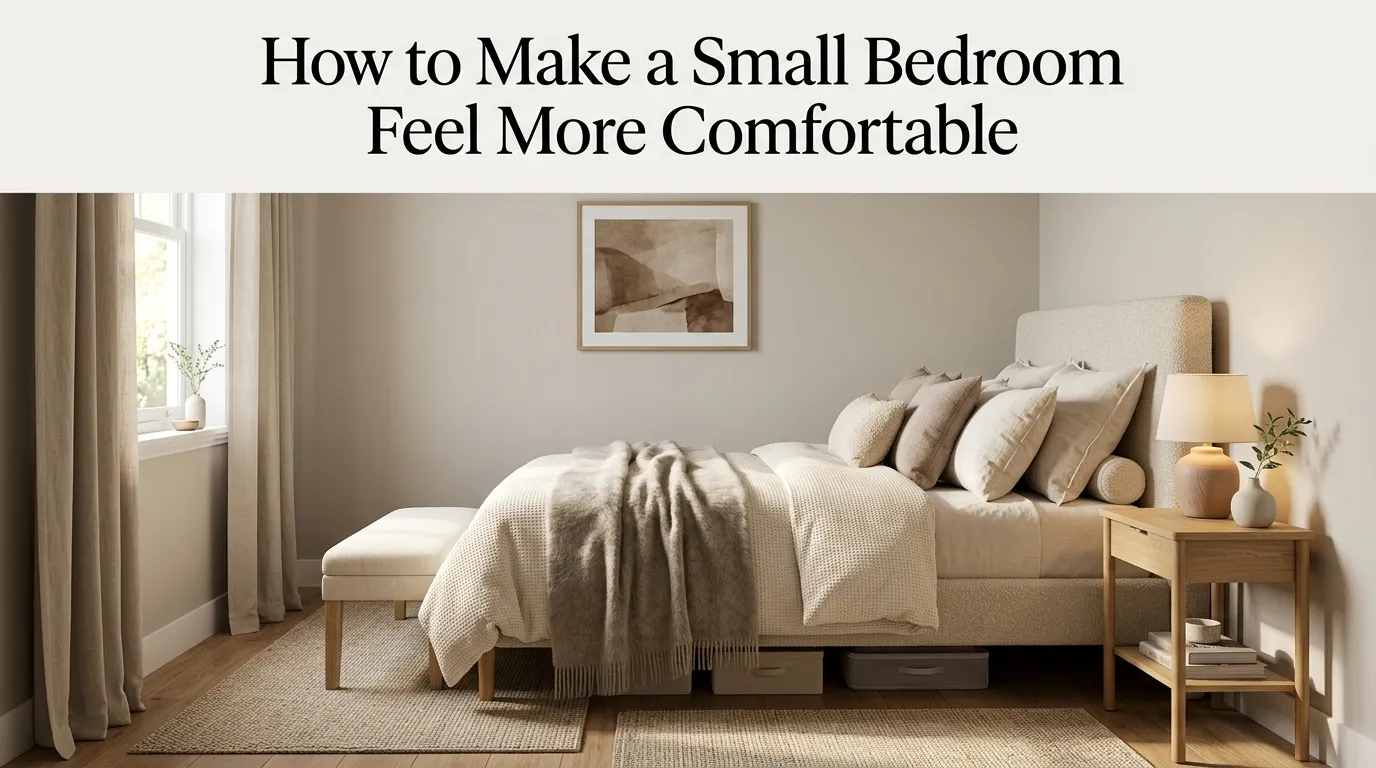
A small bedroom can be incredibly cozy when it’s designed around comfort rather than simply trying to make the room look bigger. The challenge is finding the right balance between useful furniture, soft textures, storage, lighting, and enough open space to move around easily.
When a bedroom is compact, every choice becomes more noticeable. A bulky nightstand can make the walkway feel tight, harsh lighting can make the room feel cold, and too many decorative pieces can quickly create visual clutter. On the other hand, a carefully chosen bed, layered textiles, warm lighting, and a few personal touches can make even a modest bedroom feel like a welcoming retreat.
In my experience, comfort comes from several small details working together. Soft bedding creates physical comfort, while a warm color palette and gentle lighting create visual comfort. Smart storage keeps everyday clutter under control, and appropriately scaled furniture helps the room remain functional.
You also don’t need to spend a fortune. Rearranging furniture, adding a few pillows, changing the lighting, introducing curtains, or creating a better bedside setup can make a noticeable difference.
Whether you’re decorating a small apartment bedroom, guest room, rental, or compact primary bedroom, these ideas can help you make the most of your available space while creating a room that feels warm, restful, and genuinely comfortable.
Table of Contents
1. Layer Soft Bedding
Create a comfortable foundation around the bed.
2. Choose Warm Lighting
Use gentle illumination to make the room inviting.
3. Scale Furniture Carefully
Keep essential furniture proportional to the room.
4. Add Cozy Textures
Make the space feel softer and warmer.
5. Use Calming Colors
Create a peaceful visual atmosphere.
6. Create Window Softness
Use curtains to frame the room beautifully.
7. Keep Floors Open
Protect valuable walking space.
8. Add Personal Details
Make the room feel uniquely yours.
9. Create Smart Storage
Reduce clutter without sacrificing function.
10. Build a Relaxing Nook
Give the bedroom another comfortable purpose.
1. Layer Soft Bedding
Quick Benefits
- Improves physical comfort
- Creates visual softness
- Makes the bed inviting
- Adds texture
- Works in any decorating style
Why It Works
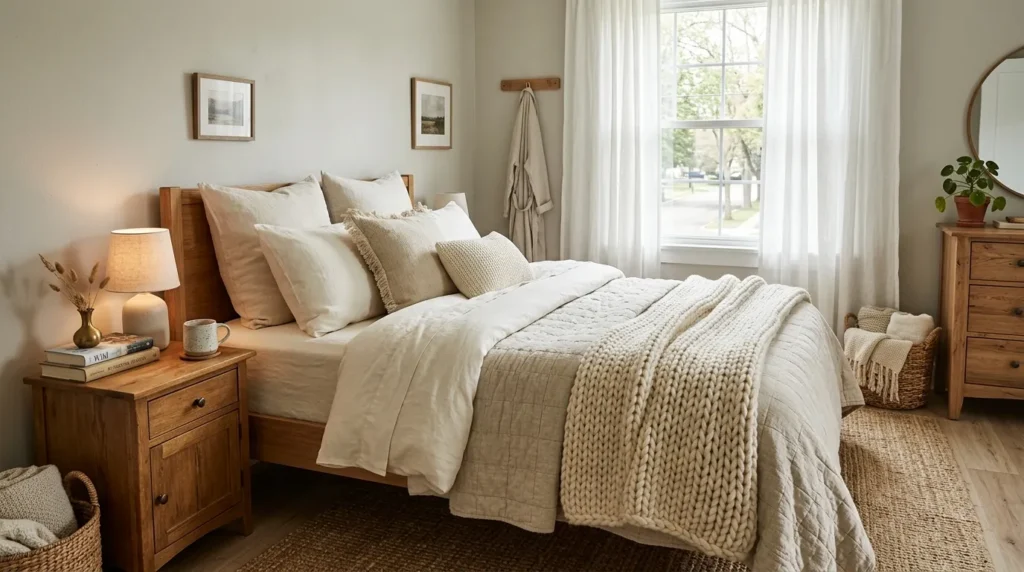
The bed is usually the dominant feature in a small bedroom, so making it genuinely comfortable can transform the entire atmosphere. Soft layers also create the visual feeling of a cozy retreat without requiring additional furniture.
Rather than relying on one heavy comforter, layering different materials creates depth and flexibility.
How To Style It
Start with comfortable sheets, then add a duvet, quilt, blanket, and a few pillows. Choose breathable fabrics such as cotton or linen for warmer seasons and add heavier textures when temperatures drop.
Keep the palette coordinated with the room. A combination of cream, beige, warm white, muted gray, or soft earthy colors can create a restful appearance.
2. Choose Warm Lighting
Quick Benefits
- Creates a relaxing mood
- Reduces harsh shadows
- Makes the room feel warmer
- Improves nighttime comfort
- Adds decorative interest
Why It Works
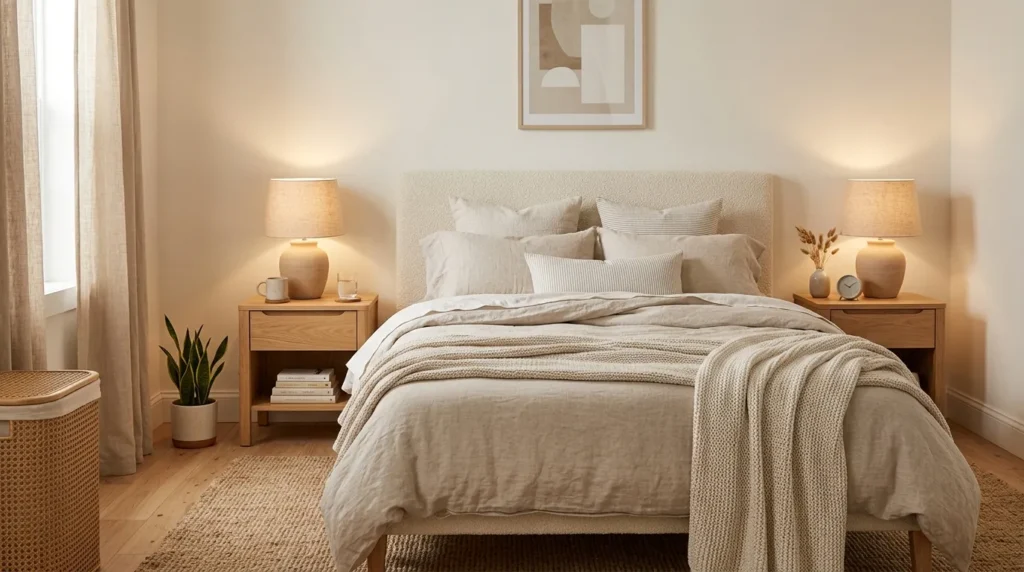
Lighting is one of the easiest ways to change how a small bedroom feels. A single bright ceiling fixture can make a compact room feel stark, while multiple softer light sources create a layered and intimate atmosphere.
Warm lighting can also make neutral colors and natural materials appear more inviting.
How To Style It
Use a bedside lamp, wall sconce, floor lamp, or other suitable light source in addition to the main ceiling fixture.
Place lighting where you actually need it, such as beside the bed for reading. Choose warm-toned bulbs when appropriate and avoid overly bright illumination in areas intended for relaxing.
3. Scale Furniture Carefully
Quick Benefits
- Improves movement
- Makes the room feel balanced
- Prevents overcrowding
- Creates more usable space
- Improves visual comfort
Why It Works
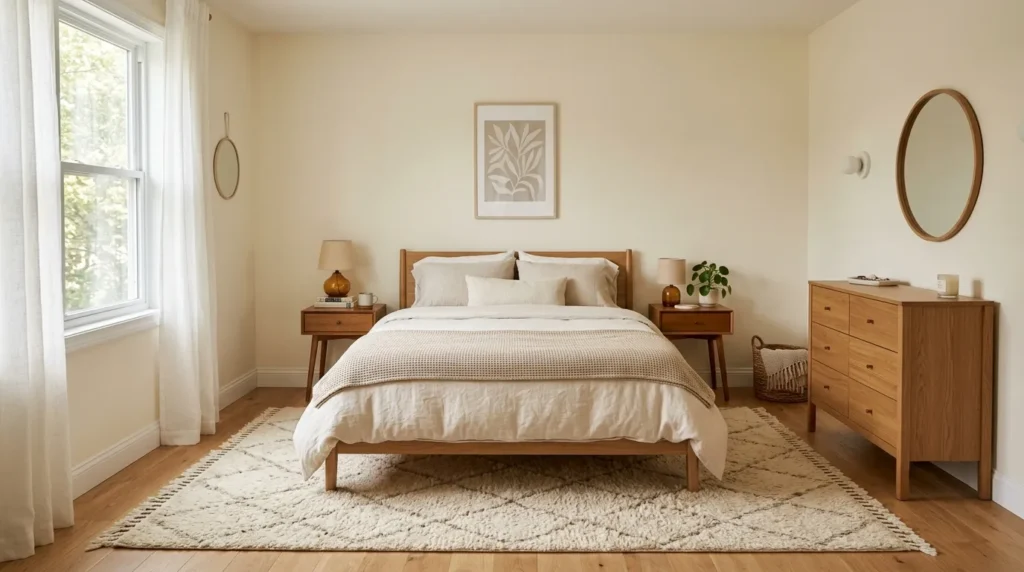
Furniture that is too large can make a small bedroom feel cramped even when there aren’t many pieces. Conversely, appropriately scaled furniture allows the room to breathe.
The goal isn’t to choose the smallest possible furniture. It’s to choose pieces that provide the necessary function without overwhelming the available floor area.
How To Style It
Measure the bedroom before purchasing furniture. Pay particular attention to the distance around the bed, door swings, drawers, and walking paths.
Choose narrow nightstands, compact dressers, wall-mounted lighting, or multifunctional furniture when appropriate. A bed with built-in storage can be especially useful when floor space is limited.
4. Add Cozy Textures
Quick Benefits
- Creates warmth
- Makes the room inviting
- Adds visual depth
- Softens hard surfaces
- Improves the sensory experience
Why It Works
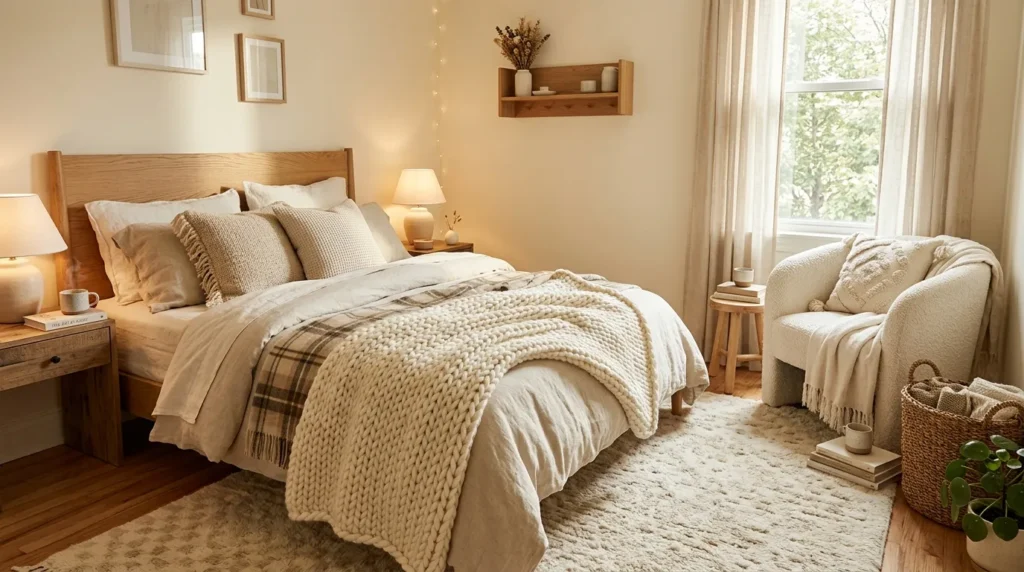
Texture can make a small room feel much more comfortable without taking up significant space. Soft fabrics contrast with wood, metal, glass, and painted surfaces, creating a more layered environment.
The best cozy rooms usually combine several textures rather than relying on one type.
How To Style It
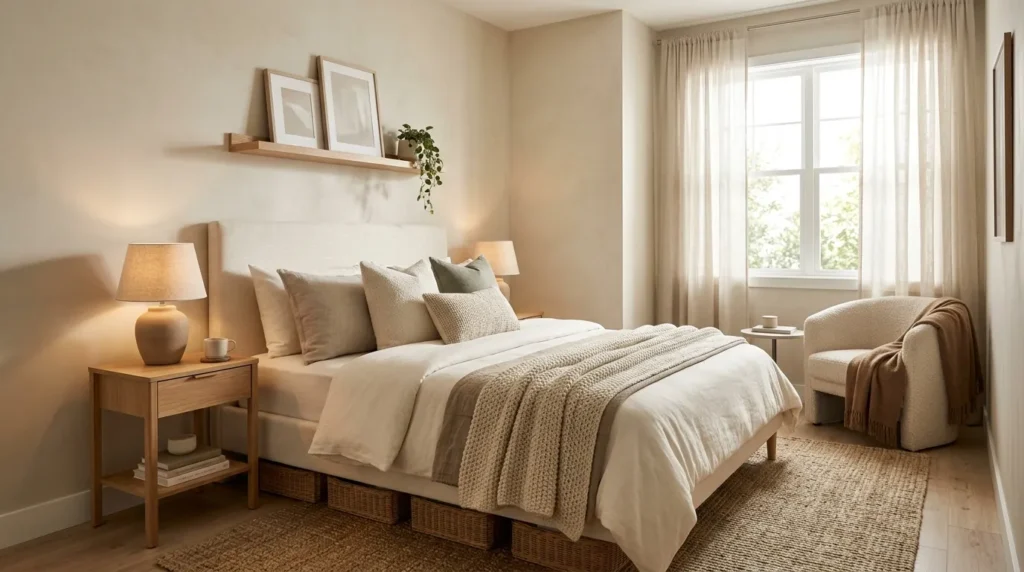
Add a soft rug beside or beneath the bed, textured bedding, a woven basket, upholstered furniture, or a knitted throw.
Mix materials such as linen, cotton, wool-inspired textiles, boucle, woven fibers, and natural wood. Keep the color palette consistent so the room feels layered rather than busy.
5. Use Calming Colors
Quick Benefits
- Creates a restful atmosphere
- Helps the room feel cohesive
- Makes decorating easier
- Works with natural materials
- Supports relaxation
Why It Works
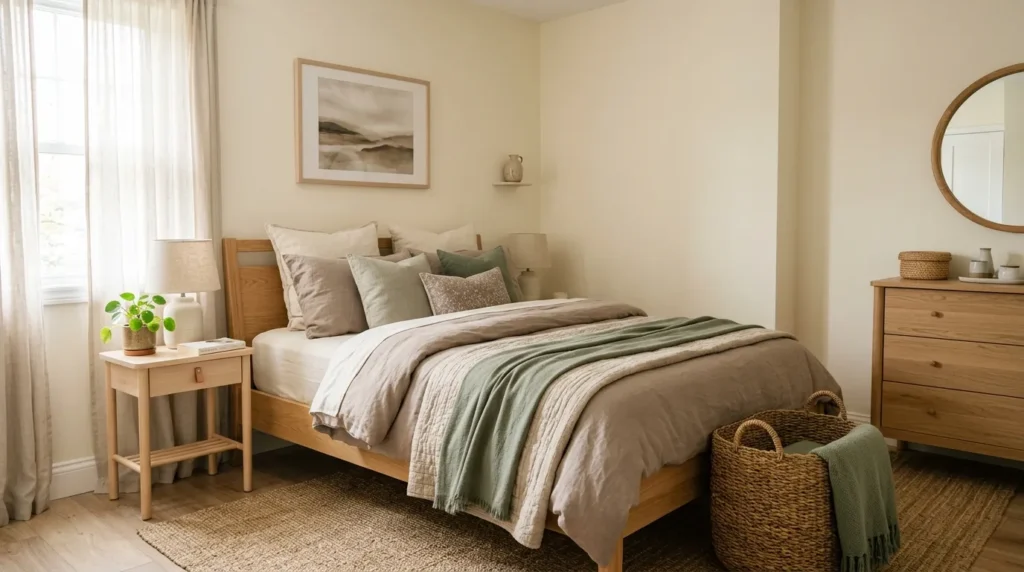
Color has a strong effect on the perceived atmosphere of a bedroom. Soft neutrals and muted tones can create a calm environment without requiring the room to be completely white.
Warm beige, creamy white, dusty blue, muted green, soft taupe, and gentle blush tones can all work beautifully.
How To Style It
Choose one dominant color, then add one or two supporting shades. Repeat those colors through bedding, curtains, artwork, and accessories.
If you love stronger colors, use them in smaller accents rather than covering every surface. This preserves a sense of visual calm.
6. Create Window Softness
Quick Benefits
- Adds privacy
- Softens hard lines
- Controls natural light
- Makes the room feel finished
- Adds fabric and texture
Why It Works
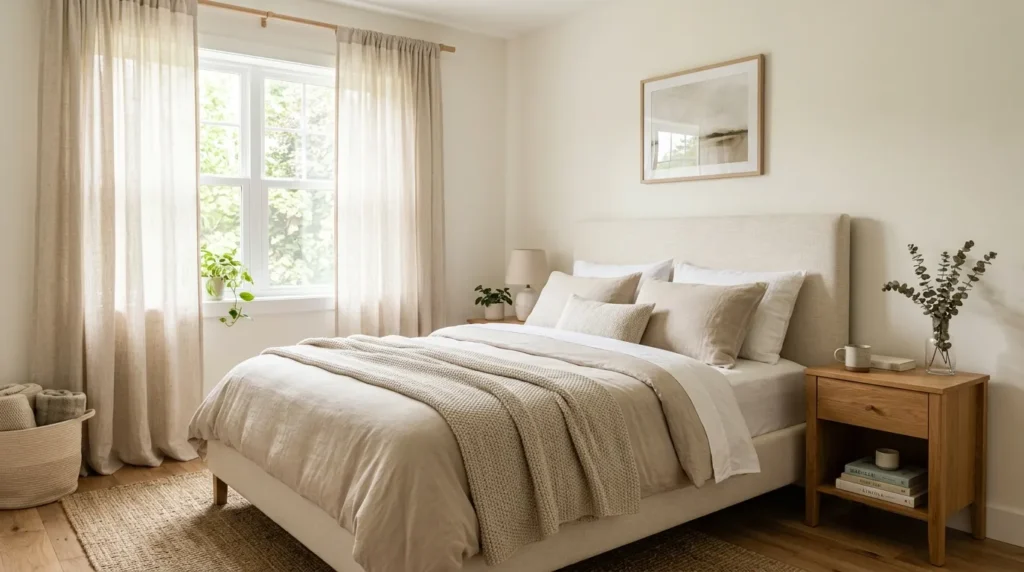
Windows are an important part of a small bedroom because natural light can dramatically influence how spacious and comfortable the room feels. Curtains can soften the window while providing privacy and light control.
They can also add a vertical element that draws the eye upward.
How To Style It
Choose curtains that complement your wall and bedding colors. Lightweight fabrics can preserve natural light, while lined curtains provide stronger light control when needed.
Mount curtain hardware appropriately and, when the room allows, position curtains so they frame the window rather than covering most of the glass when open.
7. Keep Floors Open
Quick Benefits
- Improves movement
- Makes the room feel calmer
- Simplifies cleaning
- Reduces visual clutter
- Makes furniture easier to appreciate
Why It Works
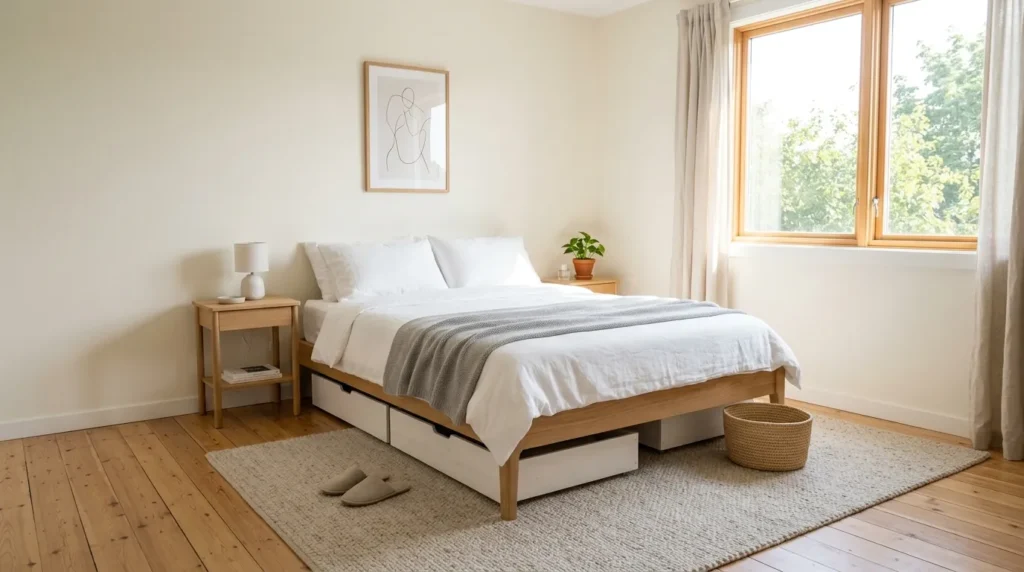
In a small bedroom, the visible floor area has a major influence on how spacious the room feels. Too many baskets, stools, storage boxes, and decorative objects on the floor can make even a well-organized space feel crowded.
Keeping the floor relatively clear creates visual breathing room.
How To Style It
Use wall-mounted shelves, under-bed storage, hooks, and furniture with integrated storage when possible.
Keep only essential floor pieces, such as a rug, compact chair, or small basket. If an item isn’t serving a useful purpose, consider moving it elsewhere.
8. Add Personal Details
Quick Benefits
- Makes the room feel like home
- Adds personality
- Creates emotional comfort
- Prevents the space from feeling generic
- Works on any budget
Why It Works
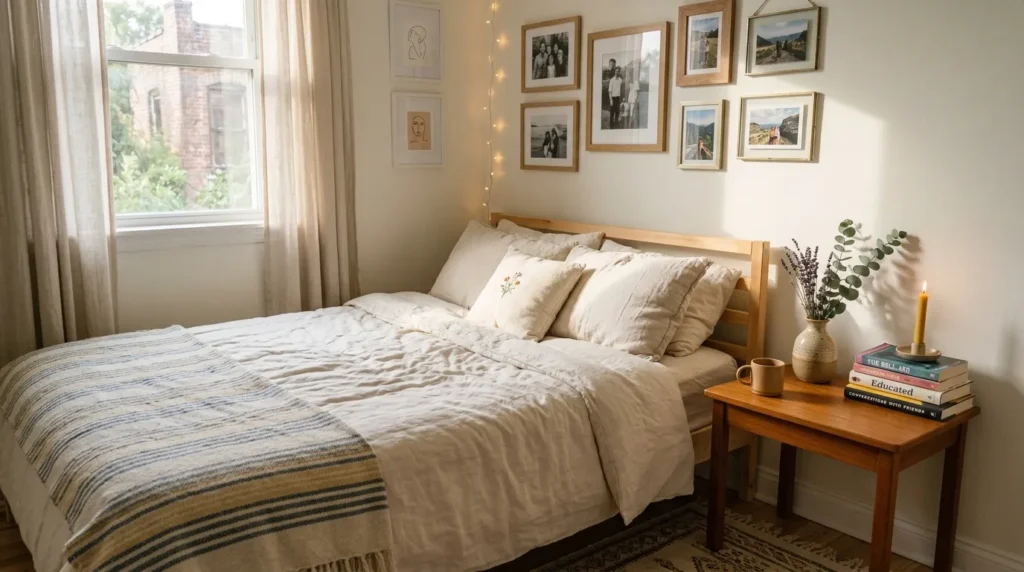
A comfortable bedroom should feel personal, not like a staged model room. Meaningful artwork, photographs, books, collected objects, and favorite colors can make the space feel familiar and welcoming.
The trick is selecting a few meaningful pieces rather than displaying everything you own.
How To Style It
Choose artwork that makes you happy, display a few favorite photographs, or place meaningful objects on a nightstand or shelf.
Keep the display edited. In a small bedroom, three thoughtfully chosen objects can often make a stronger impression than a crowded collection.
9. Create Smart Storage
Quick Benefits
- Reduces clutter
- Keeps essentials accessible
- Makes cleaning easier
- Preserves floor space
- Improves everyday function
Why It Works
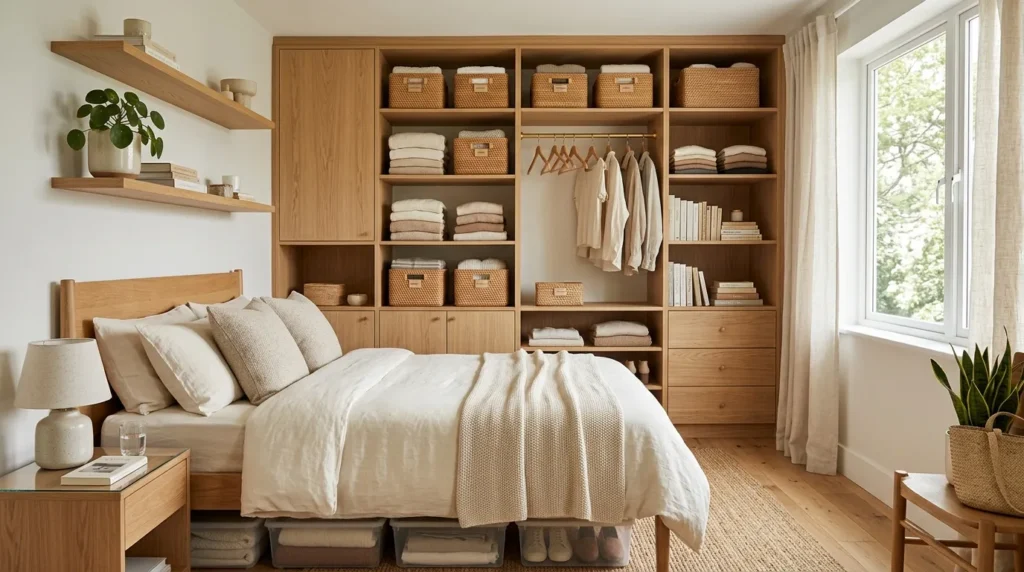
Comfort is difficult to maintain when clothing, books, electronics, and miscellaneous belongings are constantly visible. Good storage helps create the calm background that allows cozy elements to stand out.
In a small room, storage needs to work vertically and horizontally.
How To Style It
Use under-bed containers for seasonal belongings, floating shelves for books, baskets for blankets, and drawer organizers for smaller items.
Before buying additional storage, declutter what you no longer use. The less you need to store, the easier it becomes to maintain an organized bedroom.
10. Build a Relaxing Nook
Quick Benefits
- Creates another comfort zone
- Uses awkward space
- Adds personality
- Encourages relaxation
- Makes the bedroom more functional
Why It Works
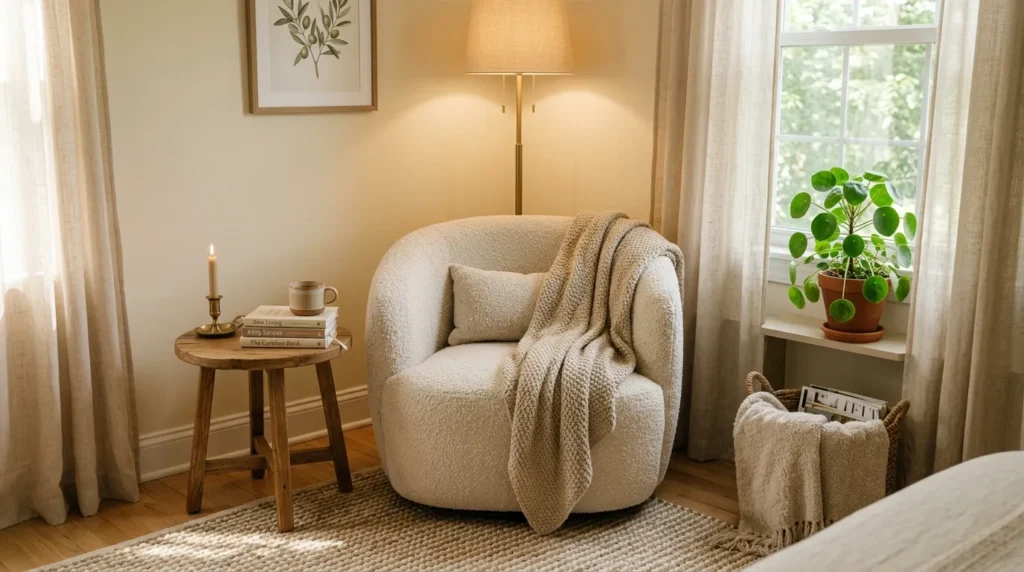
If your bedroom has even a small unused corner, turning it into a dedicated relaxation zone can make the room feel more intentional. It doesn’t need to be a full reading room.
A compact chair, floor cushion, small stool, or narrow bench can create a place to sit that isn’t the bed.
How To Style It
Choose furniture that fits comfortably without obstructing the main walking path. Add a small table, soft throw, or floor lamp if space allows.
Keep the area visually simple. The goal is to create a peaceful little retreat, not another place to accumulate belongings.
Frequently Asked Questions
How can I make a small bedroom feel cozy?
Layer comfortable bedding, add warm lighting, introduce soft textures, choose calming colors, and keep clutter under control. Appropriately sized furniture and a relatively clear floor can also make the room feel more comfortable and easier to use.
What colors make a small bedroom feel cozy?
Warm whites, cream, beige, taupe, muted green, dusty blue, and soft earthy shades can create a cozy atmosphere. Warm neutrals are particularly versatile because they work well with wood and natural textiles.
How do I make a small bedroom comfortable without buying new furniture?
Start by rearranging the existing layout. Remove unnecessary pieces, move furniture away from blocked pathways, layer existing bedding, change lighting, add a throw, and create a more organized bedside area. Small changes can make the room feel noticeably different.
What type of lighting is best for a cozy bedroom?
Layered lighting is generally more comfortable than relying on one bright overhead fixture. Bedside lamps, wall lights, floor lamps, and other suitable warm-toned sources can create softer illumination for relaxing and reading.
How do I make a small bedroom feel less cluttered?
Use vertical storage, under-bed storage, multifunctional furniture, and baskets while reducing items you don’t regularly use. Keep surfaces and floors relatively clear so the room has visual breathing space.
Should I use a rug in a small bedroom?
Yes. A properly sized rug can add warmth and texture while making the bed area feel more comfortable. Choose a size that fits the room and doesn’t interfere with doors or walking paths.
Conclusion
Making a small bedroom more comfortable isn’t about squeezing more furniture into the room. It’s about choosing the right elements and creating a space that supports rest, relaxation, and everyday routines.
Start with the bed because it naturally becomes the center of the room. Make it comfortable with breathable bedding and layered textures, then use warm lighting to create a softer atmosphere. From there, consider the furniture scale, storage, window treatments, and color palette.
Keep the floor and major surfaces relatively clear. This doesn’t mean your bedroom needs to be minimalist; it simply gives the room enough breathing space to feel calm rather than crowded.
Finally, add personal touches that make the room yours. A favorite photograph, a meaningful book, a soft throw, or a small piece of artwork can provide emotional comfort without taking up much space.
You don’t need a larger bedroom to create a better retreat. With thoughtful furniture choices, cozy textures, smart storage, and gentle lighting, even a compact bedroom can become one of the most inviting rooms in your home.
Related Articles
- 10 Small Bedroom Ideas That Feel Spacious
- 10 Cozy Bedroom Ideas for a Relaxing Retreat
- 10 Modern Bedroom Ideas with Cozy Layers
- 10 Bedroom Storage Ideas for Small Spaces
- 10 Bedroom Wall Decor Ideas with Floating Shelves