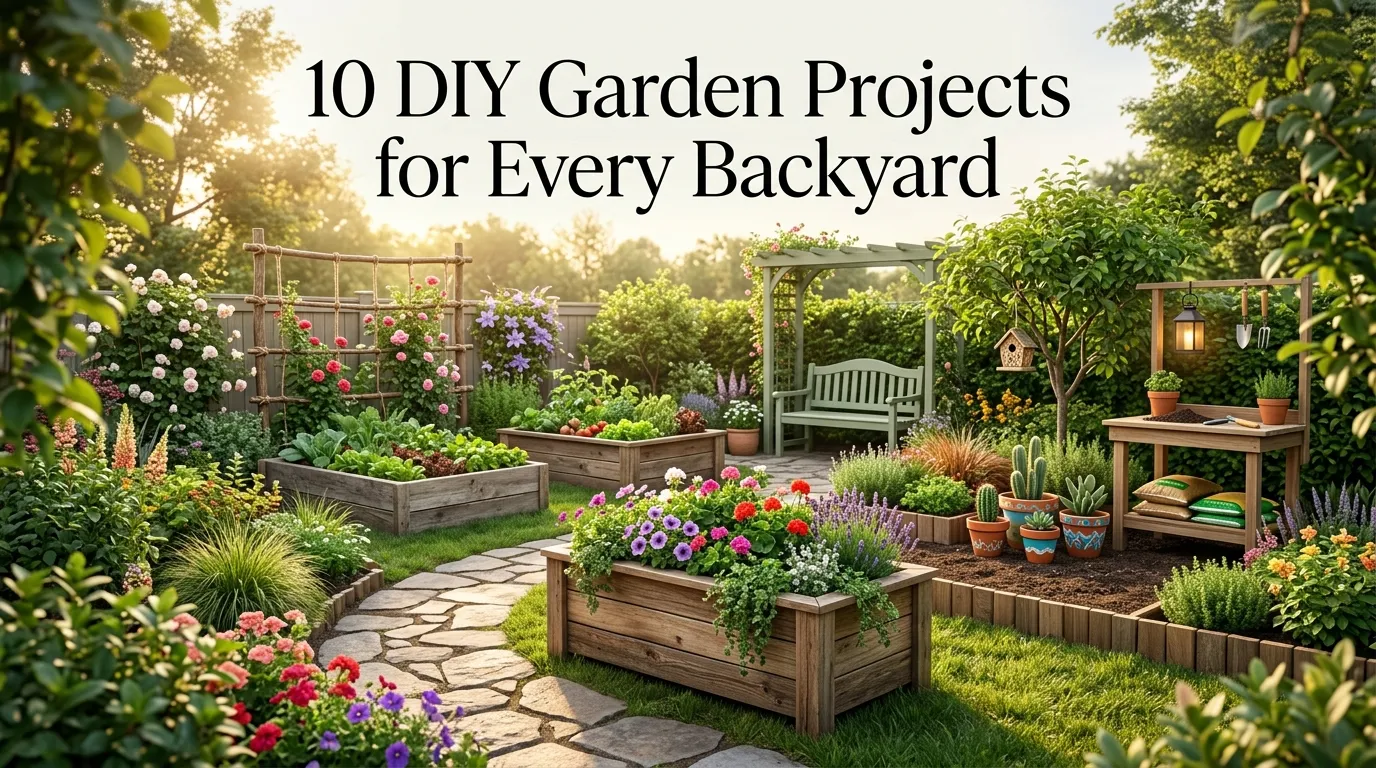
10 DIY Garden Projects for Every Backyard
A backyard doesn’t need an expensive landscaping plan to feel beautiful and inviting. Some of the most charming outdoor spaces are built gradually with simple DIY projects that add function, personality, and a little creativity.
Whether you have a large suburban yard, a compact patio garden, or a small patch of grass behind a townhouse, there are plenty of ways to make the space feel more intentional. The best projects are those that solve a real problem while also making the garden more enjoyable to use.
In my experience, starting with one practical project is often better than attempting a complete backyard makeover. A raised planter can make growing vegetables easier, a simple trellis can turn a blank wall into a living backdrop, and a dedicated potting station can keep gardening supplies organized.
You also don’t need advanced woodworking skills for every project. Many garden upgrades can be created using readily available materials, repurposed items, basic hand tools, and a little patience. Before beginning, always choose materials appropriate for outdoor exposure and check local requirements for structures, fire features, drainage, and permanent installations.
These DIY garden projects are designed to work across a variety of backyard styles and sizes. Some focus on growing plants, while others create organization, privacy, seating, or visual interest.
Choose the project that solves your biggest backyard challenge first, then build from there.
Table of Contents
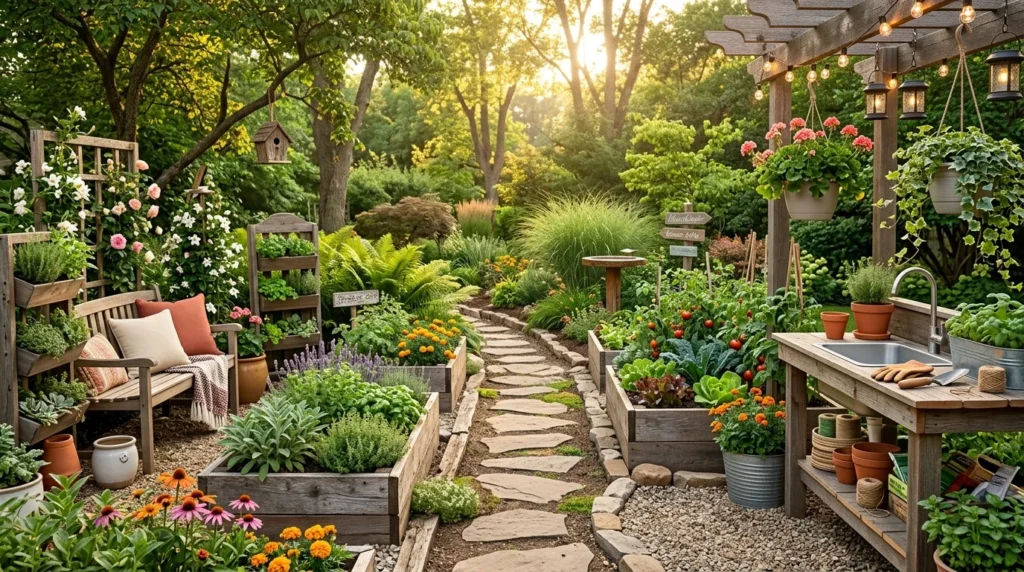
1. Raised Garden Beds
Create an organized space for growing plants.
2. DIY Garden Trellis
Give climbing plants a beautiful structure.
3. Container Herb Garden
Grow useful herbs in compact spaces.
4. Backyard Potting Bench
Create a dedicated gardening workstation.
5. Garden Stepping Stones
Add structure to outdoor pathways.
6. Vertical Plant Wall
Make unused walls productive.
7. DIY Garden Seating
Create a comfortable outdoor resting spot.
8. Upcycled Planters
Give old materials a second life.
9. Simple Compost Station
Turn suitable organic waste into garden resources.
10. Garden Tool Organizer
Keep essential gardening tools accessible.
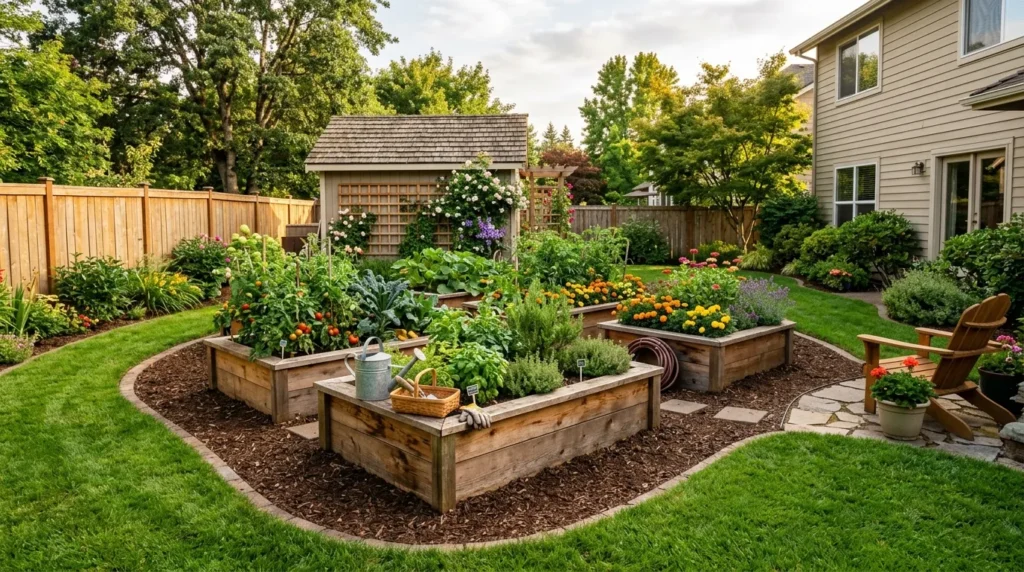
1. Raised Garden Beds
Quick Benefits
- Creates organized planting areas
- Makes gardening easier to manage
- Separates crops from lawn
- Improves visual structure
- Works in many backyard sizes
Why It Works
Raised garden beds can make a backyard feel more organized while providing a dedicated growing area for vegetables, herbs, flowers, or other suitable plants. They’re particularly useful when the existing soil isn’t ideal for the plants you want to grow.
A defined bed also makes it easier to separate gardening from lawn maintenance.
How To Style It
Build the bed from outdoor-appropriate materials such as untreated naturally durable wood or another material designed for garden use. Keep the dimensions manageable so you can reach the center without stepping into the soil.
Position beds where plants receive the sunlight they need. Fill them with an appropriate growing medium and organize plants according to their mature size and growing requirements.
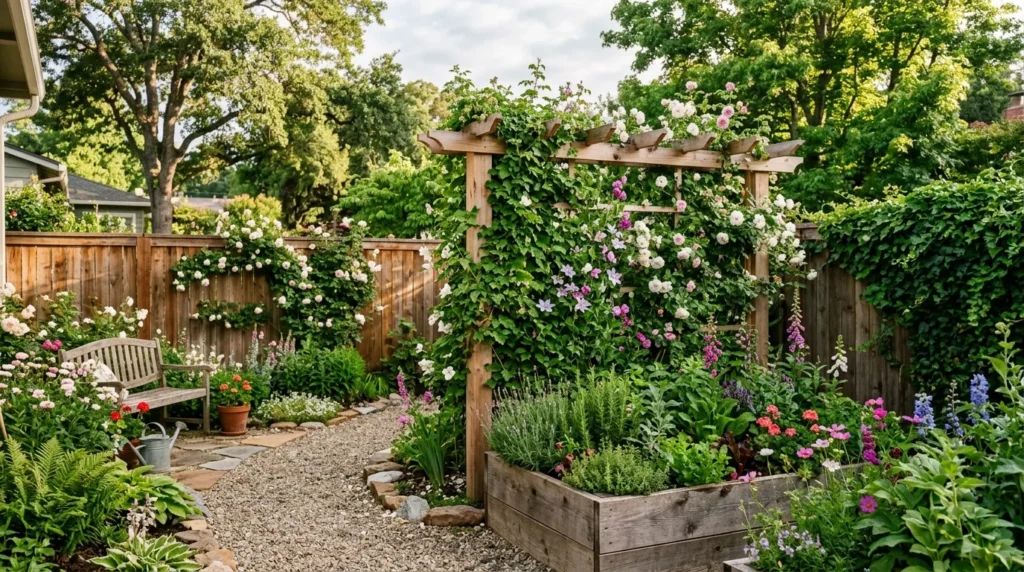
2. DIY Garden Trellis
Quick Benefits
- Supports climbing plants
- Adds vertical interest
- Can create privacy
- Uses limited ground space
- Makes blank areas more attractive
Why It Works
A trellis turns vertical space into a gardening opportunity. Climbing flowers, vines, peas, beans, and other suitable plants can use the structure to grow upward instead of spreading across the ground.
A well-placed trellis can also become a visual focal point.
How To Style It
Build a simple trellis using outdoor-rated materials and make sure it is securely anchored. The structure should be appropriate for the mature size and weight of the plants you intend to grow.
Place it against an appropriate wall, along a garden bed, or in another suitable location. Paint or stain compatible materials if desired, or let natural wood weather naturally.
3. Container Herb Garden
Quick Benefits
- Works in small spaces
- Makes herbs easy to access
- Adds greenery
- Can be inexpensive
- Works on patios and balconies
Why It Works
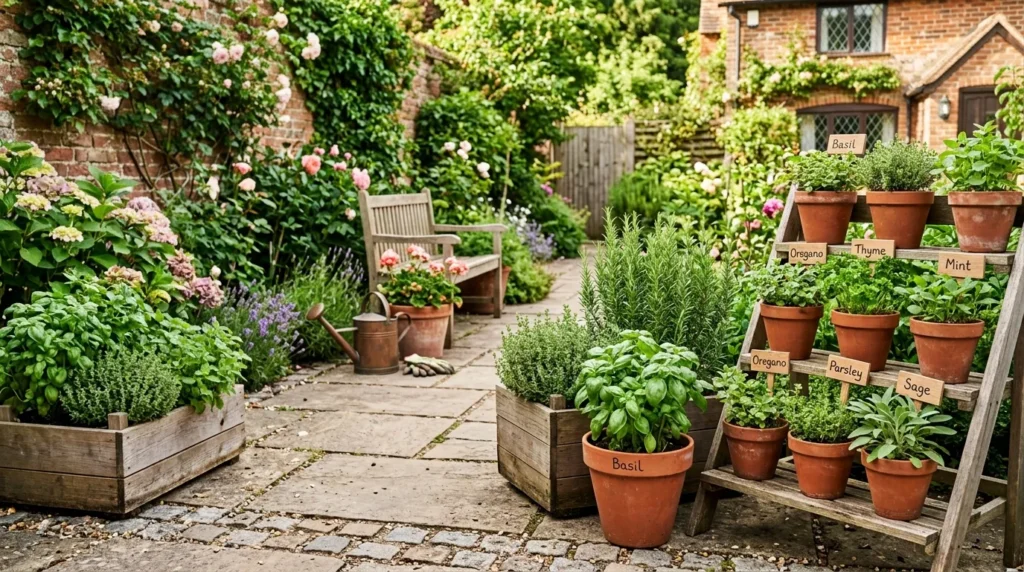
A container herb garden is one of the easiest DIY projects for beginners. You don’t need a large backyard or dedicated garden bed to grow useful herbs.
Keeping herbs near the kitchen can also make them more convenient to harvest.
How To Style It
Choose containers with adequate drainage and match each plant to the appropriate growing conditions. Terracotta pots, wooden planters, galvanized-style containers, or repurposed suitable vessels can create different looks.
Group containers together on a small stand, bench, or designated patio area. Add simple labels if you want an organized garden appearance.
4. Backyard Potting Bench
Quick Benefits
- Creates a gardening workstation
- Organizes supplies
- Saves time
- Adds practical storage
- Can become a decorative feature
Why It Works
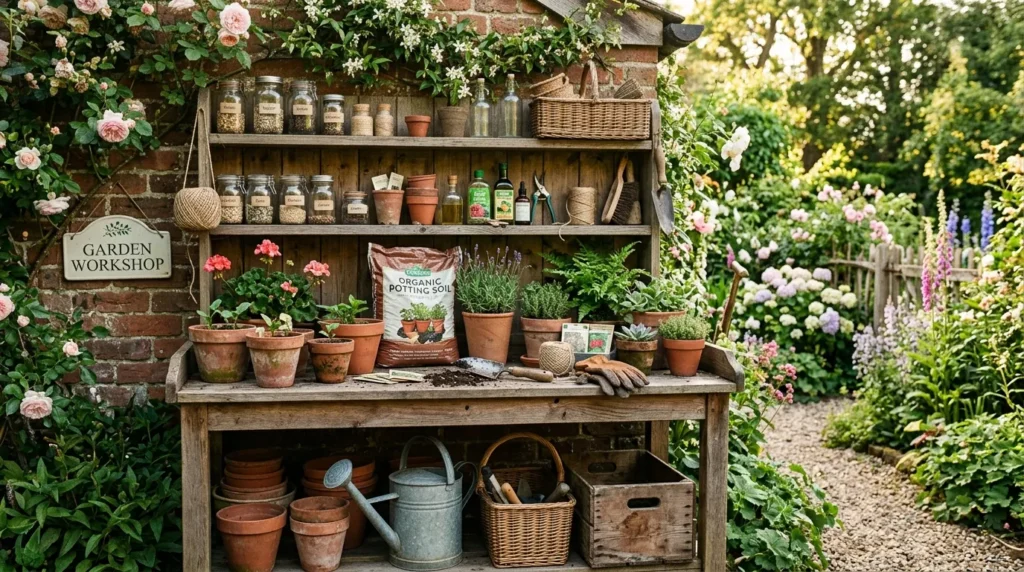
A potting bench gives gardening supplies a dedicated home. Instead of carrying soil, pots, tools, and gloves around the yard, you can keep frequently used items together.
It can also provide a useful surface for repotting plants and preparing containers.
How To Style It
Use a sturdy outdoor-appropriate bench or build one from suitable materials. Add shelves underneath for pots, soil containers, or baskets.
Place the bench somewhere convenient and protected from excessive weather when possible. Keep heavy materials stored securely and avoid overcrowding the workspace.
5. Garden Stepping Stones
Quick Benefits
- Defines walking paths
- Protects garden beds
- Adds visual structure
- Makes the yard easier to navigate
- Can personalize the landscape
Why It Works
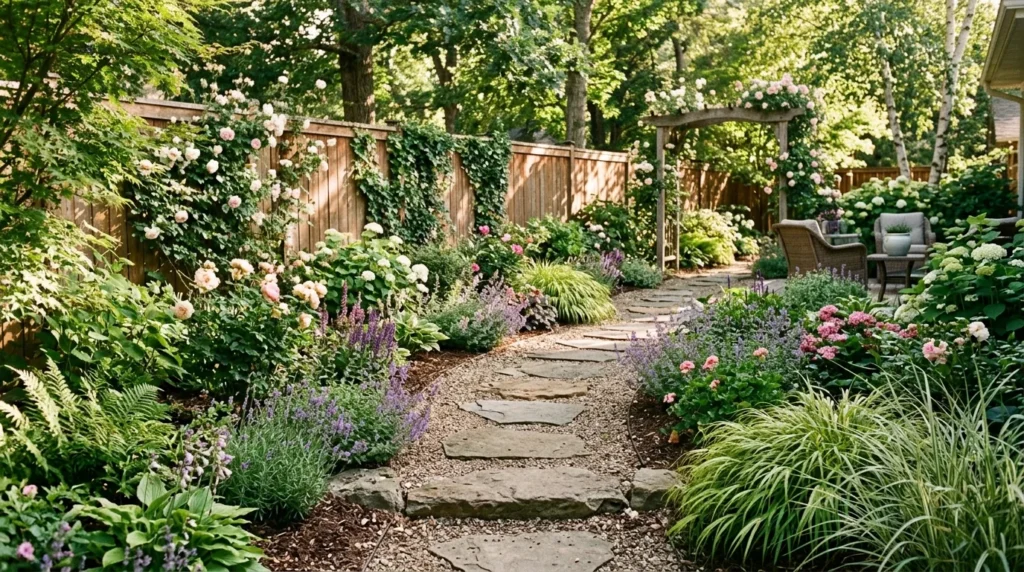
Stepping stones can create a simple pathway through grass or garden beds without requiring a complete paved walkway. They also give the backyard a more intentional layout.
A path can visually connect the patio, garden beds, shed, seating area, or other destinations.
How To Style It
Choose durable outdoor stones or suitable pavers that are appropriate for foot traffic. Arrange them according to a comfortable walking pattern and install them securely on a suitable base.
Consider spacing based on natural walking stride rather than creating a perfectly rigid grid. Surround the stones with gravel, ground cover, mulch, or lawn depending on the design.
6. Vertical Plant Wall
Quick Benefits
- Uses vertical space
- Adds greenery
- Works in compact yards
- Creates a focal point
- Can soften plain walls
Why It Works
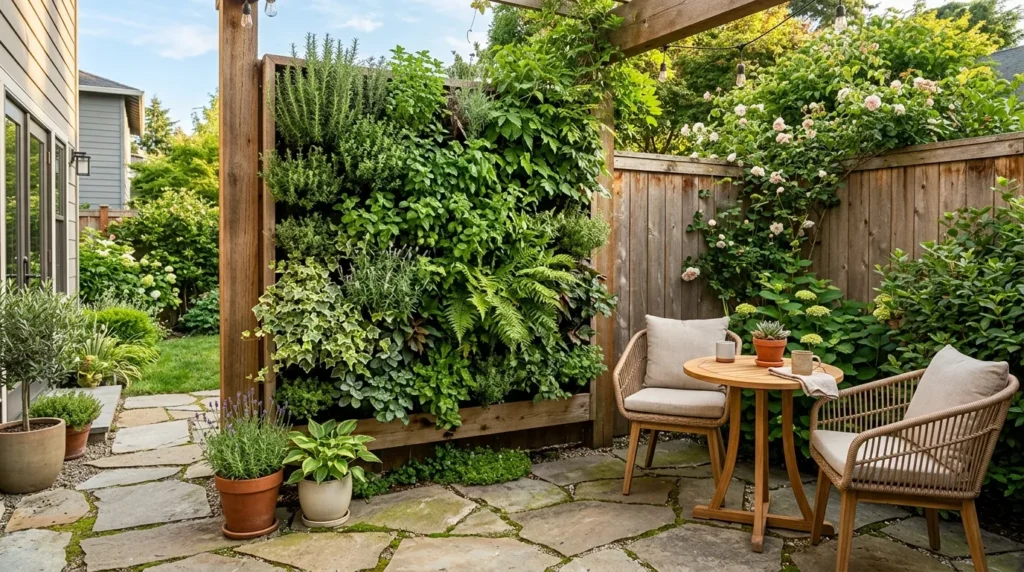
Vertical gardening allows you to add substantial greenery without using much ground space. It’s especially helpful for patios, small backyards, and narrow side yards.
A plant wall can also disguise an unattractive fence or blank exterior surface when appropriate.
How To Style It
Use a sturdy outdoor vertical planter system that can safely support the weight of mature plants and wet growing media. Choose plants according to available sunlight and watering requirements.
Combine several plant heights and textures for a layered appearance. Make sure water drainage is directed appropriately to avoid damaging walls or surfaces.
7. DIY Garden Seating
Quick Benefits
- Creates a place to relax
- Makes the garden more usable
- Adds personality
- Encourages outdoor time
- Can be built around existing materials
Why It Works
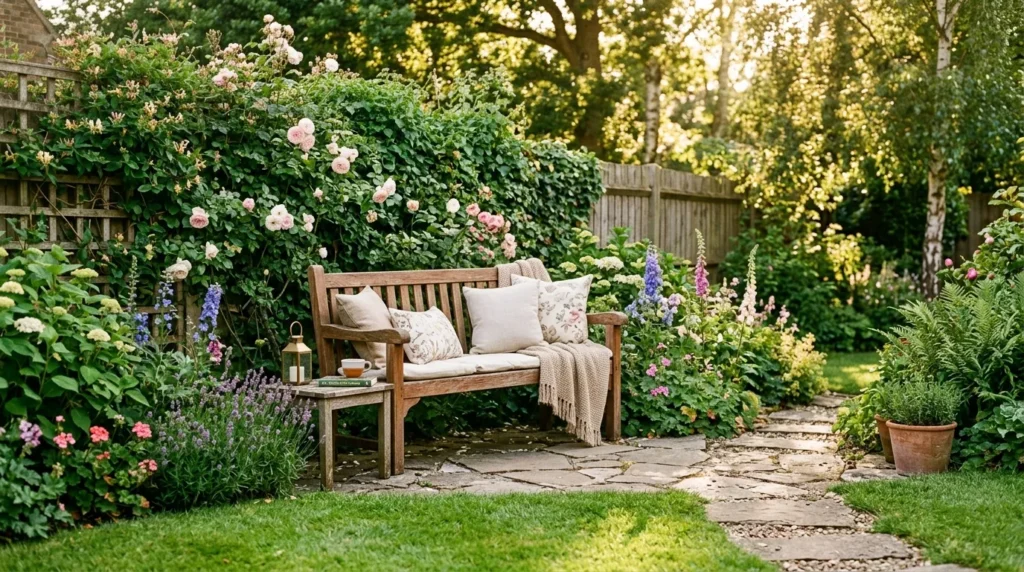
A garden is more enjoyable when you have somewhere comfortable to sit and appreciate it. A simple bench or seating area can transform a garden from something you look at into a space you actively use.
The seating doesn’t need to be elaborate.
How To Style It
Choose weather-appropriate furniture or construct a simple bench from suitable outdoor materials. Position seating near flowers, trees, raised beds, or another attractive garden feature.
Add outdoor cushions if appropriate, but store or secure textiles during severe weather. Leave enough clearance around seating for comfortable access.
8. Upcycled Planters
Quick Benefits
- Gives old items new purpose
- Adds personality
- Can reduce waste
- Creates unique garden décor
- Often inexpensive
Why It Works
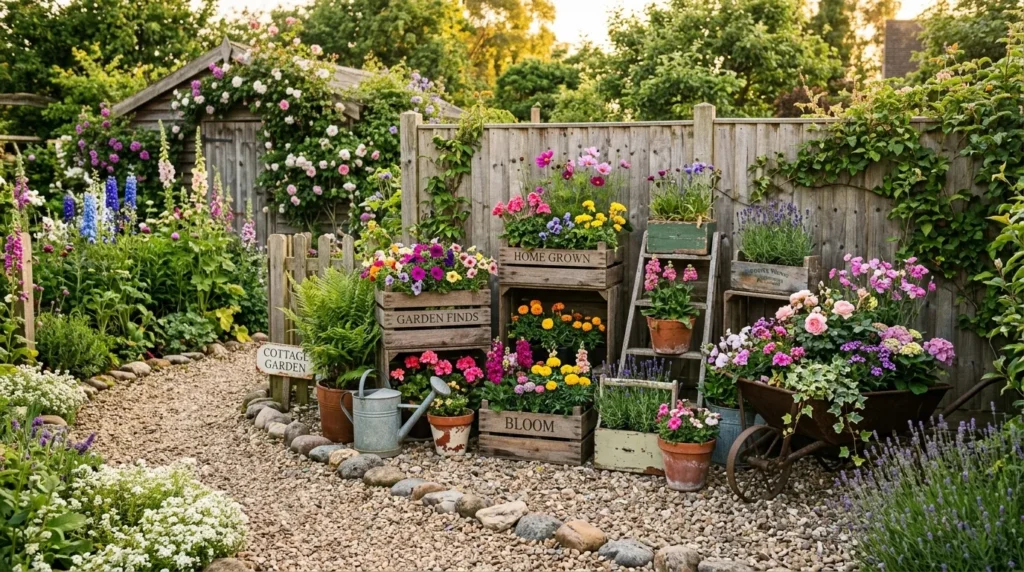
Some of the most memorable gardens use unexpected containers as planters. Old wooden crates, suitable metal containers, reclaimed vessels, or other weather-appropriate objects can become decorative planting features.
Upcycling also allows you to create a garden that feels personal rather than mass-produced.
How To Style It
Only use containers that are safe for their intended planting purpose. Make sure excess water can drain appropriately, and avoid materials that may leach harmful substances into soil.
Group several containers together rather than scattering them randomly. Repeat a color or material to make the collection feel cohesive.
9. Simple Compost Station
Quick Benefits
- Provides a place for suitable organic scraps
- Supports garden maintenance
- Reduces certain household waste
- Creates a dedicated backyard zone
- Can be built simply
Why It Works
A composting area can turn suitable organic material into a useful garden resource while giving the backyard another practical function.
The important part is choosing a composting approach appropriate for your household, climate, available space, and local guidelines.
How To Style It
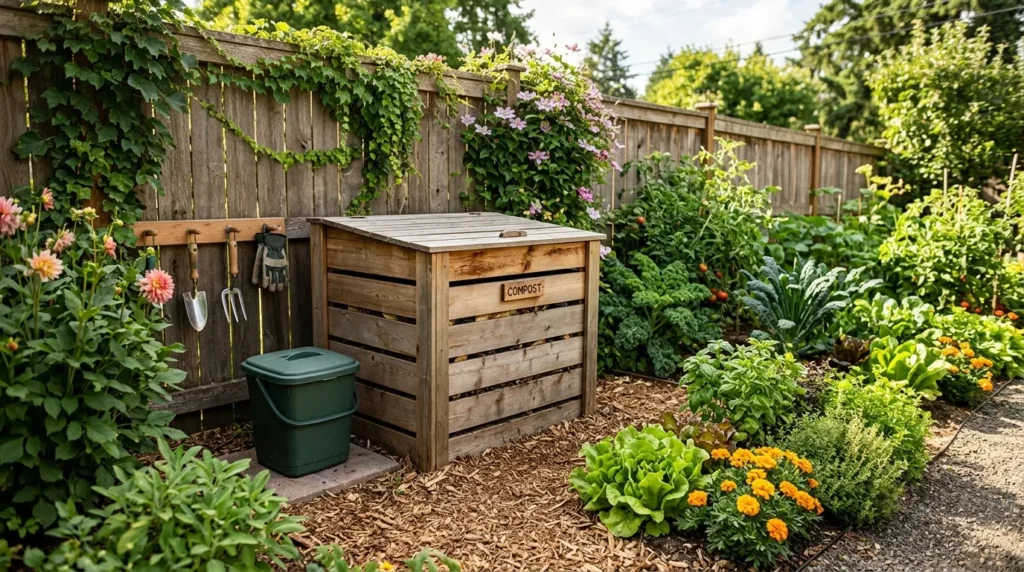
Use a commercially designed compost bin or construct an appropriate enclosure with suitable materials. Position it on a well-drained area that is convenient but not directly against the home.
Learn what materials are suitable for your chosen composting method and maintain the pile according to the system’s requirements. Keep the area tidy with a small covered container for temporary collection.
10. Garden Tool Organizer
Quick Benefits
- Keeps tools accessible
- Reduces clutter
- Protects equipment
- Makes gardening easier
- Uses vertical storage
Why It Works
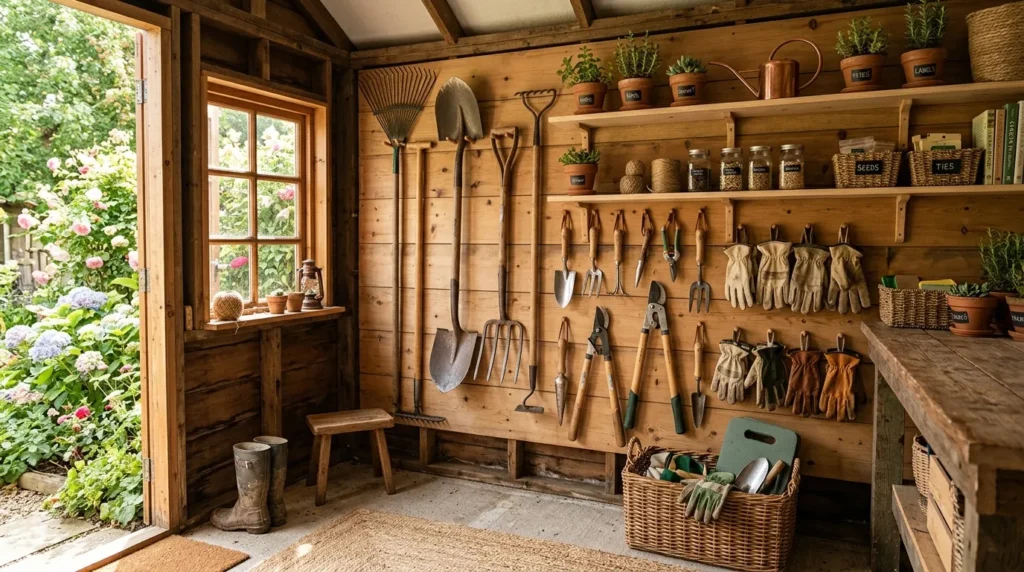
Gardening becomes much more enjoyable when essential tools are easy to find. Instead of leaving shovels, pruners, gloves, and hand tools scattered around the shed or garage, create a dedicated storage area.
Vertical organization is especially helpful because long-handled tools can consume considerable floor space.
How To Style It
Install sturdy hooks, pegboards, or purpose-built storage systems on an appropriate wall. Keep heavy tools securely supported and store sharp tools in a safe position.
Create separate areas for long-handled equipment, hand tools, gloves, and smaller supplies. Labeling can help if multiple family members use the garden.
Frequently Asked Questions
What is the easiest DIY garden project for beginners?
A container herb garden is one of the simplest projects because it requires minimal construction and can be adapted to almost any space. Raised beds, simple planters, and basic garden organization projects are also approachable starting points.
How can I improve my backyard without spending a lot?
Start with projects that use existing materials or inexpensive supplies, such as container gardens, simple stepping stones, repurposed planters, or vertical plant supports. Decluttering and rearranging the existing garden can also create a noticeable improvement at little cost.
What DIY garden projects work in a small backyard?
Vertical planters, trellises, container gardens, compact raised beds, narrow pathways, and small seating areas can work well in limited spaces. Prioritize vertical surfaces and multifunctional features to preserve valuable floor or ground area.
What materials are best for DIY garden projects?
Choose materials based on the project’s purpose and outdoor exposure. Weather-appropriate wood, durable stone, suitable metal, and outdoor-rated hardware are common choices. Always use materials appropriate for contact with soil or plants when building planters.
How do I make a DIY garden look professional?
Use repetition, consistent materials, clear garden zones, and a limited color palette. Align pathways and planting beds thoughtfully, keep tools and supplies organized, and avoid adding too many unrelated decorative elements.
Which DIY garden projects add the most function?
Raised beds, potting benches, tool organizers, compost stations, trellises, and dedicated seating areas provide practical benefits while also improving the appearance and usability of the backyard.
Conclusion
DIY garden projects are a wonderful way to make a backyard feel more useful, personal, and inviting without attempting an expensive landscape overhaul.
Start with the problem you most want to solve. If you’re struggling to grow plants, build a raised bed or container garden. If your yard lacks vertical interest, add a trellis or plant wall. If gardening supplies are scattered everywhere, create a potting bench or tool organization station.
Think about the entire backyard as a collection of functional zones. A garden bed can become a growing area, a stepping-stone path can connect it to a seating space, and a nearby bench can give you a place to enjoy the results.
You also don’t need to complete every project at once. Choose one that fits your available time, skill level, budget, and space, then build on it gradually.
The best DIY gardens aren’t necessarily the most elaborate ones. They’re the spaces that make everyday outdoor life easier and more enjoyable. With a few thoughtful projects, you can create a backyard that feels distinctly yours while giving you more reasons to spend time outside.
Related Articles
- 10 Backyard Landscape Design Ideas for Every Budget
- 10 Garden Decor Ideas That Make Outdoor Spaces Shine
- 10 DIY Backyard Projects for Outdoor Living
- 10 Small Garden Ideas for Limited Spaces
- 10 Backyard Seating Ideas for a Cozy Outdoor Retreat