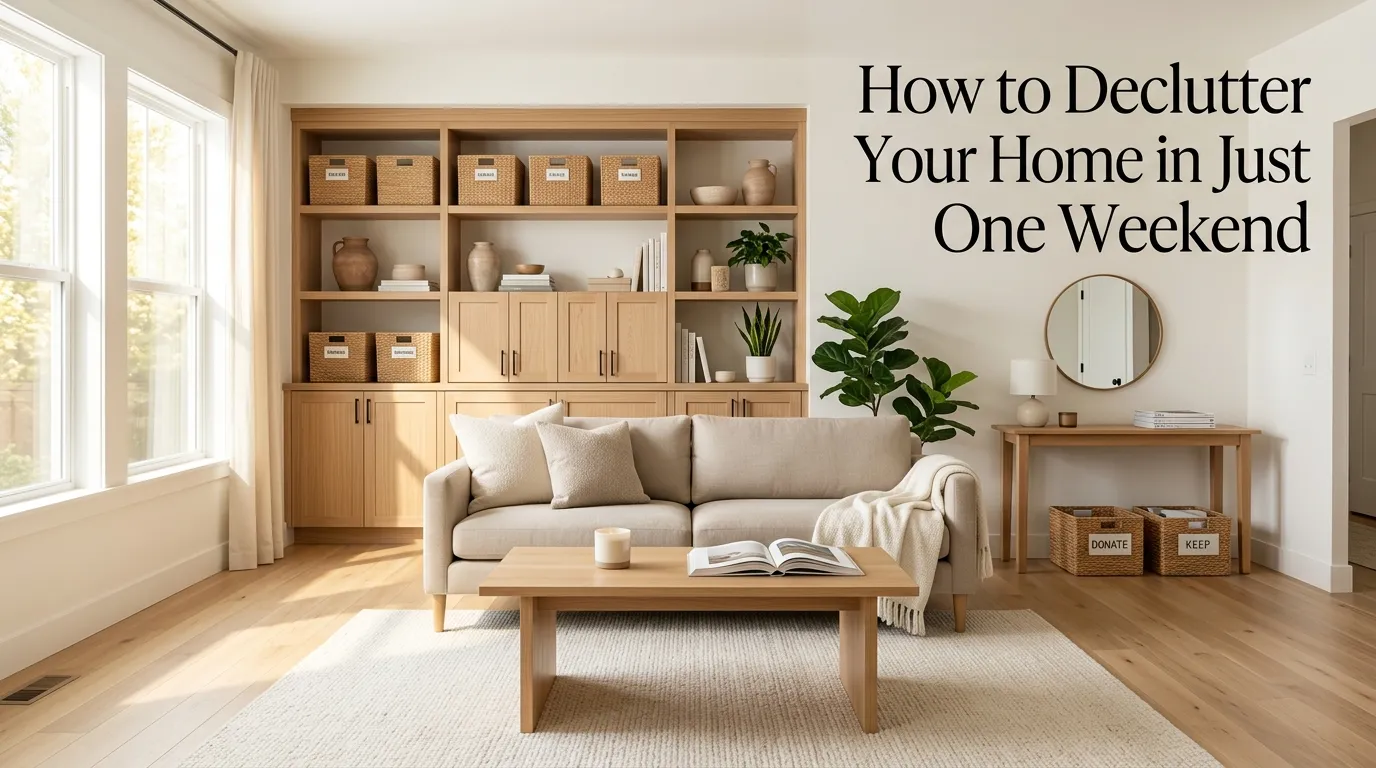
How to Declutter Your Home in Just One Weekend
Decluttering your home doesn’t have to mean spending weeks sorting through every drawer, closet, and cabinet. With a focused weekend plan, you can make a noticeable difference by concentrating on the areas that create the most visible and everyday clutter.
The biggest mistake people make is trying to declutter everything at once. That approach can quickly become exhausting, especially when every room contains belongings that need decisions. A better strategy is to work in manageable zones, make quick decisions, and keep the process moving.
I’ve found that the most satisfying decluttering projects begin with a simple rule: make your home easier to live in, not perfectly empty. The goal isn’t to remove everything you don’t use. It’s to create breathing room and make frequently used spaces easier to clean, organize, and enjoy.
A weekend is enough to tackle the most important areas if you prepare beforehand. Start by gathering bags and boxes, deciding where donations will go, and choosing a realistic stopping point. Then work through the home systematically rather than jumping between rooms.
This guide walks you through a practical weekend decluttering plan, including what to tackle first, how to make faster decisions, what to do with unwanted items, and how to keep clutter from returning.
Table of Contents
1. Set Weekend Goals
Create a realistic plan before you begin.
2. Gather Your Supplies
Prepare everything you’ll need for sorting.
3. Start With Surfaces
Clear the clutter you see every day.
4. Tackle the Kitchen
Remove unused and duplicate items.
5. Simplify Closets
Create more usable wardrobe space.
6. Organize Living Areas
Make everyday spaces easier to use.
7. Sort Sentimental Items
Handle emotional belongings thoughtfully.
8. Create Donation Stations
Keep unwanted belongings moving out.
9. Finish With Storage
Give remaining essentials a home.
10. Build Daily Habits
Prevent clutter from returning.
1. Set Weekend Goals
Quick Benefits
- Prevents overwhelm
- Keeps the project focused
- Creates measurable progress
- Saves time
- Makes decisions easier
Why It Works
Decluttering becomes much easier when you know exactly what you want to accomplish. Instead of saying, “I’m going to declutter the house,” choose specific goals such as clearing the kitchen counters, editing one closet, organizing the entryway, and removing unused bathroom products.
A focused plan gives you a finish line. It also prevents you from spending the entire weekend on one complicated drawer while ignoring areas that would make a bigger difference to everyday life.
How To Style It
Before starting, walk through your home and identify the spaces that bother you most. Write down three to five priority zones.
Break the weekend into sessions rather than working continuously. For example, spend Saturday morning on visible living areas and the kitchen, Saturday afternoon on closets and bedrooms, then reserve Sunday for bathrooms, storage, donations, and finishing touches.
2. Gather Your Supplies
Quick Benefits
- Keeps the process moving
- Prevents unnecessary interruptions
- Makes sorting easier
- Creates clear categories
- Reduces decision fatigue
Why It Works
Having supplies ready before you start means you won’t constantly stop to search for boxes, bags, labels, or cleaning materials. Decluttering is largely a decision-making process, so anything that interrupts your momentum can make the project feel harder.
You don’t need expensive organizing products. Basic containers and sturdy bags are usually enough to begin.
How To Style It
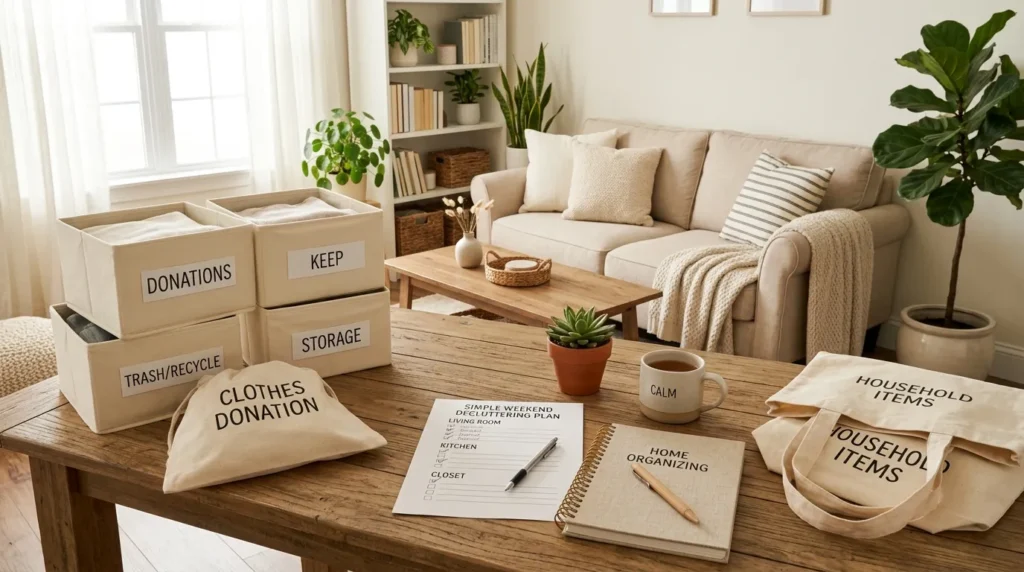
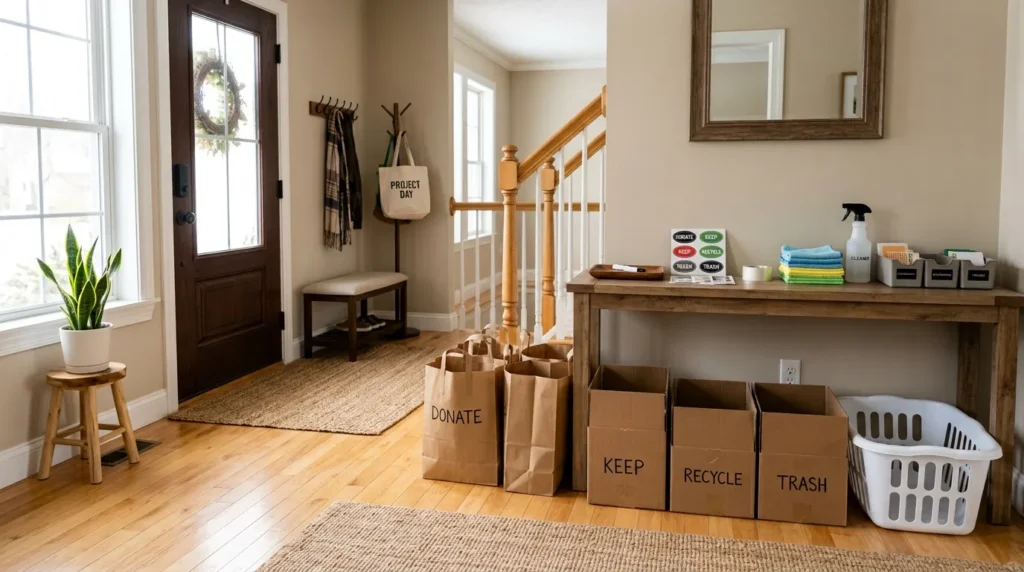
Gather trash bags, donation bags, boxes, labels, a marker, cleaning cloths, and a laundry basket or large bin for items that belong elsewhere.
Create simple categories such as Keep, Donate, Trash, and Relocate. If you’re unsure about selling something, create a separate category, but give yourself a deadline so the “sell” pile doesn’t become permanent storage.
3. Start With Surfaces
Quick Benefits
- Creates immediate visual improvement
- Makes rooms feel calmer
- Builds motivation
- Makes cleaning easier
- Provides quick wins
Why It Works
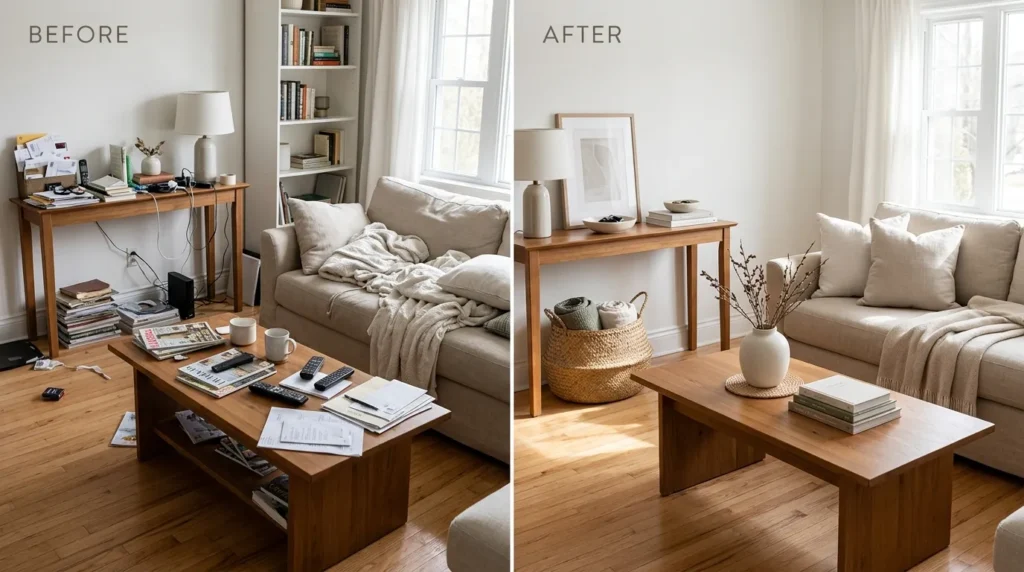
Visible clutter has an outsized effect on how a home feels. Kitchen counters, coffee tables, entryway consoles, bathroom counters, and bedside tables are often filled with items that don’t need to remain there.
Clearing these surfaces first gives you an immediate sense of progress and makes the rest of the weekend feel more manageable.
How To Style It
Choose one room and clear its visible surfaces completely. Put misplaced belongings into your relocate basket instead of walking around the house returning individual items.
Once a surface is empty, clean it before deciding what should return. Keep only the items you genuinely use or enjoy seeing.
A tray can help group everyday essentials without allowing them to spread across the entire surface.
4. Tackle the Kitchen
Quick Benefits
- Creates more usable workspace
- Removes duplicates
- Makes cooking easier
- Improves cabinet access
- Reduces visual clutter
Why It Works
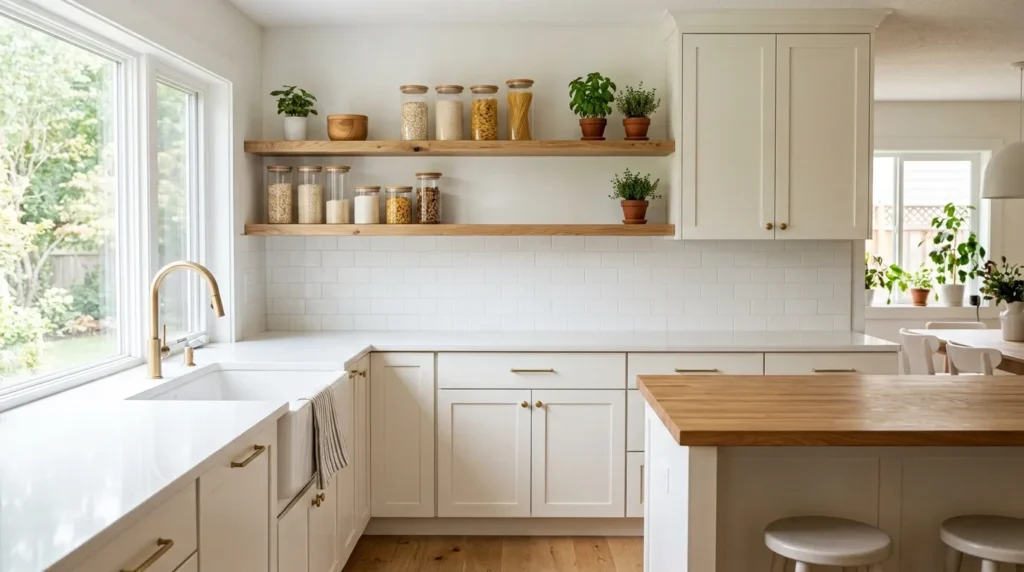
Kitchens tend to accumulate duplicates, rarely used gadgets, mismatched containers, expired pantry items, and appliances that seemed useful when purchased but rarely leave the cabinet.
Decluttering the kitchen can make everyday routines noticeably easier because frequently used items become easier to reach.
How To Style It
Start with one category rather than emptying every cabinet. Work through mugs, food containers, utensils, cookware, pantry goods, or small appliances separately.
Ask yourself whether you use the item, whether you have duplicates, and whether another item already performs the same job.
Keep frequently used items within easy reach and move occasional-use pieces to less accessible storage.
5. Simplify Closets
Quick Benefits
- Creates breathing room
- Makes clothing easier to find
- Reduces morning decisions
- Improves organization
- Makes storage more efficient
Why It Works
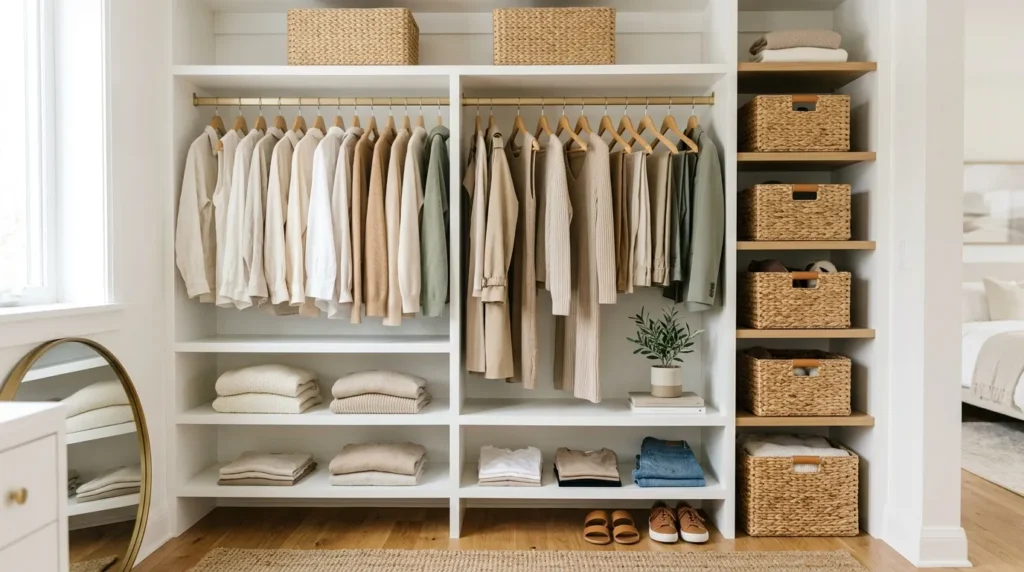
A packed closet can make it feel as though you have nothing to wear while owning far more clothing than you actually use. Removing pieces that no longer fit your lifestyle creates space for the clothes you genuinely enjoy.
You don’t need to create a minimalist wardrobe. The goal is simply to make the closet functional.
How To Style It
Pull out clothing that no longer fits, is damaged beyond reasonable repair, hasn’t been worn in a long time, or doesn’t suit your current lifestyle.
Group similar categories together and keep frequently worn pieces easy to access. Use consistent hangers if you already have them, but don’t feel that buying new organizing products is necessary before you’ve reduced the volume.
6. Organize Living Areas
Quick Benefits
- Improves relaxation
- Creates clearer surfaces
- Makes cleaning easier
- Reduces misplaced items
- Makes rooms feel larger
Why It Works
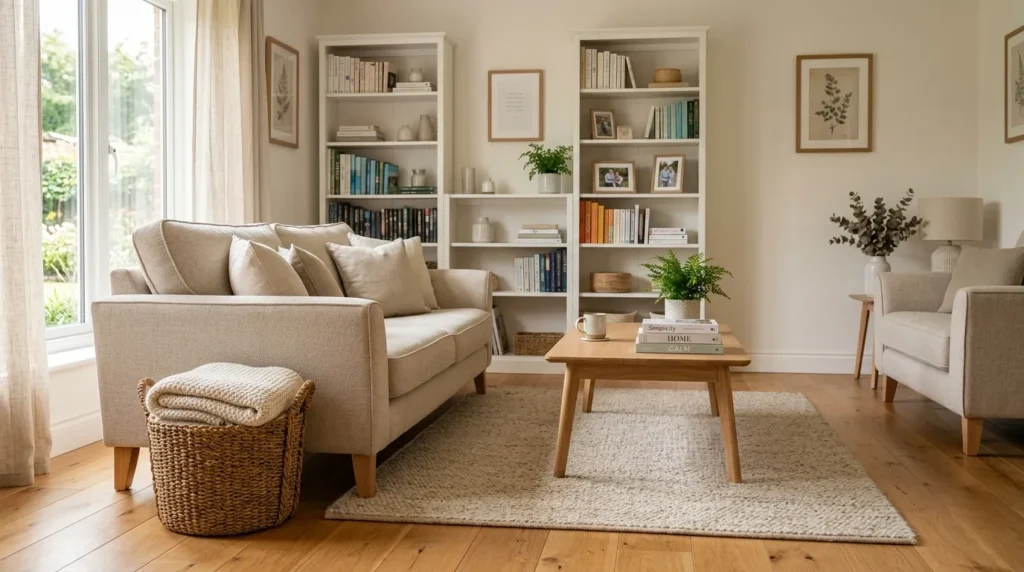
Living rooms often become collection points for belongings from every part of the home. Books, mail, toys, blankets, electronics, shoes, and miscellaneous objects can gradually take over tables and seating areas.
The solution isn’t necessarily more storage. Often, the first step is reducing what doesn’t belong there.
How To Style It
Give every common category a designated location. Use a basket for throws, a drawer or container for remotes, and a defined shelf for frequently used books.
Avoid filling empty shelves simply because there is available space. Leaving some visual breathing room can make the room feel calmer.
7. Sort Sentimental Items
Quick Benefits
- Reduces emotional clutter
- Preserves meaningful memories
- Prevents unnecessary guilt
- Creates manageable collections
- Makes storage easier
Why It Works
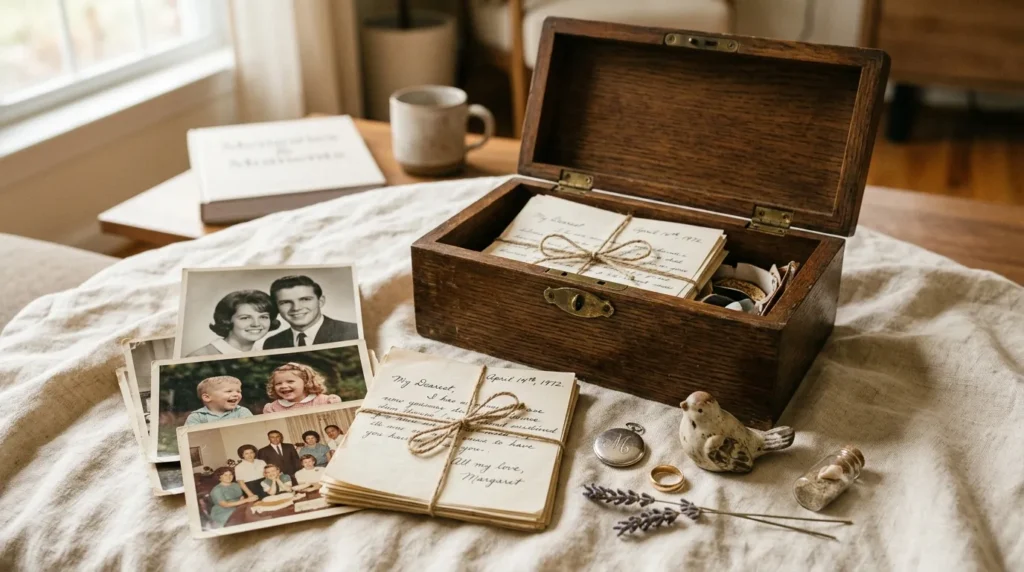
Sentimental belongings require a different approach. Throwing everything away quickly may create regret, while keeping every item can make storage overwhelming.
Instead, focus on preserving the memories that matter most rather than keeping every physical object connected to them.
How To Style It
Create one dedicated container or storage area for sentimental belongings. Keep items that genuinely bring back meaningful memories and consider photographing larger objects that you don’t have room to store.
If you’re uncertain about an item, set it aside rather than making an emotional decision in the middle of a busy decluttering session. You can revisit it later with a clearer perspective.
8. Create Donation Stations
Quick Benefits
- Prevents unwanted items from returning
- Keeps categories organized
- Makes removal easier
- Reduces clutter quickly
- Creates a clear finish line
Why It Works
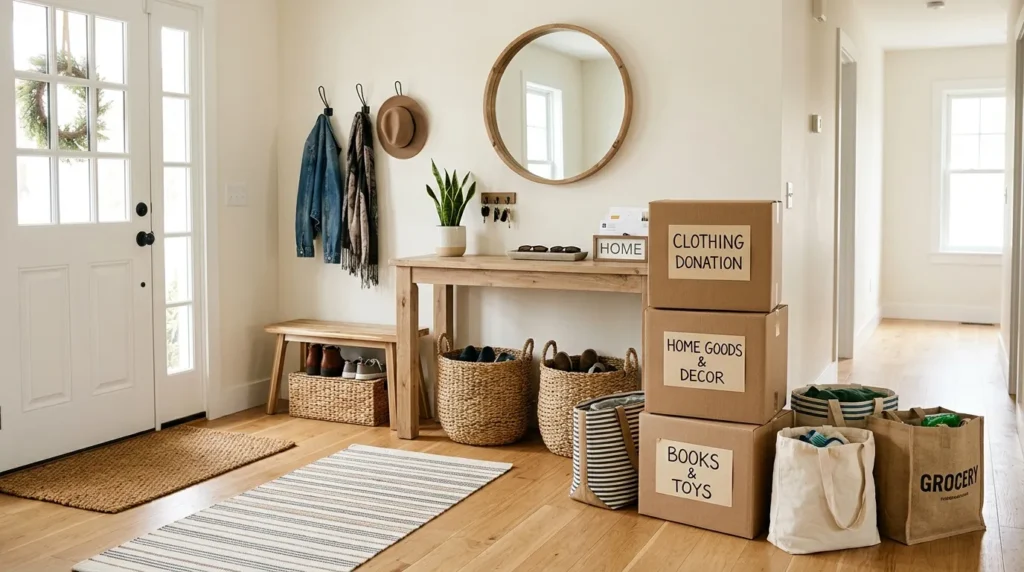
Decluttering isn’t finished when items leave a drawer. The unwanted belongings still need to leave the house. If donation bags sit in a hallway for weeks, they can become part of the clutter again.
Creating a clear exit system keeps the process moving.
How To Style It
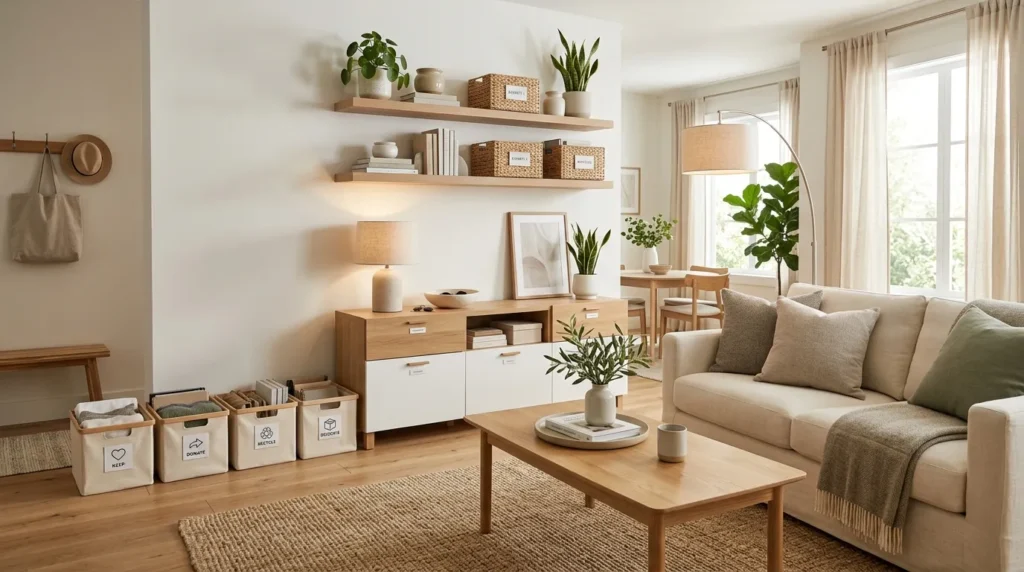
Place sturdy bags or boxes near the area where you’re working. Label them clearly and avoid mixing donations with household items you intend to keep.
At the end of each decluttering session, move completed donation bags to an appropriate temporary location. Arrange a donation drop-off or pickup as soon as practical.
9. Finish With Storage
Quick Benefits
- Gives essentials a home
- Makes rooms easier to maintain
- Prevents piles from returning
- Improves everyday function
- Creates visual calm
Why It Works
Storage should come after decluttering, not before. Buying containers for everything you own can simply make it easier to keep belongings you don’t actually need.
Once you’ve reduced the volume, you can see what storage is genuinely necessary.
How To Style It
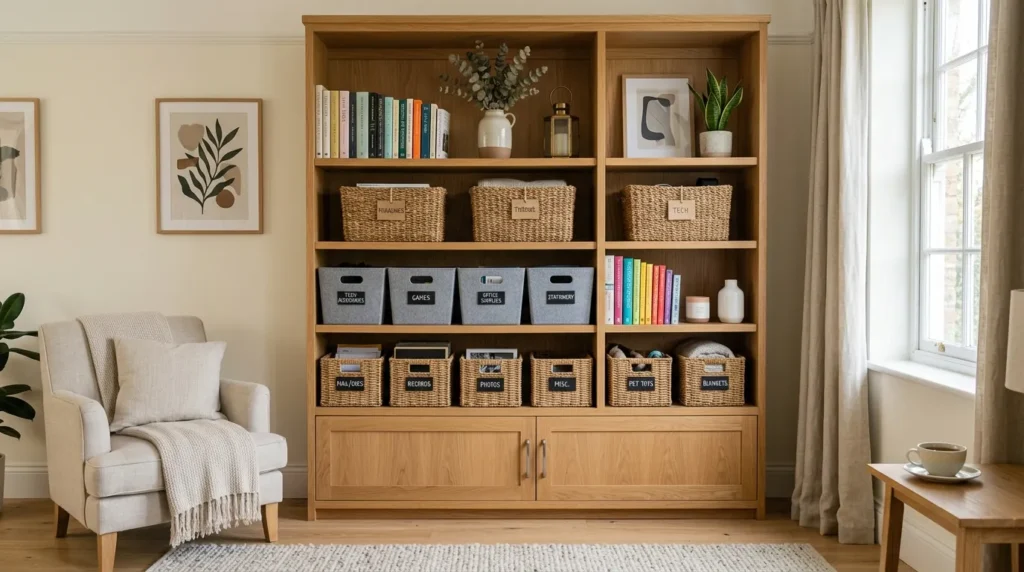
Group remaining belongings by how they’re used. Everyday items should be easy to access, while seasonal or occasional belongings can go into less accessible areas.
Use baskets, bins, drawers, shelves, or existing furniture based on what you already own. Label containers only when labels will genuinely make finding things easier.
10. Build Daily Habits
Quick Benefits
- Keeps clutter under control
- Reduces future cleaning
- Makes organization easier
- Creates sustainable routines
- Protects your weekend work
Why It Works
A successful decluttering weekend should make your home easier to maintain afterward. Without a few simple habits, surfaces and storage areas can gradually return to their previous state.
You don’t need an elaborate cleaning routine. Small daily resets can make a major difference.
How To Style It
Choose a few habits that fit naturally into your day. Return items after using them, clear the kitchen counter before bed, process incoming mail regularly, and spend a few minutes resetting the living room each evening.
For new purchases, consider using a simple “one in, one out” approach when appropriate. If something new replaces an older item, decide whether the older piece still deserves space.
Frequently Asked Questions
Can I really declutter my home in one weekend?
Yes, if your goal is meaningful improvement rather than completely transforming every storage area. Focus on high-impact rooms and visible clutter first. A weekend can make a significant difference, while more complicated storage areas can be handled later.
What should I declutter first?
Start with areas that affect your everyday experience the most. Kitchen counters, living room surfaces, entryways, bathroom counters, and frequently used closets are often good starting points because improvements are immediately noticeable.
How do I decide what to get rid of?
Consider whether you use the item, whether it works, whether you have duplicates, whether it fits your current lifestyle, and whether you would choose to bring it into your home again today. Sentimental belongings may require a slower decision.
Should I sell or donate unwanted items?
That depends on the item’s condition, value, and how much time you’re willing to spend. Selling can make sense for valuable items, while donating may be more practical for everyday belongings. Avoid allowing a large “to sell” pile to become permanent clutter.
How do I declutter when my family doesn’t want to get rid of things?
Focus on your own belongings and shared spaces where you have agreement. Avoid secretly discarding someone else’s possessions. For shared areas, establish simple rules about what needs to be stored, displayed, or removed.
How do I keep my home decluttered?
Create small daily reset habits and regularly remove things that no longer serve a purpose. Keeping surfaces relatively clear, processing incoming items promptly, and being intentional about new purchases can prevent clutter from rebuilding.
Conclusion
A decluttering weekend doesn’t need to produce a perfectly minimalist home. The real goal is to create a house that feels easier to live in.
Start with the areas you see and use most often. Clear visible surfaces, simplify the kitchen, edit your closet, organize living spaces, and create a clear exit path for donations and trash. These changes can make your home feel noticeably lighter without requiring you to spend weeks sorting every possession.
Don’t rush sentimental decisions, and don’t buy a mountain of storage containers before you’ve reduced what you own. Decluttering works best when you remove unnecessary belongings first and organize what’s left second.
Once the weekend is over, protect your progress with small habits rather than another huge organizing project. A few minutes of daily resetting can keep counters clearer, belongings easier to find, and rooms more enjoyable.
You don’t have to finish everything in one weekend. Choose the spaces that will make the biggest difference, start there, and let the momentum carry you forward. A calmer home often begins with just one cleared surface and one simple decision.
Related Articles
- 10 Easy Home Organization Ideas for Busy Families
- 10 Small Space Storage Ideas That Actually Work
- 10 Closet Organization Ideas for a Clutter-Free Home
- 10 Kitchen Organization Ideas for Everyday Living
- 10 Living Room Organization Ideas for a Tidy Home