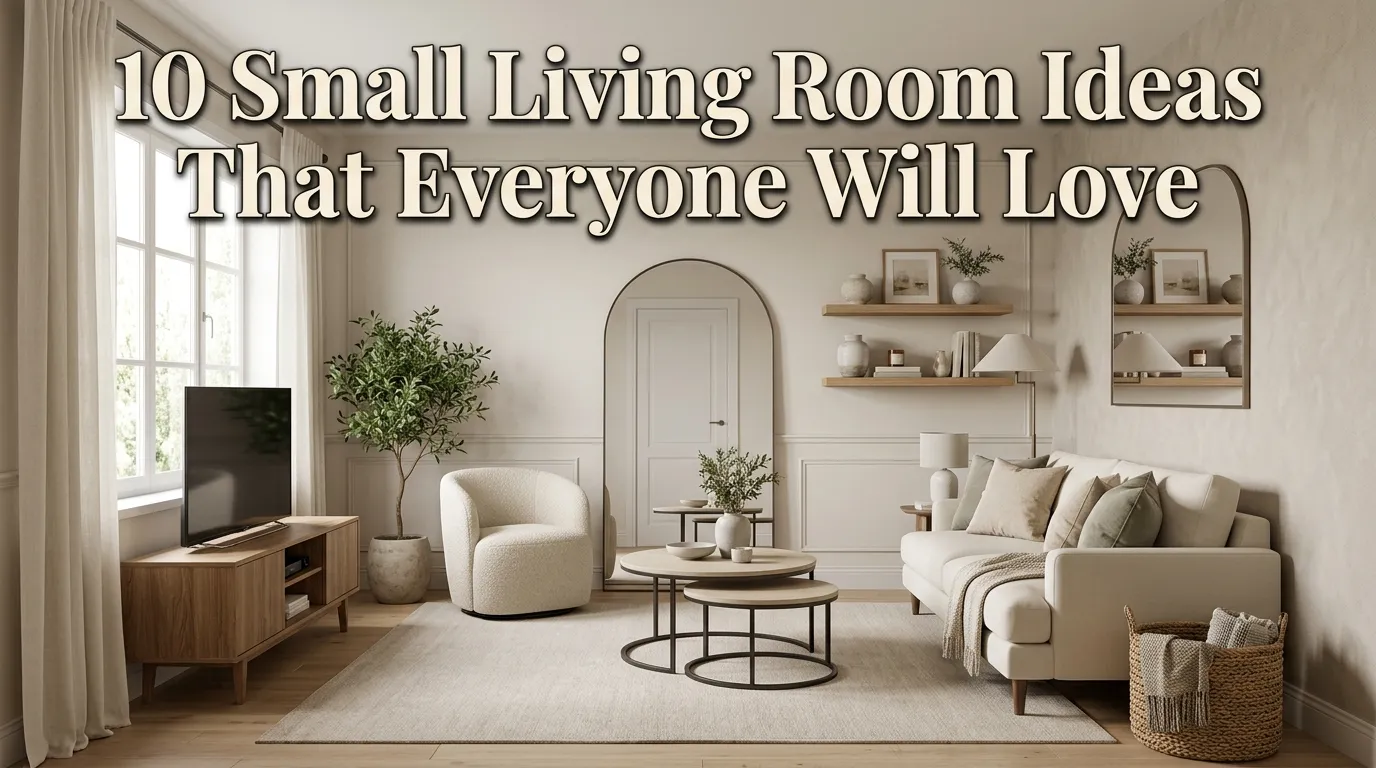
10 Small Living Room Ideas That Everyone Will Love
A small living room can be one of the coziest spaces in a home when every piece is chosen with intention. Limited square footage doesn’t mean you have to sacrifice comfort, personality, or style. In fact, a smaller room can feel especially inviting when the furniture, colors, lighting, and decorative details work together.
The challenge is finding the right balance. Too much furniture can make the room feel cramped, while too little can leave it looking unfinished. I’ve noticed that the most successful small living rooms usually rely on a few simple principles: choosing appropriately scaled furniture, keeping walkways clear, using vertical space, and adding layers of texture without overwhelming the room.
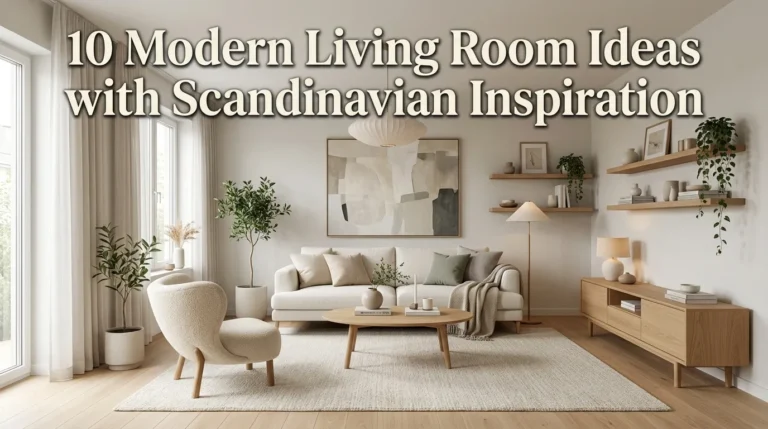
Whether you’re decorating an apartment, townhouse, starter home, or a compact family room, there are plenty of ways to make the space feel larger and more comfortable. A light color palette can visually open the room, while strategically placed mirrors can bounce natural light around the space. Storage ottomans, nesting tables, and slim-profile furniture can also make everyday living much easier.
In this guide, you’ll find ten practical and stylish ideas for making a small living room feel comfortable, functional, and beautiful. From clever furniture arrangements to cozy textures and smart storage, these ideas can work with modern, farmhouse, traditional, or transitional decorating styles.
Table of Contents
1. Light Neutral Palette
Create an airy foundation with soft colors.
2. Slim Profile Sofa
Save valuable floor space without sacrificing comfort.
3. Large Area Rug
Visually connect the seating arrangement.
4. Wall Mounted Storage
Keep belongings organized without using floor space.
5. Statement Mirror
Reflect light and create a sense of depth.
6. Layered Lighting
Make the room feel warm and inviting.
7. Multiuse Furniture
Combine comfort with practical functionality.
8. Vertical Decor
Draw the eye upward to make ceilings feel taller.
9. Cozy Window Seat
Turn an unused area into useful seating.
10. Simple Styling
Create a polished look without visual clutter.
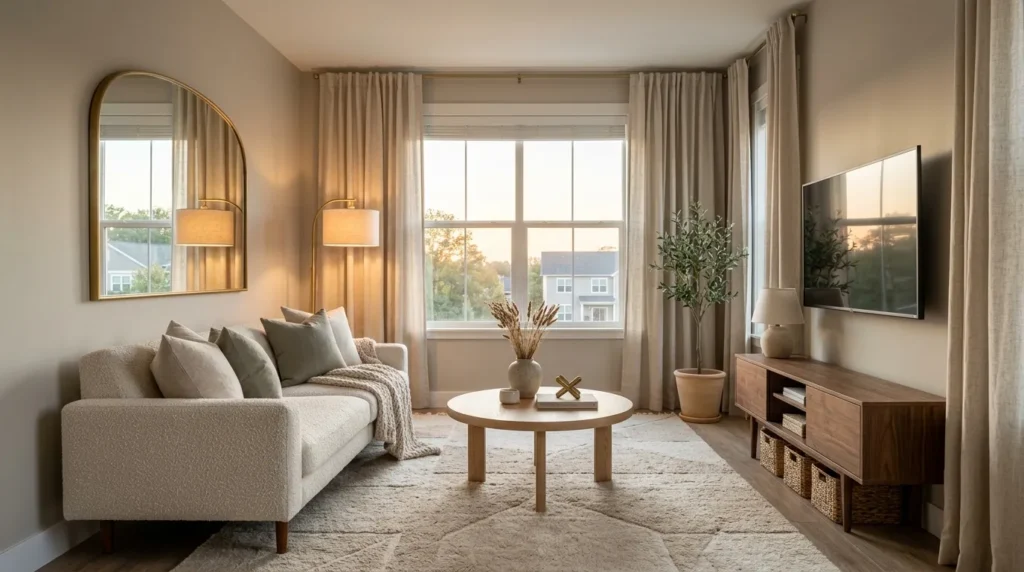
1. Light Neutral Palette
Quick Benefits
- Makes the room feel brighter
- Creates an airy atmosphere
- Visually expands the space
- Works with many decorating styles
- Provides a versatile foundation
Why It Works
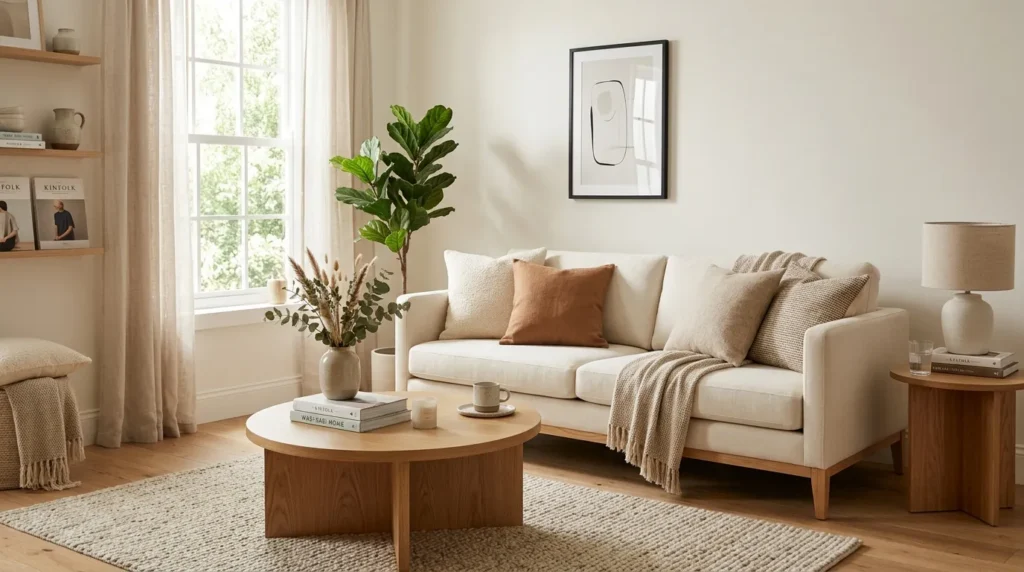
Light colors can make a compact living room feel more open by reflecting available natural and artificial light. Warm white, ivory, beige, soft taupe, and pale greige are particularly useful because they add brightness without making the room feel cold. Keeping larger surfaces within a similar tonal family also creates visual continuity, helping the room feel less divided.
In my experience, warm neutrals are especially effective in small family living rooms because they provide a relaxed backdrop for furniture and accessories. They also make it easy to introduce color through pillows, artwork, plants, and seasonal décor without overwhelming the space.
How To Style It
Start with warm white or light beige walls, then choose a sofa and curtains in closely related neutral shades. Add a cream or natural-fiber area rug to reinforce the palette.
Introduce subtle contrast through natural wood, woven baskets, black accents, or muted greenery. Rather than making every item exactly the same color, use several shades of the same neutral family to create depth and warmth.
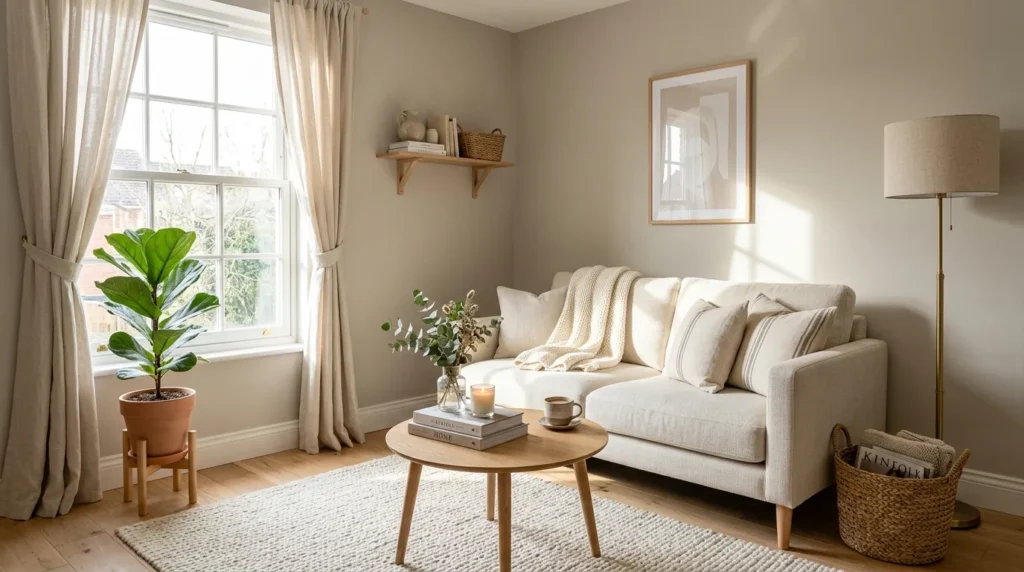
2. Slim Profile Sofa
Quick Benefits
- Frees up floor space
- Makes movement easier
- Keeps the room visually open
- Provides comfortable seating
- Works well in apartments
Why It Works
The sofa usually takes up more visual and physical space than any other piece of furniture in a living room, so choosing the right profile can make a noticeable difference. A sofa with narrower arms, raised legs, and a streamlined frame can provide plenty of seating while allowing more floor to remain visible.
A mistake many homeowners make is choosing oversized furniture because it feels comfortable in the showroom. In a compact room, however, scale matters just as much as comfort. A properly proportioned sofa can actually make the space feel more spacious.
How To Style It
Look for a sofa with slim arms, a moderately deep seat, and visible legs. Place it against the longest practical wall while leaving enough clearance for comfortable walking.
Pair it with one compact accent chair or an upholstered ottoman rather than several bulky chairs. Keep upholstery light and add personality through textured pillows and a cozy throw.
3. Large Area Rug
Quick Benefits
- Defines the seating zone
- Makes furniture feel connected
- Adds warmth and texture
- Creates visual cohesion
- Makes the room feel finished
Why It Works
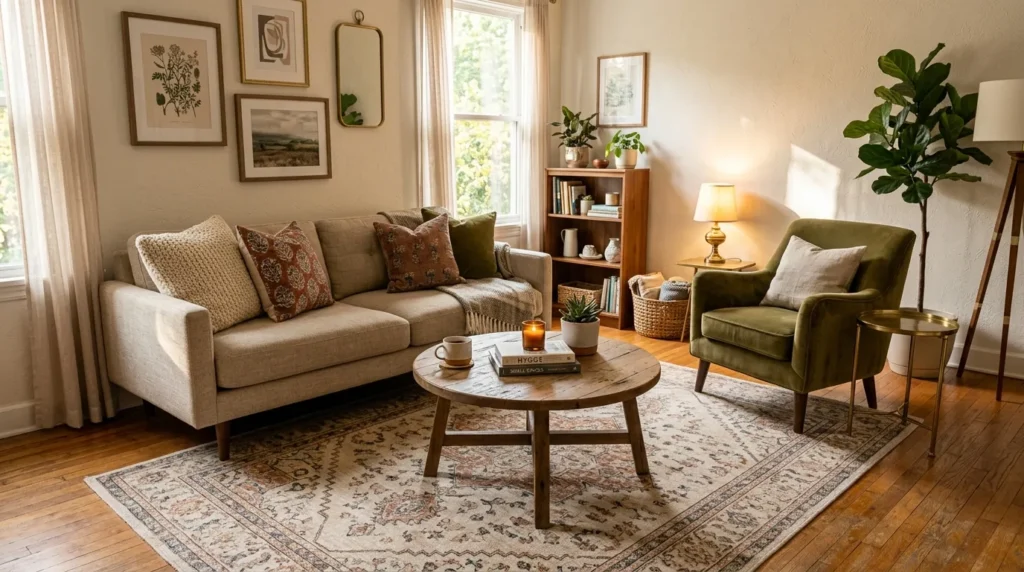
A properly sized area rug can visually unite a small living room instead of making it feel fragmented. When the front legs of the sofa and chairs sit on the rug, the furniture arrangement feels intentional and connected. A rug that is too small can have the opposite effect, making individual pieces appear disconnected.
I’ve noticed that homeowners sometimes avoid larger rugs in small rooms because they assume they will make the space feel smaller. In reality, the right large rug can make the entire seating area feel more cohesive.
How To Style It
Choose a rug large enough to extend beneath at least the front legs of your main seating pieces. Neutral patterns, subtle stripes, vintage-inspired designs, and natural jute textures work especially well.
Keep the rug proportional to the seating arrangement rather than the entire room. Layer a smaller patterned rug over a neutral base if you want additional personality without introducing too many competing colors.
4. Wall Mounted Storage
Quick Benefits
- Saves floor space
- Reduces visual clutter
- Provides practical organization
- Uses overlooked wall space
- Works in small apartments
Why It Works
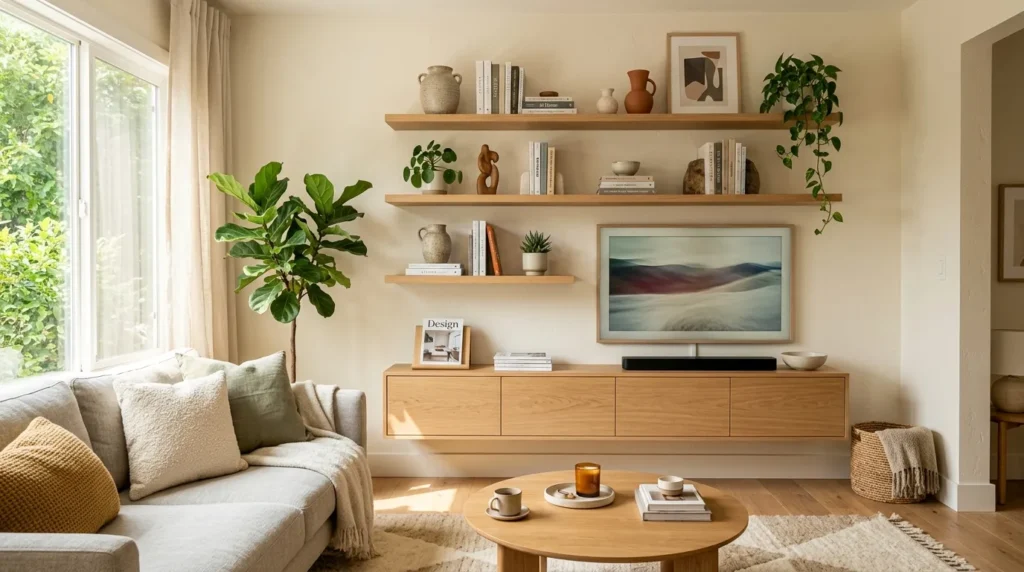
When floor space is limited, walls become valuable real estate. Floating shelves, wall-mounted cabinets, and streamlined media consoles can provide storage without adding bulky furniture to the room. Keeping items elevated also leaves more visible flooring, which can contribute to a lighter, more open appearance.
One simple trick I always suggest is combining closed and open storage. Closed cabinets hide everyday clutter, while a few open shelves provide space for books, artwork, plants, and decorative objects.
How To Style It
Install floating shelves above a sofa, beside a television, or on an otherwise unused wall. Use baskets or attractive boxes to conceal smaller items while leaving selected decorative pieces visible.
Choose wood shelving for warmth or painted shelving for a seamless appearance. Keep displays intentionally edited rather than filling every inch of available space.
5. Statement Mirror
Quick Benefits
- Reflects natural light
- Adds visual depth
- Creates a decorative focal point
- Makes walls feel larger
- Works with many styles
Why It Works
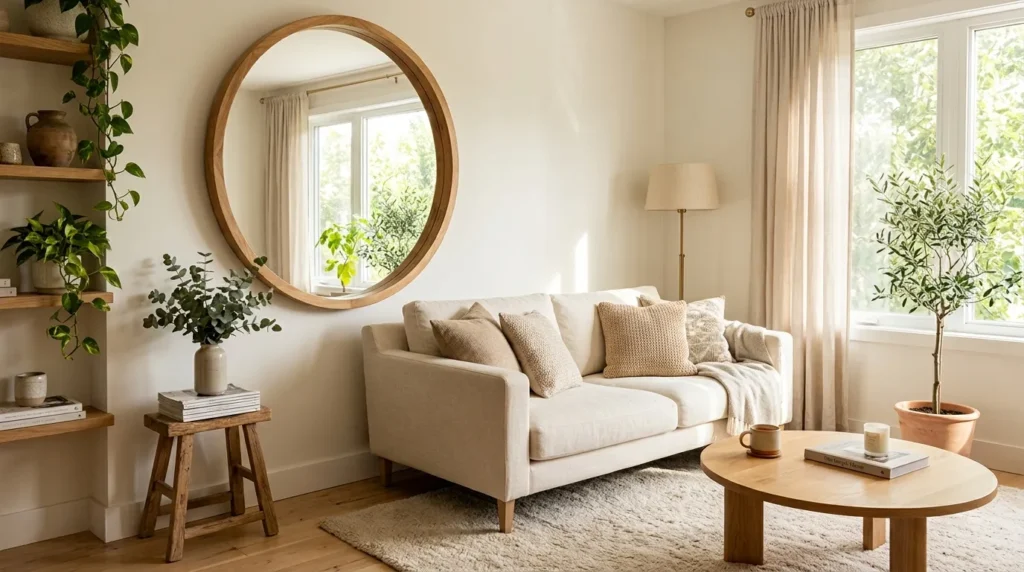
Mirrors are a classic decorating tool for compact rooms because they reflect light and surrounding views, creating an impression of greater depth. A large mirror can also become an attractive focal point instead of simply functioning as a practical accessory.
Positioning matters more than simply adding a mirror anywhere. A mirror placed opposite or near a window can capture daylight and distribute it around the room, helping the space feel brighter throughout the day.
How To Style It
Choose one generously sized mirror rather than covering the wall with several small ones. Round mirrors soften rooms with lots of straight lines, while rectangular mirrors can emphasize ceiling height.
Try a wood-framed mirror for a warm farmhouse look, a thin black frame for modern interiors, or an aged brass frame for a more traditional space. Keep the surrounding décor simple so the mirror remains the focal point.
6. Layered Lighting
Quick Benefits
- Makes the room feel cozy
- Improves evening functionality
- Adds visual warmth
- Creates depth
- Highlights decorative details
Why It Works
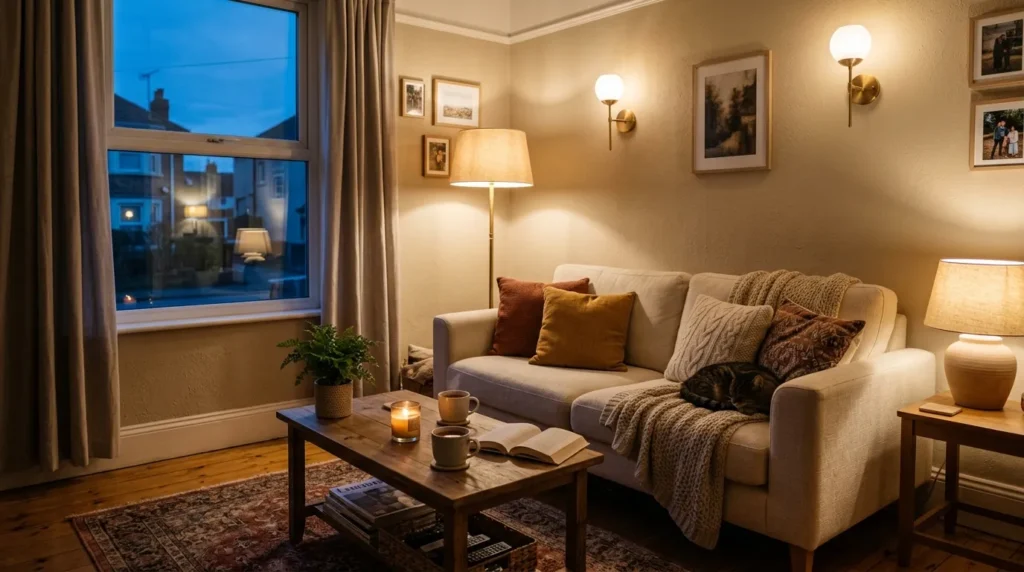
A single ceiling fixture rarely provides enough atmosphere for a comfortable living room. Layering several sources of light allows you to adjust the mood and functionality of the space throughout the day. A combination of overhead, floor, table, and accent lighting can make a small room feel more sophisticated and inviting.
I’ve noticed that lighting becomes particularly important in rooms with limited natural light. Warm illumination can make neutral walls and natural textures feel much more welcoming after sunset.
How To Style It
Combine a ceiling fixture with a slim floor lamp, compact table lamp, and small accent light. Place lighting at different heights to create visual depth.
Choose warm-toned bulbs and lampshades that diffuse rather than intensify the light. If space is extremely limited, wall sconces can provide useful illumination without taking up valuable floor or table space.
7. Multiuse Furniture
Quick Benefits
- Maximizes functionality
- Reduces furniture count
- Provides hidden storage
- Makes entertaining easier
- Ideal for apartments
Why It Works
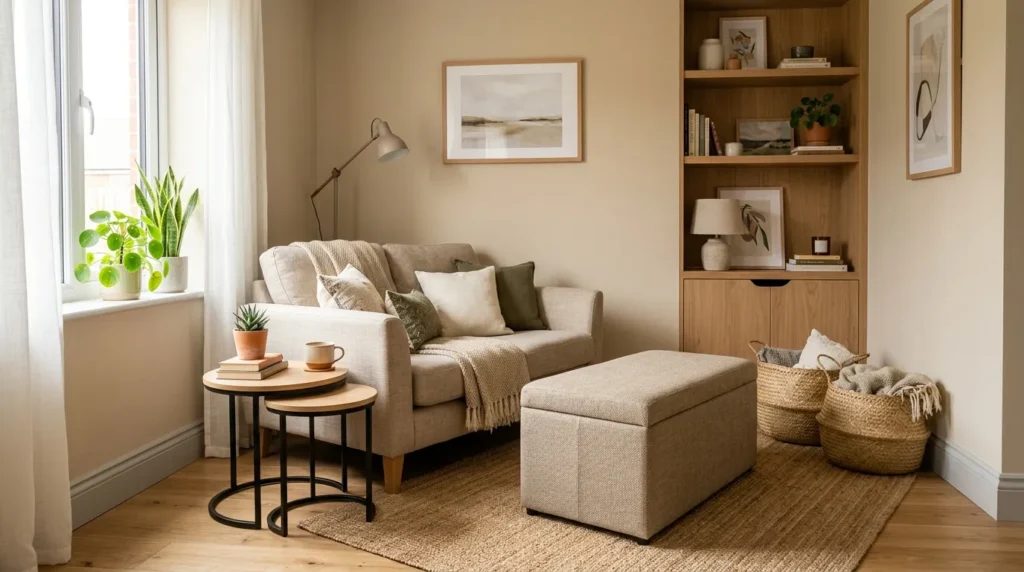
Furniture that performs more than one job is incredibly useful in a compact living room. An ottoman can act as extra seating, a footrest, and a coffee table, while a storage bench can provide seating and a place to hide blankets or toys. These flexible pieces allow you to enjoy more functionality without filling the room with separate furniture.
In my experience, multifunctional furniture is particularly valuable for busy households where the living room needs to adapt throughout the day.
How To Style It
Choose an upholstered storage ottoman with a flat, sturdy surface that can hold a decorative tray. Use the tray for coffee cups, books, or candles while keeping the ottoman available as additional seating.
Consider nesting tables that can separate when guests arrive or a slim console table that doubles as a workspace. Choose pieces that can easily move when you need to change the room’s layout.
8. Vertical Decor
Quick Benefits
- Draws attention upward
- Makes ceilings feel taller
- Uses unused wall space
- Adds personality
- Reduces floor clutter
Why It Works
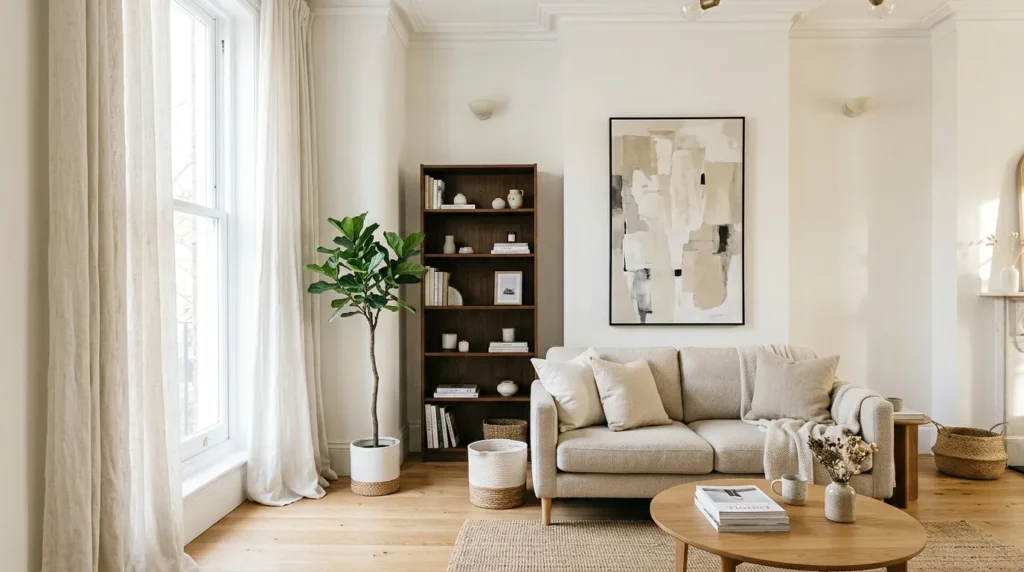
Decorating vertically encourages the eye to move upward rather than focusing only on the limited floor area. Tall bookshelves, vertical artwork, floor-to-ceiling curtains, and narrow plants can make a compact living room feel taller and more visually balanced.
A common mistake is placing every decorative element at eye level. Varying the heights of artwork, shelving, lighting, and plants creates a more dynamic room while keeping the floor relatively open.
How To Style It
Hang curtains close to the ceiling and let them fall nearly to the floor to emphasize vertical height. Use a tall, narrow bookcase or plant stand in an unused corner.
Create a vertical gallery wall with artwork arranged in a clean column or use one large piece of artwork above the sofa. Keep the composition simple so the wall doesn’t become visually overwhelming.
9. Cozy Window Seat
Quick Benefits
- Uses an overlooked area
- Adds extra seating
- Creates a relaxing retreat
- Can provide hidden storage
- Brings attention to natural light
Why It Works
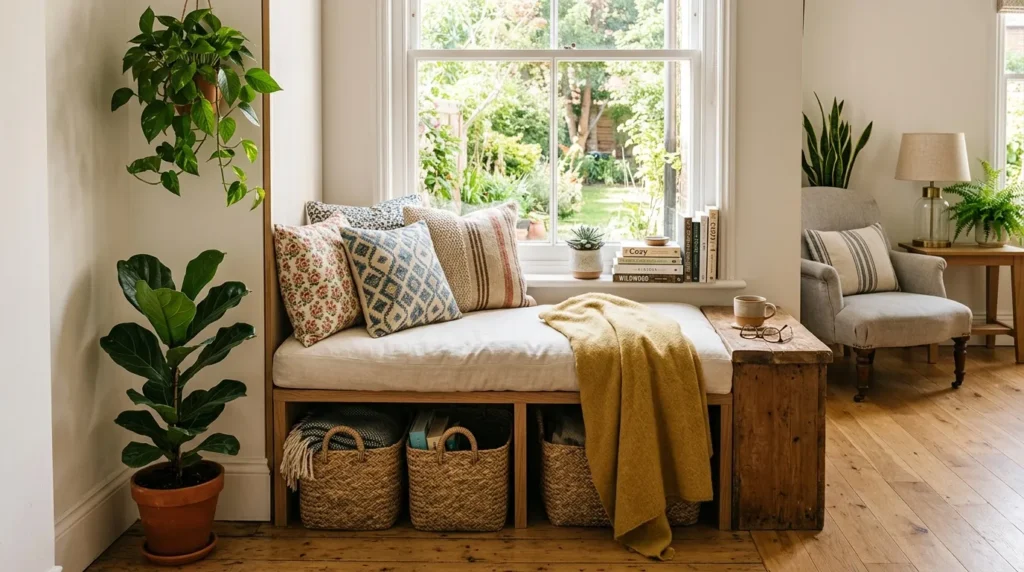
A window seat can transform an otherwise unused section of a small living room into one of its most charming features. It provides a dedicated place to read, relax, or enjoy the view without requiring a full-size chair. When designed with built-in storage, it can also solve practical organization problems.
Natural light makes window seating particularly appealing because it creates a bright little retreat within the room.
How To Style It
Use a fitted cushion in durable upholstery and add two or three comfortable pillows. Choose fabrics that coordinate with the sofa and area rug without matching everything exactly.
If construction isn’t practical, place a narrow upholstered bench beneath the window instead. Add baskets underneath for blankets, books, children’s toys, or seasonal accessories.
10. Simple Styling
Quick Benefits
- Prevents visual clutter
- Makes cleaning easier
- Highlights favorite pieces
- Creates a polished appearance
- Keeps the room feeling spacious
Why It Works
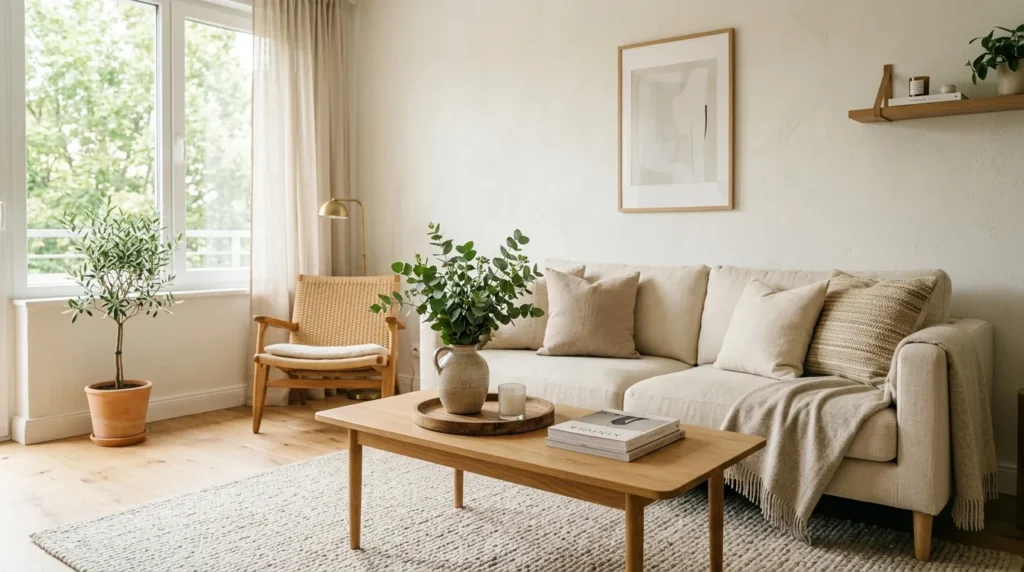
One of the most effective ways to make a small living room feel larger is simply to edit what you bring into it. Every decorative object occupies visual space, even when it doesn’t take up much physical room. A carefully selected collection of artwork, books, plants, textiles, and accessories can create personality without making the room feel crowded.
I’ve found that the most inviting small spaces usually have fewer items, but each piece has a clear purpose or contributes something beautiful.
How To Style It
Choose a few meaningful accessories instead of filling every surface. Style the coffee table with a decorative tray, one or two books, and a small vase. Keep side tables relatively clear so the room remains functional.
Repeat two or three colors throughout the space to create cohesion. Add texture through woven baskets, linen pillows, soft throws, wood accents, and greenery rather than relying on lots of small decorative objects.
Frequently Asked Questions
What furniture is best for a small living room?
Choose furniture with appropriate proportions, slim arms, visible legs, and multifunctional features. Sofas with streamlined silhouettes, nesting tables, storage ottomans, and compact accent chairs can provide comfort without overwhelming the room.
How can I make a small living room look bigger?
Use light colors, strategically placed mirrors, appropriately sized furniture, vertical décor, and clear walking paths. Keeping the floor relatively open and avoiding unnecessary clutter can also make the room feel significantly more spacious.
Should a small living room have a large rug?
Yes. A properly sized rug can visually connect the seating arrangement and make the room feel more cohesive. Ideally, the front legs of the sofa and chairs should sit on the rug.
What colors make a small living room feel bigger?
Warm white, ivory, beige, light greige, pale taupe, and soft muted colors can help create an airy appearance. You can introduce darker colors through smaller accessories for contrast.
How do I add storage without making the room feel crowded?
Use vertical storage, floating shelves, wall-mounted cabinets, storage ottomans, and furniture with concealed compartments. Closed storage is especially useful for keeping everyday clutter out of sight.
Can I use dark colors in a small living room?
Absolutely. Dark colors can create a cozy, sophisticated atmosphere when used intentionally. Consider using them on one accent wall, through furniture, or in smaller accessories while keeping the overall room balanced with lighter elements.
Conclusion
A small living room doesn’t have to feel limited. With thoughtful furniture choices, smart storage, layered lighting, and carefully edited décor, even a compact space can become comfortable, stylish, and highly functional.
The key is to think about how each piece contributes to the room. A slim sofa preserves valuable floor space, a large rug connects the seating arrangement, a mirror adds depth, and multifunctional furniture makes everyday life easier. Vertical décor and simple styling can then add personality without creating unnecessary visual clutter.
Start with the pieces you already own and identify what the room truly needs. You don’t have to redesign everything at once. A new rug, better lighting, or a strategically positioned mirror may be enough to completely change how the space feels.
The best small living rooms aren’t necessarily the ones with the fewest things—they’re the ones where every element has a purpose. Choose pieces that make your home more comfortable, reflect your personality, and help the room work beautifully for everyday life.
Related Articles
- 10 Small Living Room Layout Ideas for Better Flow
- 10 Cozy Living Room Ideas for Family Homes
- 10 Modern Living Room Ideas That Feel Bright and Airy
- 10 Small Space Decorating Ideas That Maximize Every Inch
- 10 Neutral Living Room Ideas with Timeless Style