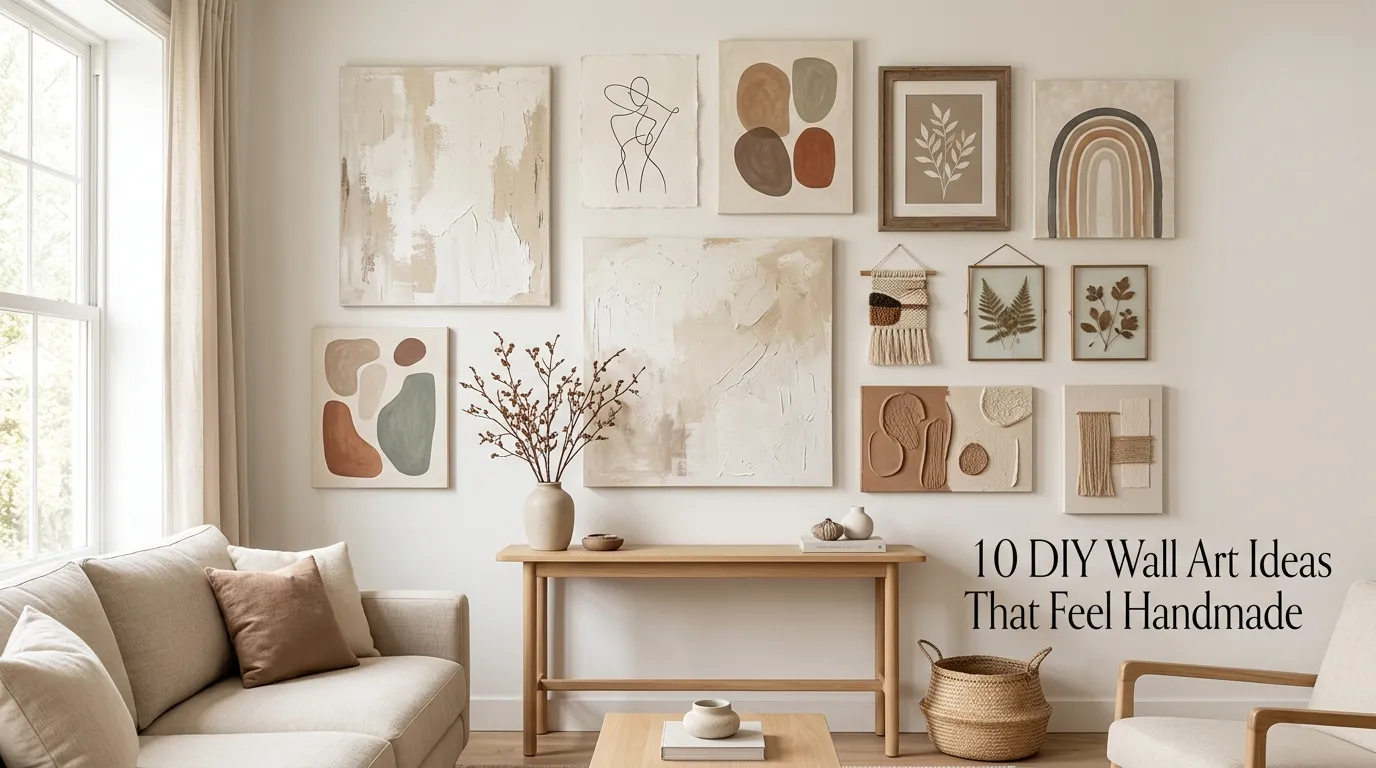
10 DIY Wall Art Ideas That Feel Handmade
There is something special about wall art that doesn’t look like it came straight from a showroom. Handmade pieces can bring warmth, personality, and texture into a room while giving your home a more collected appearance.
The best part is that DIY wall art doesn’t have to look complicated. Simple materials such as fabric, paper, paint, wood, clay, and natural fibers can become beautiful decorative pieces with a little creativity. Even imperfect brushstrokes, uneven textures, and handmade details can make artwork feel more personal.
I’ve found that the most successful DIY wall projects usually start with the room rather than the craft itself. Think about the colors already present in your furniture, rugs, curtains, and accessories, then choose materials that complement those tones.
Whether you’re decorating a bedroom, living room, hallway, home office, or entryway, these ideas can help you create artwork that feels intentional rather than mass-produced. You can also adjust the scale, colors, and materials to suit your own decorating style.
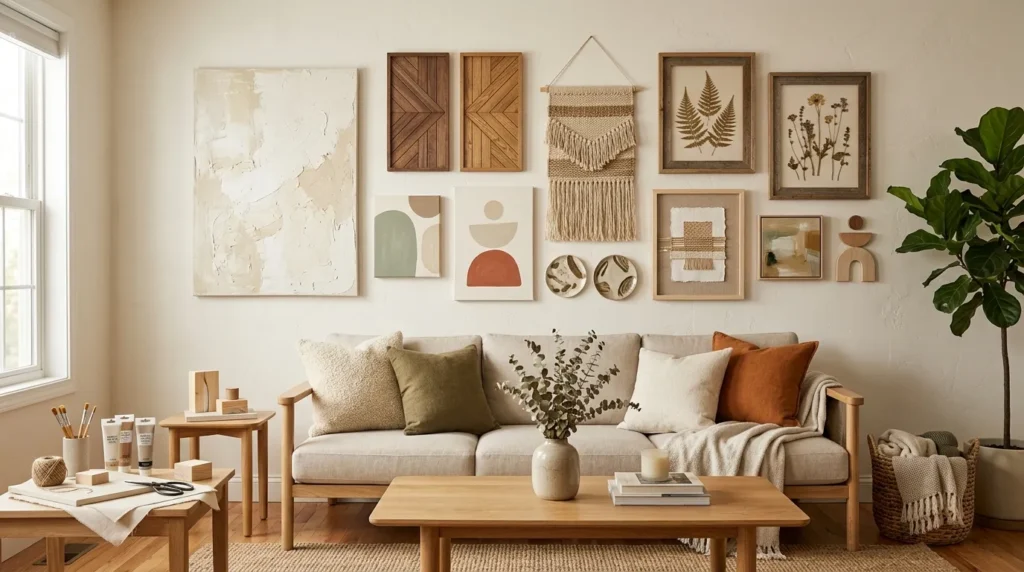
From textured canvas art to woven wall hangings and simple botanical prints, these projects are approachable enough for a weekend refresh while still having the visual impact Pinterest readers love.
Table of Contents
1. Textured Canvas Art
Create dimensional artwork with simple materials.
2. Botanical Pressed Art
Bring natural beauty to your walls.
3. Painted Abstract Panels
Create custom artwork with expressive shapes.
4. Fabric Wall Hanging
Add softness and handcrafted texture.
5. Clay Relief Art
Create sculptural artwork with organic dimension.
6. Wooden Slat Art
Use natural wood for a warm statement.
7. Framed Paper Layers
Build depth with simple paper shapes.
8. Embroidered Wall Art
Turn textile techniques into decorative artwork.
9. Painted Flower Art
Create cheerful botanical-inspired pieces.
10. Thrifted Frame Gallery
Give old frames and artwork a new life.
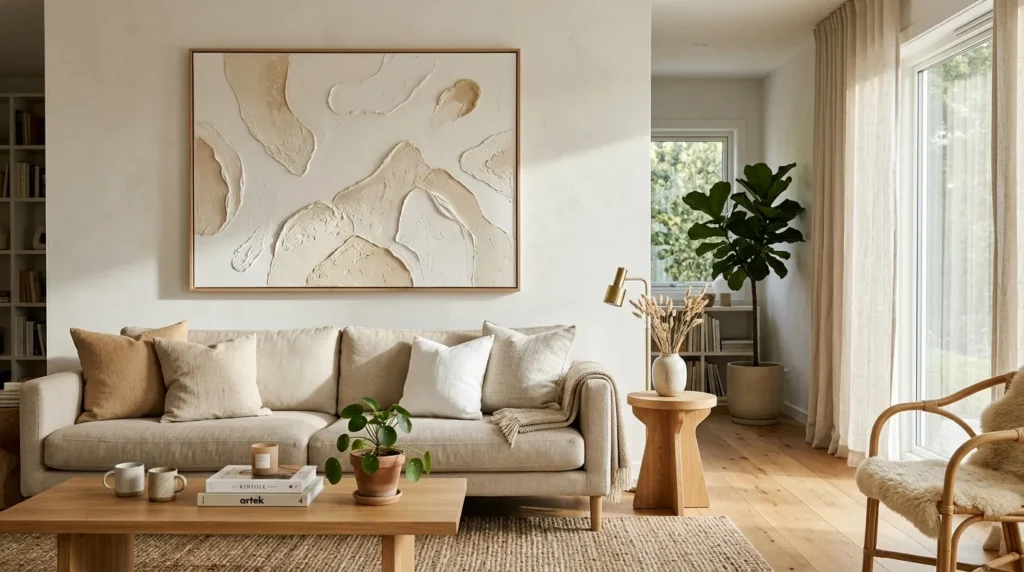
1. Textured Canvas Art
Quick Benefits
- Adds dimension
- Looks custom-made
- Works with neutral interiors
- Can be highly affordable
- Easy to personalize
Why It Works
Texture can make simple artwork feel much more substantial. Instead of relying on detailed illustrations, textured canvas art uses raised surfaces, organic shapes, and subtle shadows to create visual interest.
This style works particularly well with modern, minimalist, Scandinavian, farmhouse, and organic interiors because it can remain relatively neutral while still providing character.
How To Style It
Start with a stretched canvas and use an appropriate texture medium to create raised shapes, arches, lines, or abstract patterns. Allow the material to dry completely before applying paint if necessary.
Warm white, cream, beige, taupe, and soft gray can create a sophisticated neutral palette. Display one large canvas above a sofa or bed, or arrange several smaller pieces together.
2. Botanical Pressed Art
Quick Benefits
- Brings nature indoors
- Creates delicate texture
- Works with many decorating styles
- Easy to personalize
- Looks timeless
Why It Works
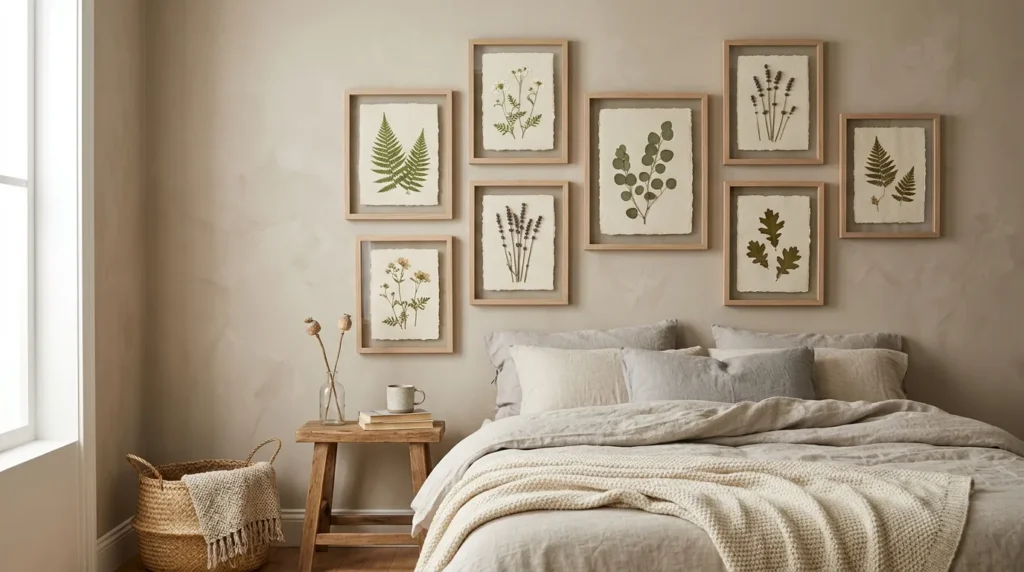
Pressed botanical artwork has an understated beauty that can make a room feel calmer and more connected to nature. Leaves, flowers, grasses, and other plant materials can create subtle variations in shape and color.
The imperfect qualities of real botanicals are part of the appeal. No two pieces will look exactly alike.
How To Style It
Press fully dried plant material and arrange it inside simple glass-front frames. Use cream paper or handmade-style paper as a background if desired.
Create a pair of matching botanical pieces or make a small gallery with different plant shapes. Keep the frame finishes coordinated for a more polished result.
3. Painted Abstract Panels
Quick Benefits
- Easy to customize
- Coordinates with existing décor
- Creates a modern look
- Works in large spaces
- Doesn’t require advanced painting skills
Why It Works
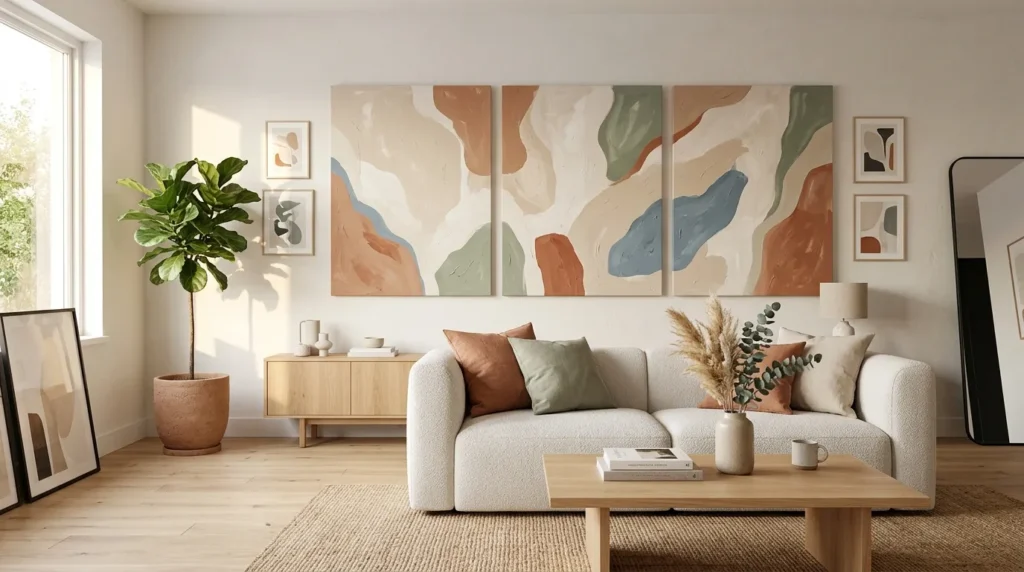
Abstract artwork gives you complete control over color, scale, and composition. You don’t need to paint a recognizable subject; simple arches, blocks, lines, curves, and overlapping shapes can create an attractive finished piece.
This makes the project especially useful when you’re trying to match artwork to a specific room palette.
How To Style It
Choose three to five colors already present in your room. Paint a neutral background, then add broad organic shapes using brushes, sponges, or other suitable tools.
For a softer appearance, use curved forms and muted colors. For a contemporary room, experiment with stronger geometric shapes and higher contrast.
4. Fabric Wall Hanging
Quick Benefits
- Adds softness
- Introduces textile texture
- Reduces visual hardness
- Works in bedrooms and living rooms
- Easy to change seasonally
Why It Works
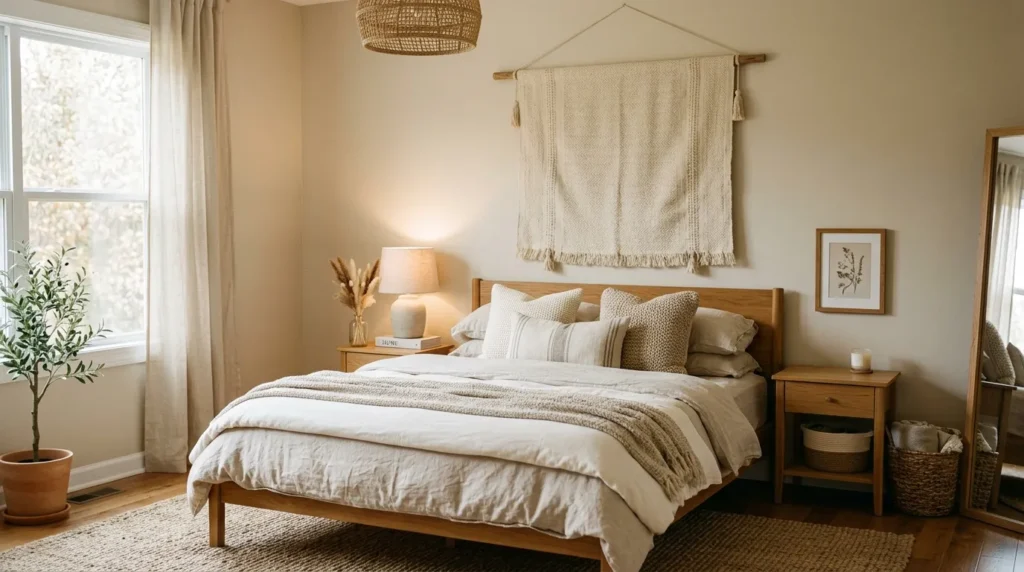
Fabric wall art brings a different type of texture to a room. Unlike painted canvas or framed prints, textiles can soften the visual appearance of large walls.
Linen, cotton, wool, woven fabric, and other textiles can all create different moods depending on their color and texture.
How To Style It
Choose a fabric that coordinates with your existing upholstery, curtains, bedding, or rugs. Mount it over a wooden dowel or suitable hanging structure.
Neutral linen creates a relaxed organic look, while patterned fabric can become a stronger focal point. Keep the hanging proportional to the wall and surrounding furniture.
5. Clay Relief Art
Quick Benefits
- Creates sculptural dimension
- Looks artistic
- Adds organic texture
- Works with neutral palettes
- Makes a strong focal point
Why It Works
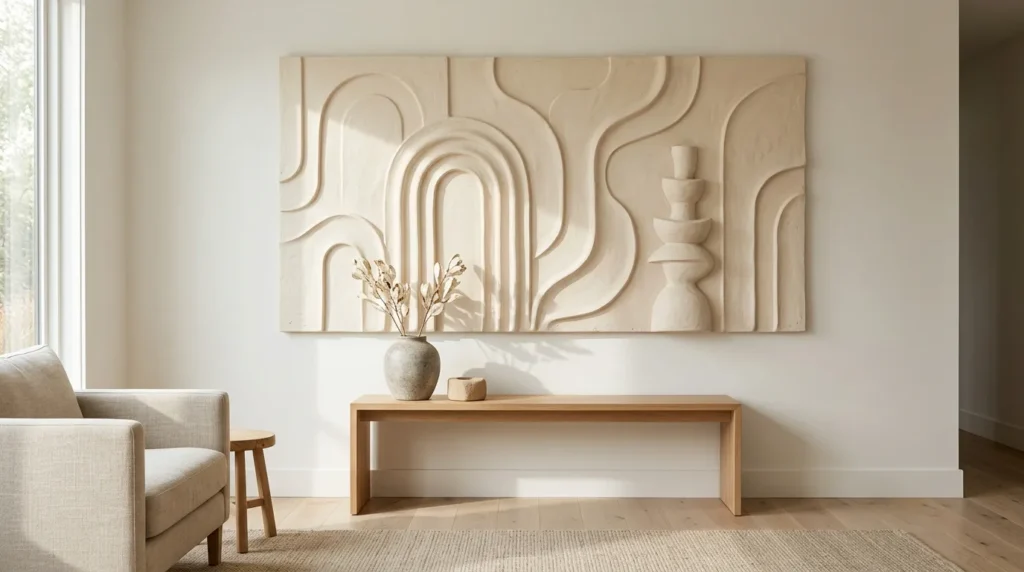
Relief artwork sits between painting and sculpture. Raised clay shapes create shadows that change as the light moves across the surface.
The result can feel handmade and artistic even when the underlying design is simple.
How To Style It
Use an appropriate air-dry or craft clay according to the manufacturer’s instructions. Create simple organic shapes, waves, arches, leaves, or abstract forms on a suitable backing.
Once completely dry, use a soft neutral finish such as cream, sand, or warm white. Display the finished piece against a simple wall so the texture remains the focus.
6. Wooden Slat Art
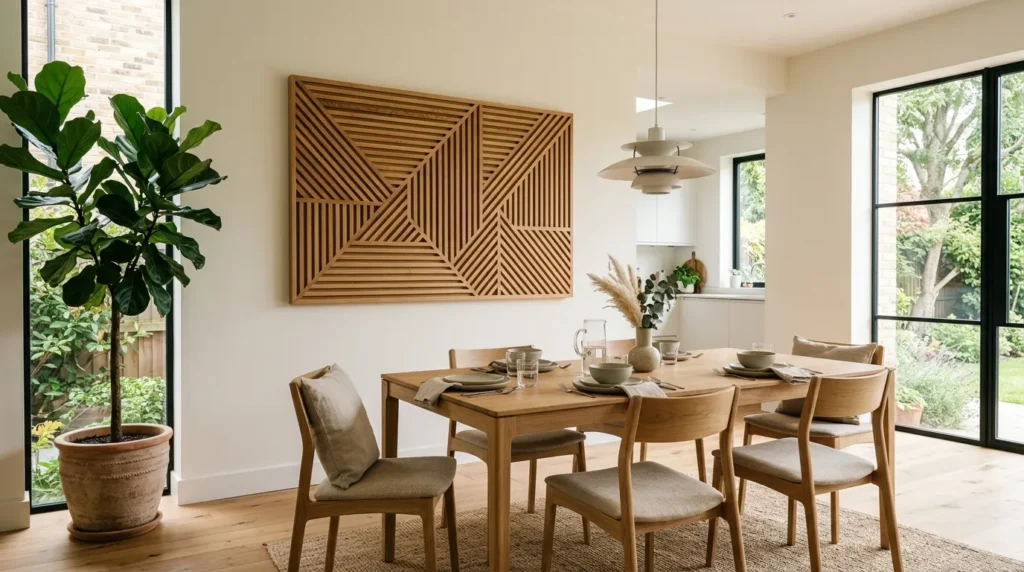
Quick Benefits
- Adds natural warmth
- Creates architectural texture
- Works with modern interiors
- Uses simple materials
- Makes a strong focal point
Why It Works
Wood naturally adds warmth and texture to a room. When arranged into a geometric composition, wooden strips can become artwork rather than simply functioning as building material.
This idea works particularly well above a console table, sofa, bed, or dining area.
How To Style It
Use thin wood strips or appropriately prepared boards and arrange them in a repeating pattern. Keep the finish natural for an organic appearance or use a stain that coordinates with the room.
Pay attention to spacing so the pattern feels deliberate. Secure all pieces properly according to the wall and mounting system.
7. Framed Paper Layers
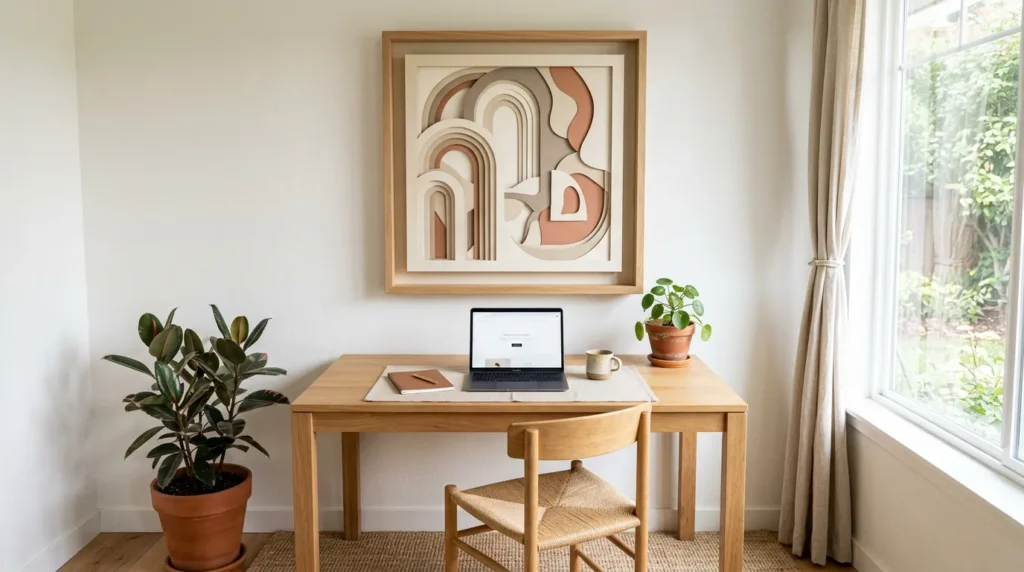
Quick Benefits
- Budget-friendly
- Easy to customize
- Lightweight
- Creates dimensional artwork
- Works for gallery walls
Why It Works
Paper can create surprisingly sophisticated wall art when layered thoughtfully. Different shapes and tones can produce depth without requiring expensive materials.
This is also a great project when you want to experiment with a new color palette before committing to larger artwork.
How To Style It
Cut heavy paper or cardstock into arches, leaves, geometric shapes, or abstract forms. Layer the pieces with small spacers to create subtle shadows between them.
Place the composition inside a deep frame or shadow box. Neutral tones create a minimalist look, while muted colors can coordinate with a more colorful room.
8. Embroidered Wall Art
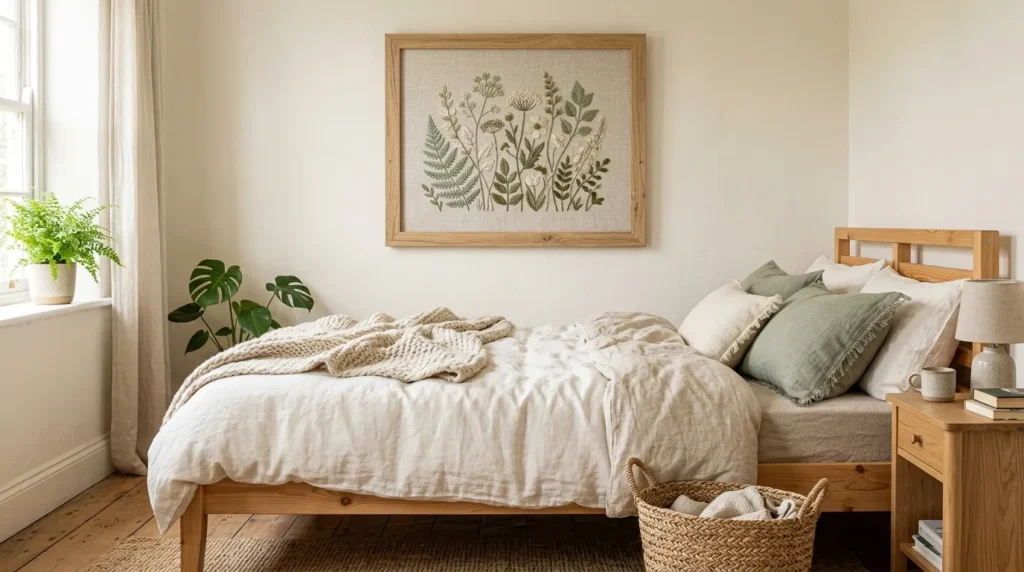
Quick Benefits
- Adds handcrafted character
- Introduces textile texture
- Creates intricate detail
- Works in bedrooms and offices
- Can become a meaningful keepsake
Why It Works
Embroidery brings visible craftsmanship to a wall. The stitches themselves become part of the design, creating a tactile quality that printed artwork can’t reproduce.
Simple botanical forms, abstract lines, initials, and geometric motifs can all work beautifully.
How To Style It
Stretch embroidered fabric inside a hoop or frame. Choose thread colors that coordinate with the room rather than trying to match everything exactly.
For a modern look, use a restrained palette and simple linework. For a more traditional appearance, introduce botanical details and richer colors.
9. Painted Flower Art
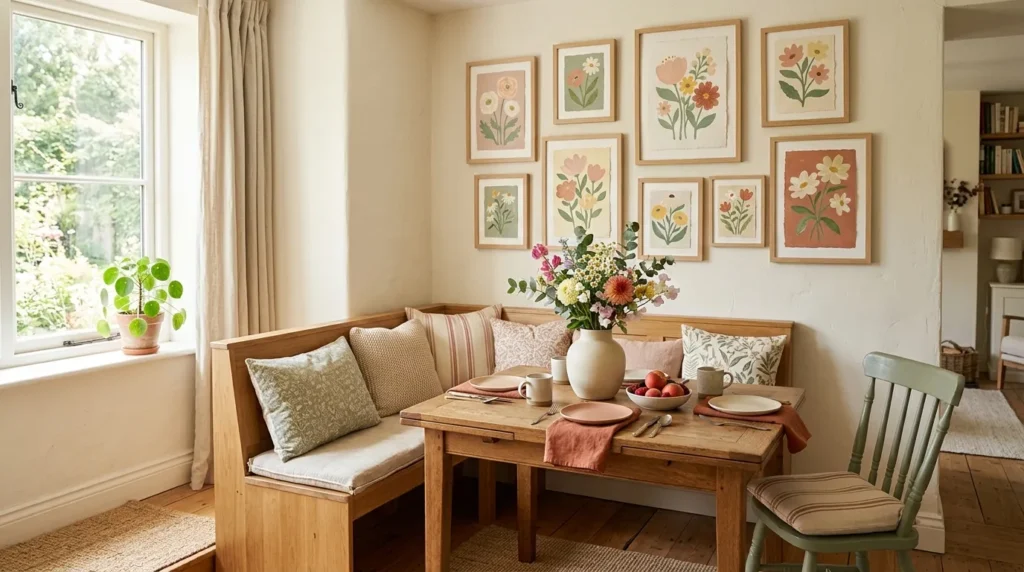
Quick Benefits
- Adds cheerful color
- Creates a personal touch
- Works in bedrooms and kitchens
- Easy to customize
- Makes an inexpensive focal point
Why It Works
Simple painted flowers can create charming artwork without requiring advanced painting skills. Loose petals, stems, and leaves often look more naturally handmade than highly detailed botanical paintings.
This is a particularly easy way to introduce seasonal color.
How To Style It
Use a neutral canvas and paint simplified flowers using colors already present in the room. Try grouping several small paintings together rather than making one complicated composition.
Soft blush, sage, butter yellow, terracotta, and cream can create a warm contemporary palette.
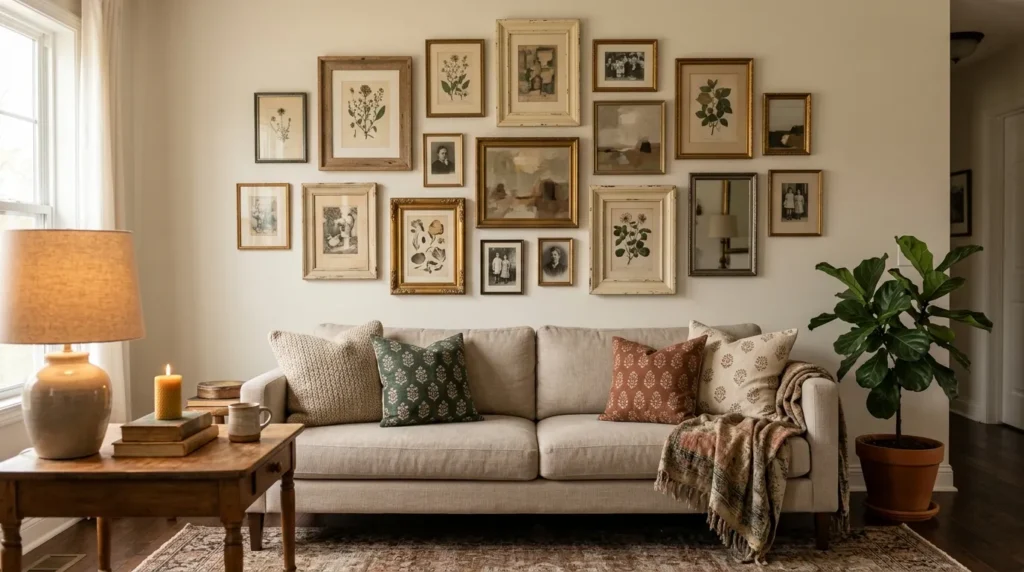
10. Thrifted Frame Gallery
Quick Benefits
- Gives old pieces new life
- Creates an eclectic appearance
- Can save money
- Adds character
- Easy to personalize
Why It Works
A collection of thrifted frames can feel far more personal than a perfectly matched gallery wall. Different frame shapes, finishes, and sizes introduce the slight irregularity that makes a room feel collected over time.
You can also reuse existing frames and replace the artwork inside them.
How To Style It
Look for frames with interesting molding, wood grain, patina, or unusual shapes. Paint some frames if you want a more cohesive palette while leaving others in their original finish.
Lay everything on the floor first to test the arrangement. Keep spacing intentional while allowing slight variations in size and shape.
Frequently Asked Questions
What is the easiest DIY wall art for beginners?
Abstract painted art is one of the easiest options because you don’t need to reproduce a specific subject. Textured canvas art, simple botanical arrangements, and layered paper artwork are also approachable projects for beginners.
How can I make DIY wall art look expensive?
Focus on scale, simplicity, and coordinated colors. Large artwork with restrained colors often looks more sophisticated than many small pieces. Quality-looking frames, natural materials, consistent spacing, and a limited color palette can also elevate a handmade project.
What materials are best for handmade wall art?
Canvas, fabric, wood, paper, clay, thread, pressed botanicals, and repurposed frames are versatile choices. Select materials based on the style of the room and the amount of texture you want to introduce.
How do I choose colors for DIY wall art?
Start with colors already present in the room. Pull shades from your rug, curtains, furniture, bedding, or accessories, then add one complementary neutral. This creates artwork that feels connected to the space without looking overly matched.
Can DIY wall art work in a modern home?
Absolutely. Choose simple compositions, neutral colors, clean frames, natural materials, and restrained textures. Abstract panels, wooden slat designs, clay reliefs, and minimal embroidered pieces can all work beautifully in modern interiors.
How should I arrange handmade artwork?
Consider the size of the wall and furniture underneath it first. Large pieces often work best as a single focal point, while smaller artwork can be grouped into a gallery. Lay pieces out before hanging them to experiment with spacing and balance.
Conclusion
DIY wall art doesn’t have to look like a complicated craft project. In fact, some of the most beautiful handmade pieces are built around simple materials, restrained colors, and a little bit of texture.
Start with the room you’re decorating. Look at the colors, materials, and shapes already present, then choose an art project that adds something missing. If the room feels flat, try textured canvas or clay relief. If it feels too hard or modern, fabric or woven artwork can introduce softness. If you want personality, a thrifted frame gallery or hand-painted botanical pieces can make the room feel much more personal.
Don’t worry about creating something perfectly symmetrical or professionally polished. Small imperfections are often what make handmade artwork special.
Choose one project that feels manageable, gather materials you already have when possible, and give yourself permission to experiment. The finished piece doesn’t just decorate your wall—it adds a little of your own creativity and personality to the home.
Related Articles
- 10 DIY Wall Decor Ideas for a Cozy Home
- 10 Bedroom Wall Decor Ideas with Floating Shelves
- 10 DIY Home Decor Projects for Beginners
- 10 Living Room Wall Decor Ideas That Add Character
- 10 Handmade Home Decor Ideas with Natural Materials