10 Garden Decor Ideas with Stone Pathways
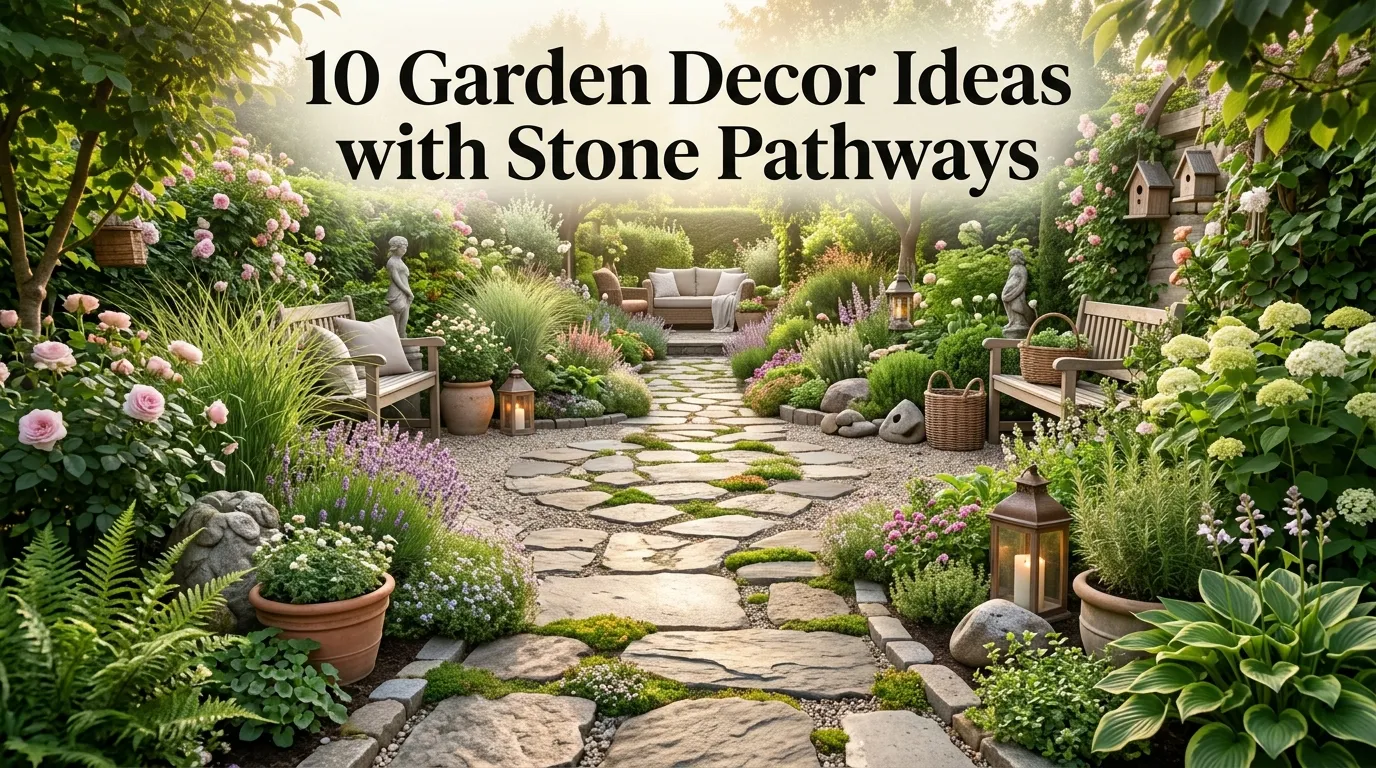
A stone pathway can do much more than lead you from one part of the garden to another. When thoughtfully designed, it becomes part of the garden’s personality, creating structure, guiding the eye, and giving plants and decorative features a beautiful foundation.
From rustic stepping stones surrounded by cottage-style flowers to sleek pavers framed by ornamental grasses, stone pathways can work with almost any landscape style. They are particularly useful when a garden feels unfinished or lacks a clear sense of movement.
The key is to treat the pathway as a design element rather than simply a practical surface. The stone type, spacing, edging, surrounding plants, lighting, and nearby décor all influence the final look.
If you’re refreshing a backyard garden, creating a cottage-inspired corner, or simply looking for ways to make an outdoor space feel more inviting, these ideas can help you create a pathway that feels intentional and beautiful.
Table of Contents
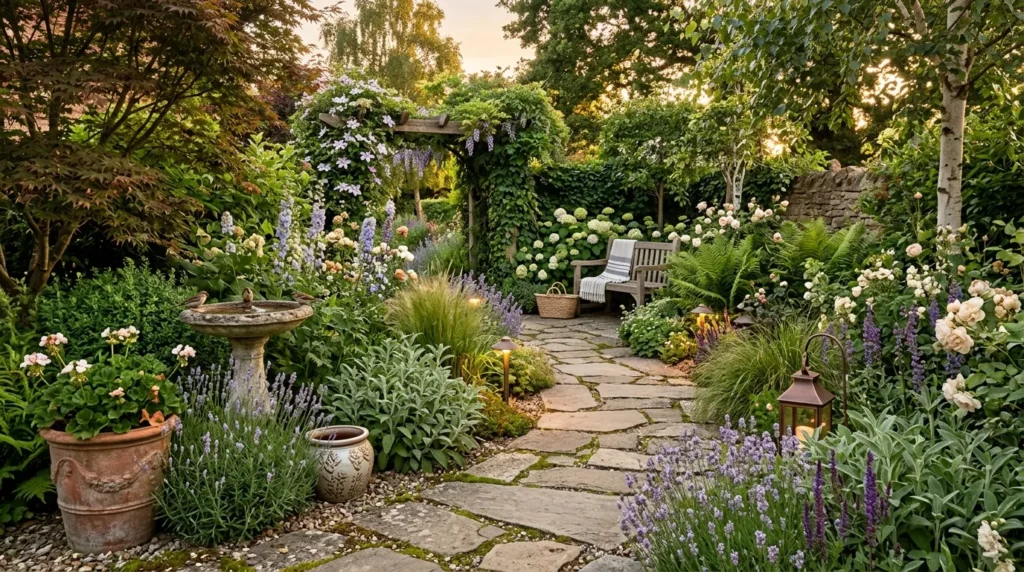
1. Cottage Stone Walk
Create a romantic pathway surrounded by flowers and greenery.
2. Stepping Stone Trail
Use individual stones for a relaxed garden route.
3. Gravel Stone Border
Combine stone pathways with decorative gravel.
4. Mossy Garden Path
Create an aged, woodland-inspired atmosphere.
5. Curved Stone Walkway
Use gentle curves to create movement.
6. Modern Paver Path
Give the garden a clean contemporary appearance.
7. Stone and Mulch
Combine hardscape with warm organic texture.
8. Illuminated Pathway
Add lighting for evening beauty and safety.
9. Rustic Garden Entry
Create an inviting transition into the garden.
10. Layered Stone Garden
Combine pathways with plants and decorative accents.
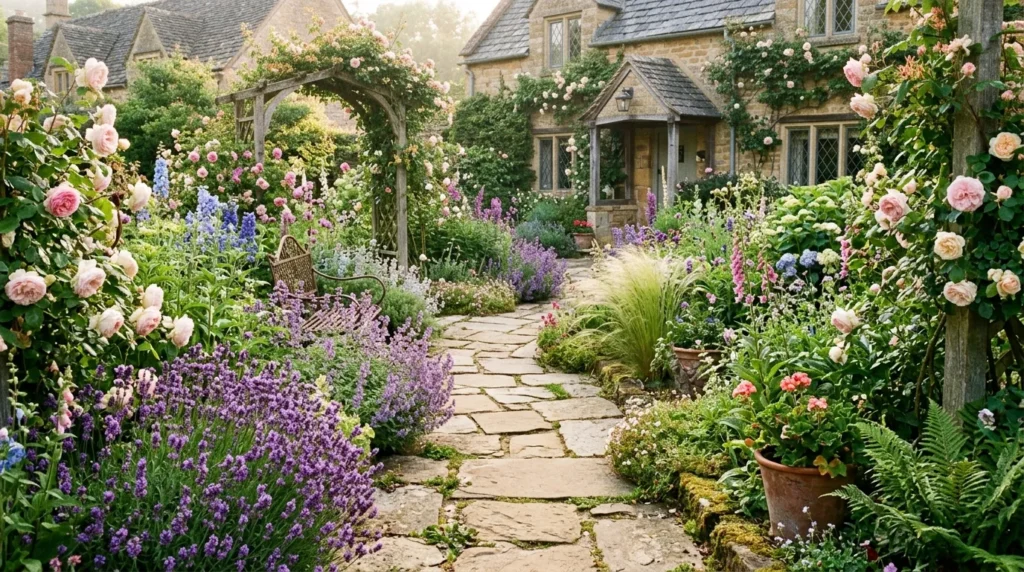
1. Cottage Stone Walk
Quick Benefits
- Creates romantic garden charm
- Works beautifully with flowers
- Softens hard landscaping
- Adds visual structure
- Complements traditional homes
Why It Works
A cottage-style stone pathway feels naturally connected to the garden rather than formally imposed on it. Irregular stone shapes, abundant planting, and slightly relaxed edges create the impression that the path has always belonged there.
This style works particularly well when you want the garden to feel welcoming and slightly informal. The contrast between solid stone and delicate flowers creates plenty of visual interest.
How To Style It
Choose natural-looking stone in muted gray, tan, or warm beige. Surround the edges with flowering perennials, lavender, ornamental grasses, and low groundcovers.
Allow plants to soften portions of the pathway without blocking the walking surface. Add a simple bench, vintage-style planter, or small garden ornament nearby for extra character.
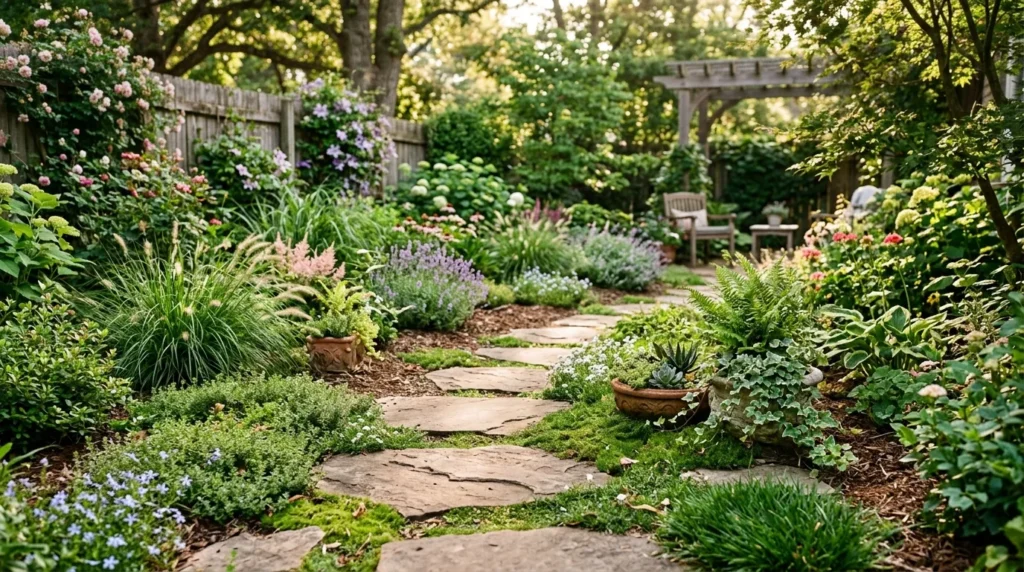
2. Stepping Stone Trail
Quick Benefits
- Uses less material
- Creates a relaxed appearance
- Works in small gardens
- Encourages movement
- Adds playful visual rhythm
Why It Works
Stepping stones create a lighter alternative to a continuous paved walkway. The spaces between the stones allow grass, moss, gravel, or groundcover to become part of the design.
The repeating pattern naturally guides people through the garden while maintaining an open, organic appearance.
How To Style It
Choose stones large enough for comfortable foot placement and position them according to a natural walking stride. Avoid spacing them too far apart.
Surround the stones with low-growing groundcover, fine gravel, or lawn. Add flowering plants along the edges to make the route feel integrated into the landscape.
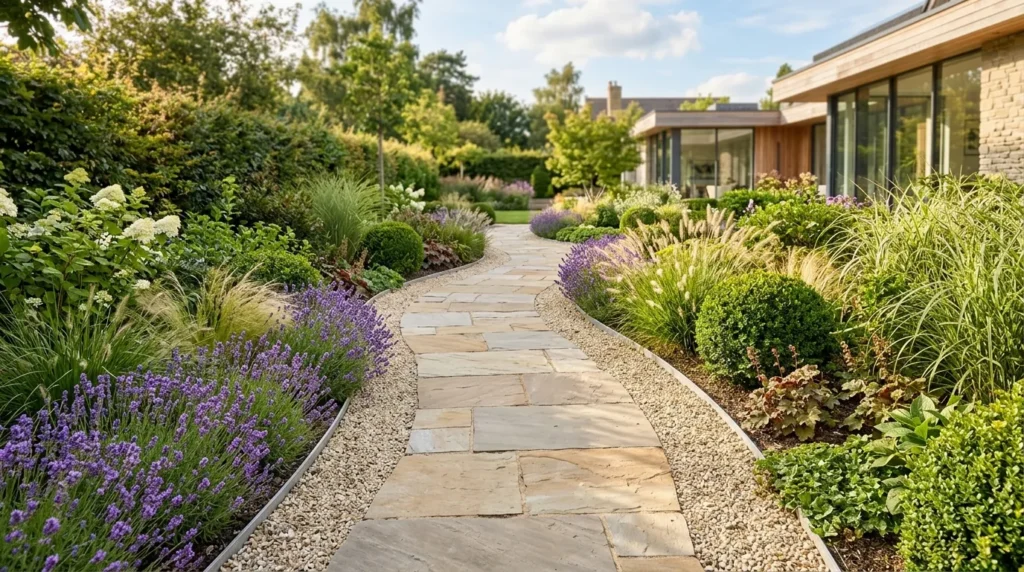
3. Gravel Stone Border
Quick Benefits
- Adds texture
- Creates clean boundaries
- Improves visual definition
- Works with many garden styles
- Can simplify maintenance
Why It Works
A gravel border creates a transition between the stone path and surrounding planting. It adds another texture without competing with the main pathway.
This approach is particularly attractive in gardens that combine natural stone with drought-tolerant or Mediterranean-inspired planting.
How To Style It
Choose gravel that complements the color of the pathway. Keep the border relatively consistent in width for a more intentional appearance.
Add low-growing plants along the outer edge and repeat the stone or gravel elsewhere in the garden to create continuity.
4. Mossy Garden Path
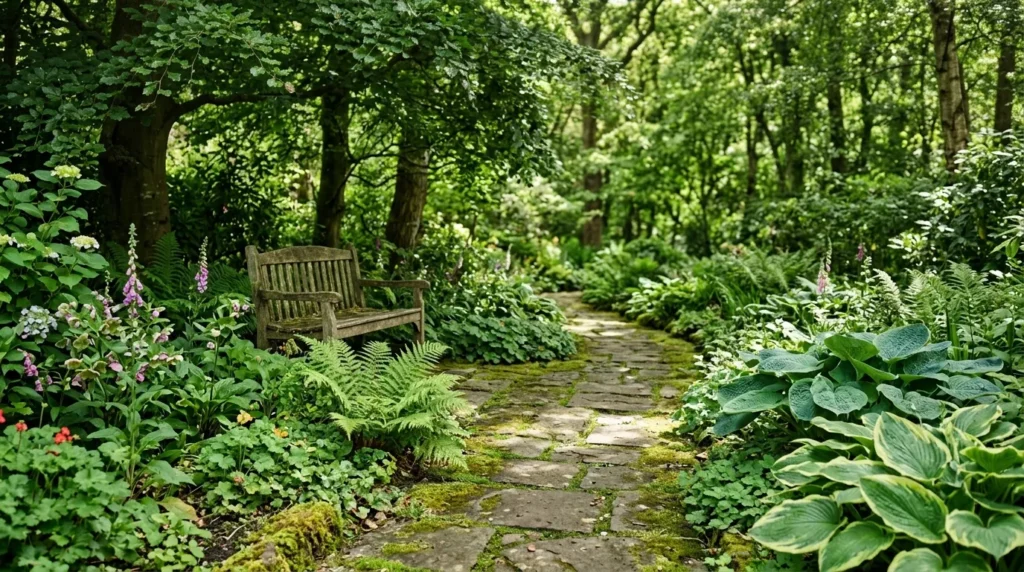
Quick Benefits
- Creates woodland charm
- Feels established
- Adds natural texture
- Works in shaded gardens
- Creates a romantic atmosphere
Why It Works
Moss and stone create a naturally aged appearance that can make a garden feel peaceful and established. The softness of moss contrasts beautifully with irregular stone surfaces.
This style is especially appealing for woodland gardens, shaded corners, and landscapes inspired by English garden design.
How To Style It
Use weathered or irregular stones and surround them with shade-tolerant plants where appropriate. Ferns, hostas, moss, and woodland groundcovers can complement the setting.
Keep the look natural rather than overly symmetrical. A simple wooden bench or aged planter can reinforce the garden’s character.
5. Curved Stone Walkway
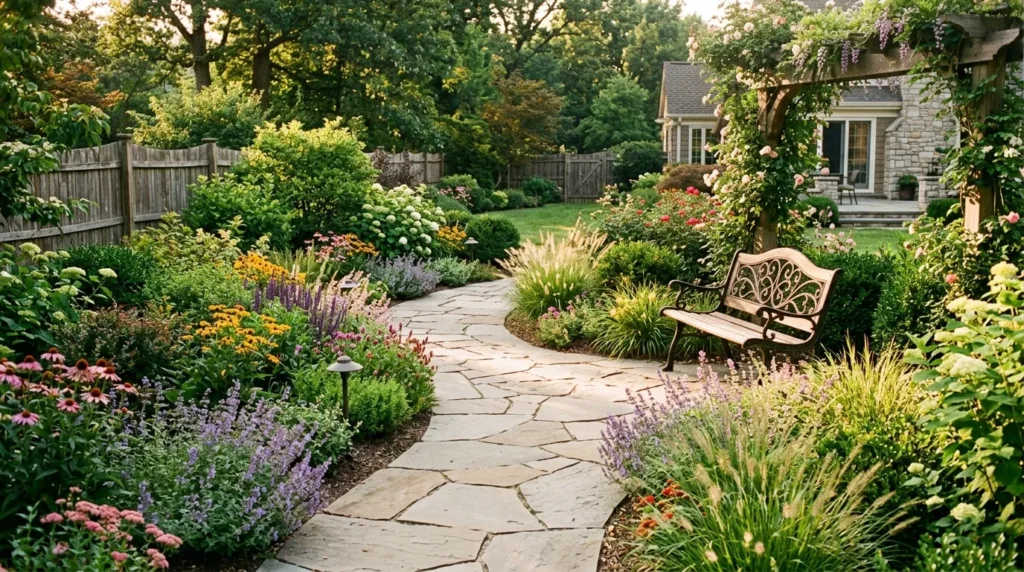
Quick Benefits
- Creates movement
- Makes the garden feel larger
- Guides visitors naturally
- Adds visual interest
- Softens straight landscaping
Why It Works
A curved pathway encourages the eye to travel through the garden rather than seeing the entire destination immediately. This can make the landscape feel more interesting and spacious.
Curves also work beautifully with informal planting because the plants can soften the edges and make the pathway feel organic.
How To Style It
Create a gentle curve rather than a series of sharp turns. Use consistent stone materials along the entire route.
Place taller plants toward the outside of curves and lower plants closer to the pathway. A bench, fountain, or sculpture can become a destination at the end of the route.
6. Modern Paver Path
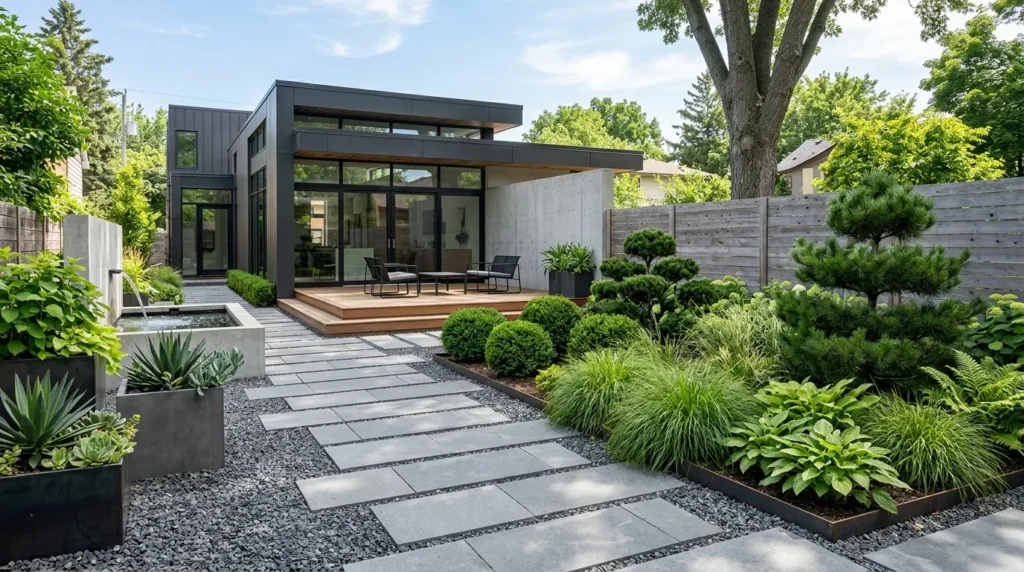
Quick Benefits
- Creates a clean appearance
- Complements contemporary homes
- Provides strong structure
- Looks polished
- Works well with minimalist gardens
Why It Works
Modern gardens benefit from simple geometry and restrained materials. Large-format stone or concrete-look pavers can create a crisp pathway that contrasts beautifully with soft planting.
The clean lines make the garden feel organized without requiring excessive decoration.
How To Style It
Choose large rectangular or square pavers with consistent spacing. Surround them with gravel, mulch, or neatly trimmed groundcover.
Keep the plant palette simple. Ornamental grasses, sculptural shrubs, evergreen plants, and a few statement planters can create a sophisticated contemporary look.
7. Stone and Mulch
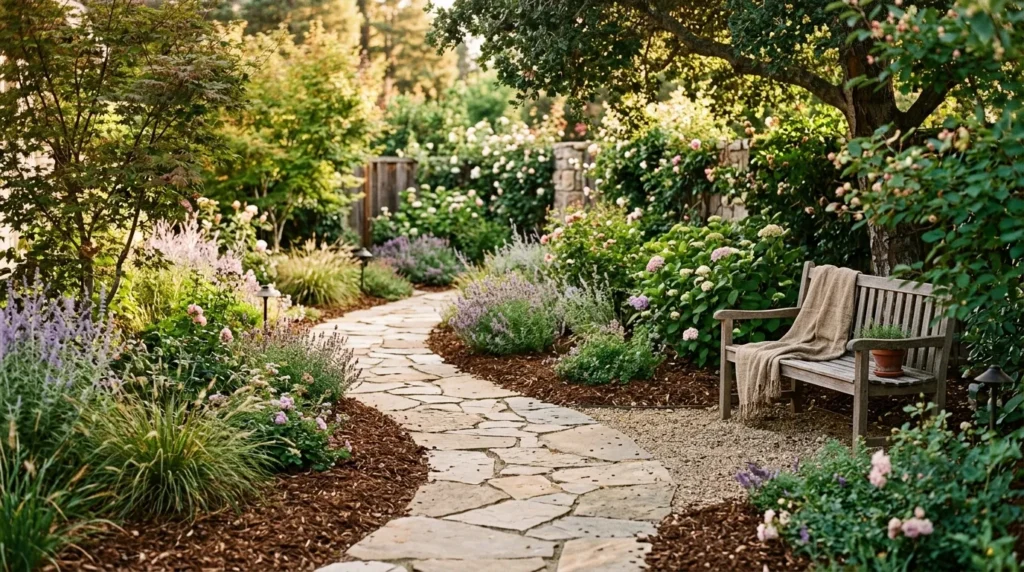
Quick Benefits
- Adds warm contrast
- Creates defined planting areas
- Helps organize the garden
- Works with rustic styles
- Provides a natural appearance
Why It Works
Stone and mulch are a natural pairing. The hard surface of the pathway contrasts with the soft, earthy texture of the planting beds.
This combination is especially useful when you want a garden that feels practical but still visually polished.
How To Style It
Use a consistent stone pathway and surround the adjacent beds with natural mulch. Choose mulch that complements rather than sharply contrasts with the stone.
Repeat the same stone around other garden features, such as a seating area or planter, to create a cohesive design.
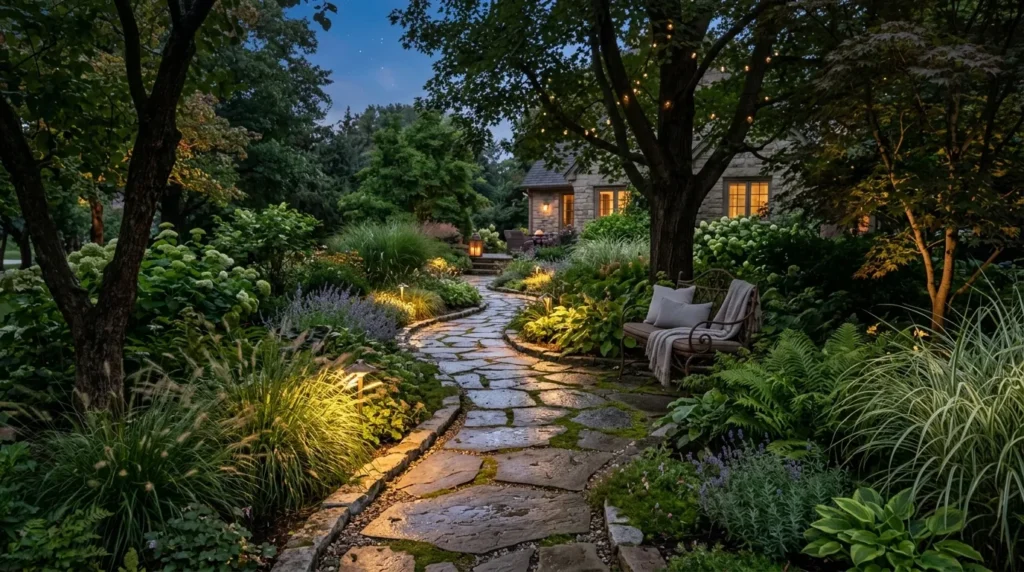
8. Illuminated Pathway
Quick Benefits
- Improves nighttime visibility
- Adds atmosphere
- Highlights landscaping
- Creates a welcoming entrance
- Extends garden enjoyment
Why It Works
A beautiful garden doesn’t have to disappear after sunset. Low-level pathway lighting can highlight the shape of the stones while creating a warm, inviting atmosphere.
Lighting also helps visitors navigate pathways more comfortably in the evening.
How To Style It
Install low-profile path lights along the edges rather than placing bright fixtures directly in the center of the walkway. Warm illumination usually creates a more relaxed outdoor atmosphere.
Add subtle uplighting beneath a feature tree or near a sculpture to create depth beyond the pathway.
9. Rustic Garden Entry
Quick Benefits
- Creates a welcoming entrance
- Establishes garden style
- Adds character
- Works with cottage landscapes
- Creates a strong first impression
Why It Works
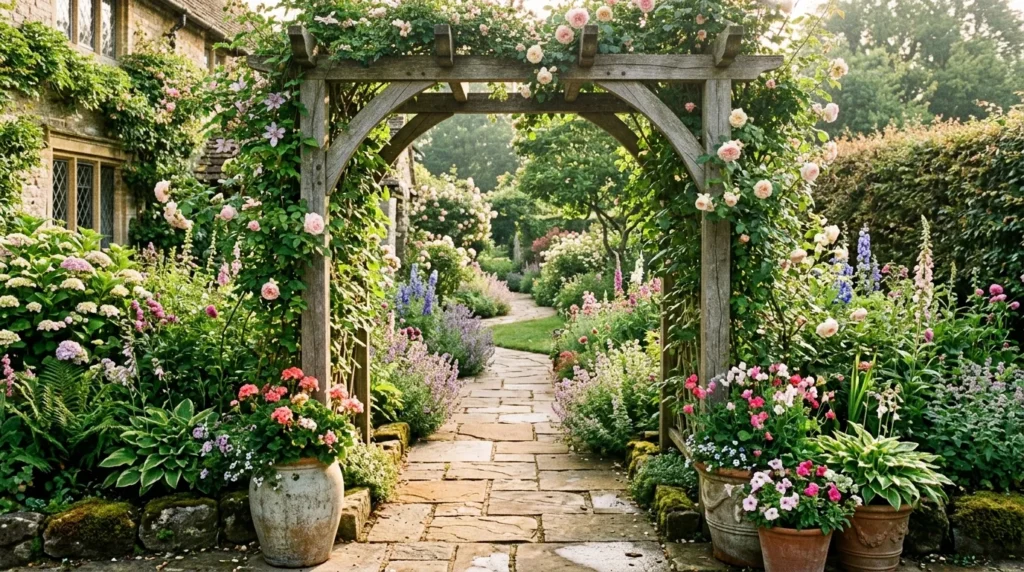
The beginning of a pathway sets expectations for the rest of the garden. A simple stone entry can feel especially inviting when combined with an arch, gate, planters, or climbing greenery.
This is a great opportunity to make the entrance feel like a transition from the everyday backyard into a special garden space.
How To Style It
Frame the entrance with large planters, climbing roses, flowering vines, or ornamental shrubs. Use natural stone with slightly irregular edges for a rustic appearance.
A wooden gate or simple arbor can make the entrance feel more substantial without overwhelming the garden.
10. Layered Stone Garden
Quick Benefits
- Creates depth
- Combines multiple textures
- Makes the pathway a focal point
- Adds visual interest
- Works across design styles
Why It Works
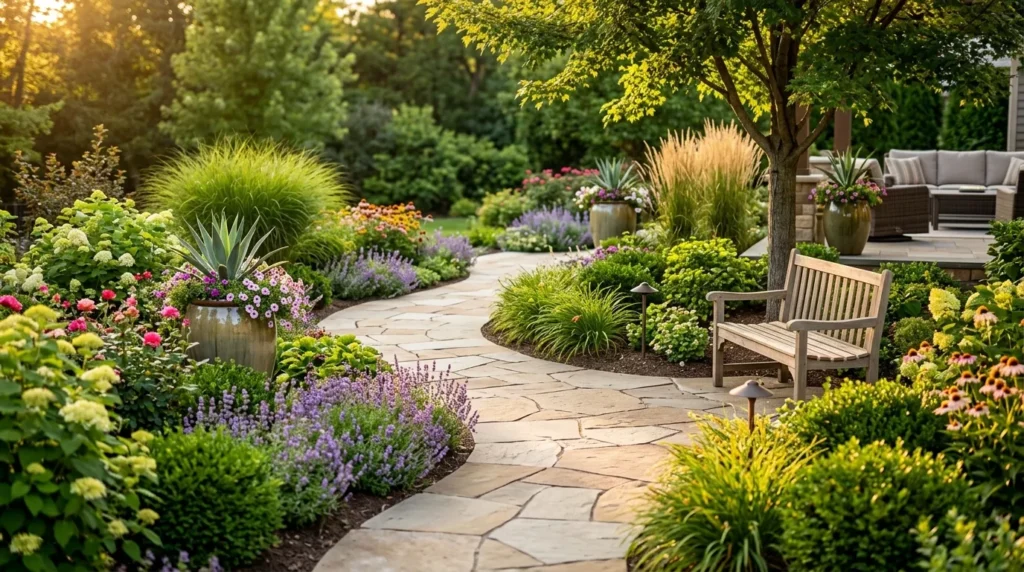
The most memorable gardens often combine several layers rather than relying on one feature. A stone pathway can become the central element while plants, seating, lighting, containers, and decorative objects build around it.
This layered approach gives the garden something to discover as you move through it.
How To Style It
Start with the pathway as the main structure. Add planting beds along both sides, then introduce one or two focal features such as a bench, fountain, large planter, or sculpture.
Repeat materials and colors throughout the garden so everything feels connected. Keep enough open space around the pathway to prevent the design from becoming visually crowded.
Frequently Asked Questions
What type of stone is best for a garden pathway?
The best material depends on climate, budget, garden style, and intended use. Natural stone, flagstone, pavers, and other landscape materials can all work well when properly installed. Choose a surface that provides appropriate traction and durability for your conditions.
How do you make a stone pathway look natural?
Use varied planting, organic curves, natural-looking materials, and appropriately scaled stones. Allowing groundcover or carefully maintained plants to soften the edges can also make a pathway feel more integrated into the landscape.
Are stepping stones good for small gardens?
Yes. Stepping stones can be particularly effective in compact gardens because they create a pathway without visually filling the entire space. The gaps between stones can remain planted, gravel-filled, or covered with lawn.
What plants look good along stone pathways?
Low-growing groundcovers, ornamental grasses, lavender, flowering perennials, ferns, and small shrubs can all complement stone pathways. Choose plants according to your local climate, soil, sunlight, and maintenance preferences.
Should a garden pathway be straight or curved?
Both can work. Straight paths tend to feel more formal and structured, while curved paths generally create a softer, more relaxed garden appearance. Let the architecture of the home and overall landscape style guide the decision.
How can I make a stone pathway look more expensive?
Focus on clean installation, appropriate proportions, attractive edging, coordinated planting, and subtle lighting. Repeating the pathway material elsewhere in the garden can also make the entire landscape feel more professionally designed.
Conclusion
Stone pathways have a way of making a garden feel complete. They provide direction, structure, and texture while creating a natural connection between different outdoor areas.
Whether you prefer a romantic cottage path, a minimalist paver walkway, or a rustic stepping-stone trail, the most successful design begins with the relationship between the stone and everything around it. Plants can soften the edges, gravel can provide contrast, lighting can add evening atmosphere, and benches or planters can create destinations along the route.
You don’t need a huge garden to use these ideas. Even a short pathway leading from a patio to a small planting bed can make the space feel more intentional.
Start with the route you naturally want people to take, choose a durable material that complements your home, and then layer in plants and decorative details. With a little planning, your pathway can become one of the most beautiful features in the entire garden.
Related Articles
- 10 Garden Decor Ideas That Make Outdoor Spaces Shine
- 10 Backyard Landscape Design Ideas for Every Budget
- 10 Backyard Garden Ideas for a Beautiful Outdoor Retreat
- 10 Outdoor Lighting Ideas for a Cozy Backyard
- 10 Cottage Garden Ideas with Romantic Charm