10 Backyard Landscape Design Ideas That Increase Property Value
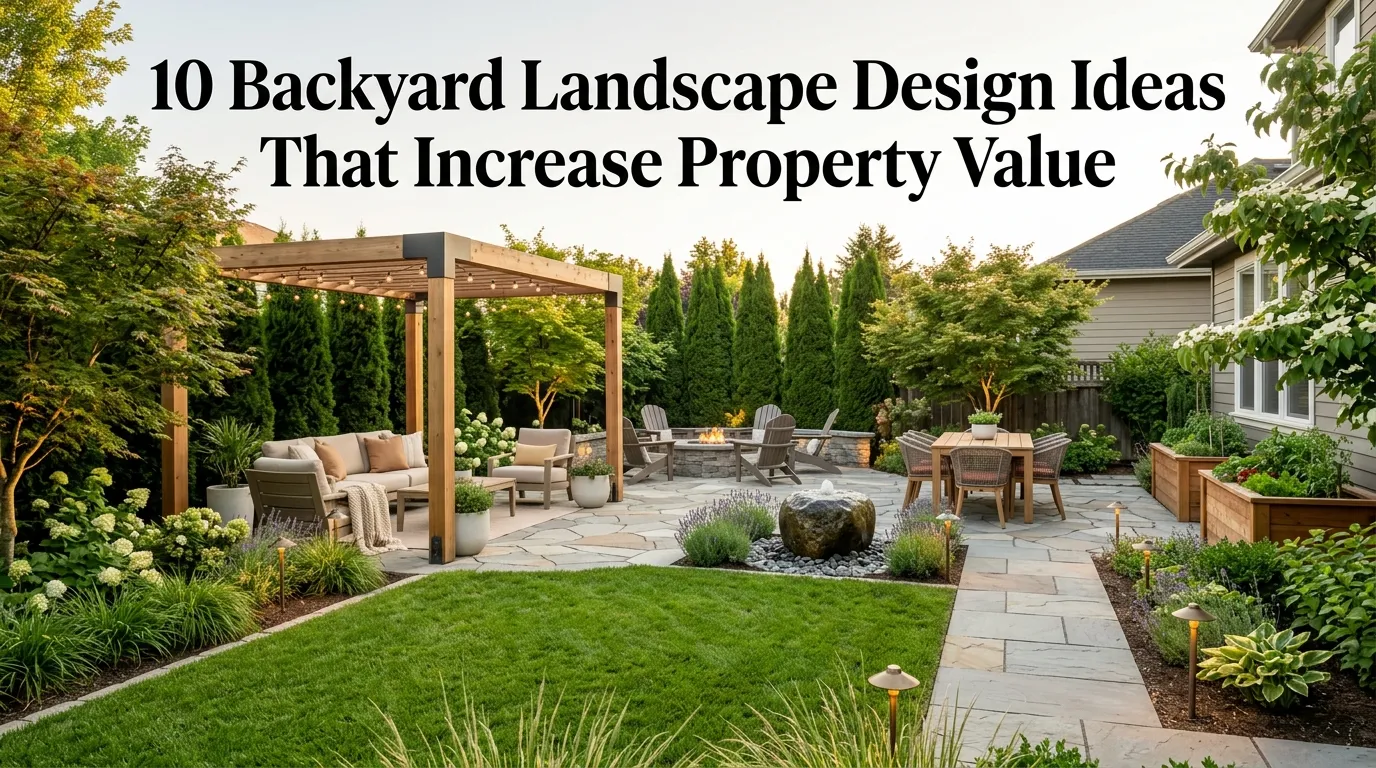
A well-designed backyard can do much more than make a home look attractive. When the landscaping is thoughtfully planned, it can create usable outdoor living space, improve curb appeal from the rear of the property, and make the entire home feel more complete. For homeowners thinking about resale, the most useful upgrades are often the ones that combine beauty with everyday function.
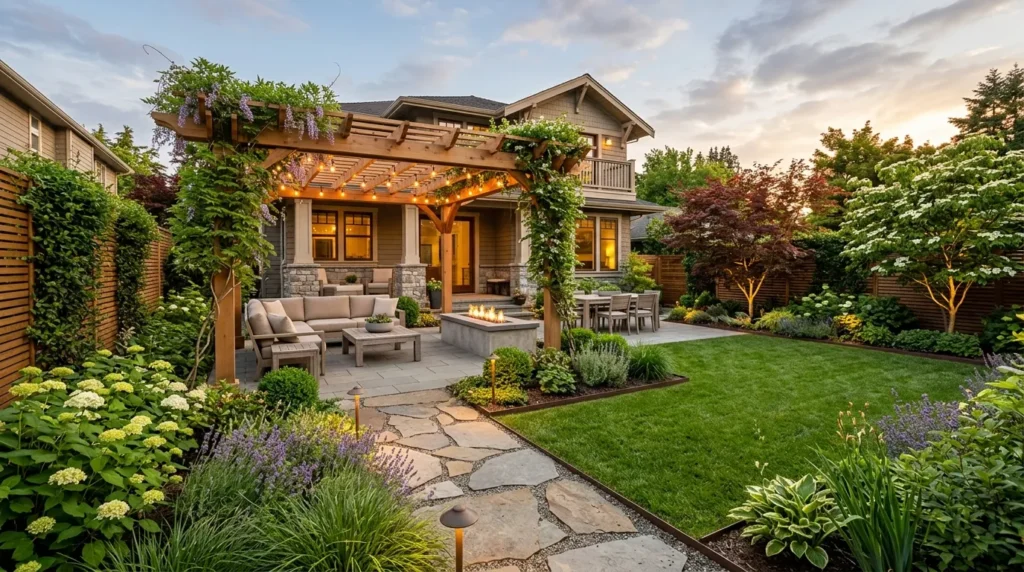
The key is not to make the backyard look overly elaborate. A polished landscape usually feels intentional, easy to maintain, and connected to the architecture of the house. Defined seating areas, healthy planting beds, attractive pathways, privacy features, and practical outdoor lighting can all make the space more enjoyable while potentially improving buyer appeal.
I’ve noticed that homeowners sometimes focus heavily on decorative landscaping while overlooking how people will actually use the yard. A beautiful garden is wonderful, but a comfortable place to sit, dine, entertain, or relax can make the outdoor space feel significantly more valuable.
It’s also important to remember that no landscaping project can guarantee a specific increase in property value. Local market conditions, neighborhood expectations, maintenance requirements, and the quality of the installation all matter. The smartest approach is to prioritize improvements that make the backyard attractive and functional for you now while also appealing to future buyers.
Below are ten backyard landscape design ideas that balance visual appeal, usability, durability, and broad buyer appeal.
Table of Contents
1. Defined Outdoor Zones
Create purposeful areas for relaxing and entertaining.
2. Attractive Patio Design
Build a comfortable foundation for outdoor living.
3. Layered Planting Beds
Add color, texture, and seasonal interest.
4. Mature Shade Trees
Improve comfort and create long-term landscape value.
5. Outdoor Lighting
Extend the backyard’s usefulness into the evening.
6. Privacy Landscaping
Create a more comfortable and secluded retreat.
7. Well-Planned Walkways
Connect the backyard with attractive pathways.
8. Low Maintenance Planting
Make the landscape easier to care for.
9. Outdoor Dining Area
Turn unused space into functional entertaining space.
10. Polished Lawn Edges
Give the entire yard a finished appearance.
1. Defined Outdoor Zones
Quick Benefits
- Makes the backyard more functional
- Creates visual organization
- Encourages outdoor living
- Makes larger yards feel purposeful
- Appeals to a wide range of homeowners
Why It Works
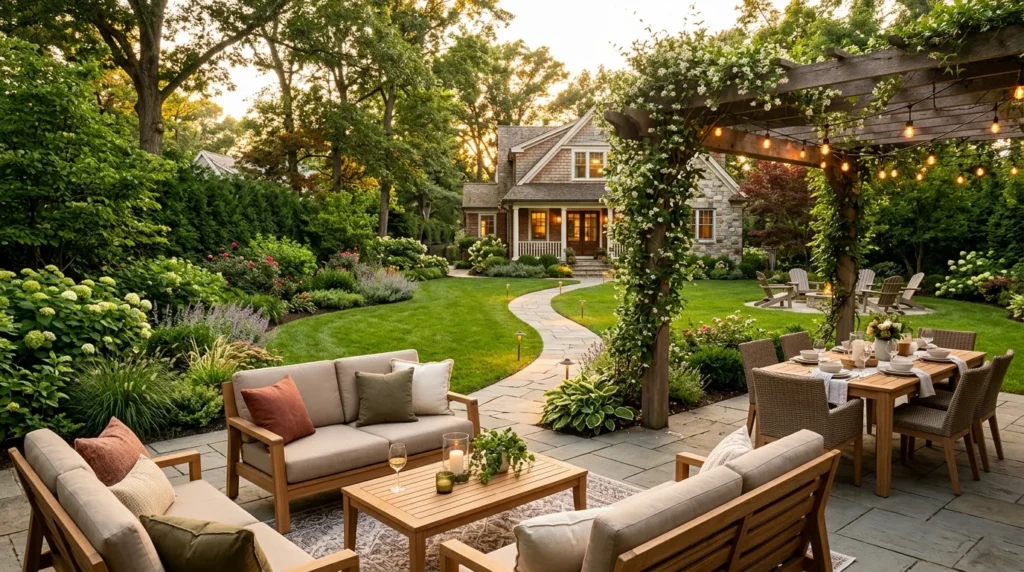
A backyard becomes much more useful when different areas have clear purposes. Instead of one large lawn surrounded by random plants, designers often divide the space into zones for dining, relaxing, gardening, entertaining, or playing.
This approach helps buyers immediately understand how the yard can be used. It also makes a property feel more thoughtfully planned rather than simply landscaped.
One thing that works especially well is creating transitions between areas with changes in paving, planting, furniture, or lighting. The zones don’t need to be separated by walls or fences.
How To Style It
Start by identifying how you actually use the yard. Create one main seating area near the house, then add a dining space, fire feature, garden area, or play zone if the property has room.
Use pavers, gravel, planting beds, or outdoor rugs to visually define each space. Keep materials coordinated so the backyard feels like one connected design rather than several unrelated areas.
2. Attractive Patio Design
Quick Benefits
- Adds usable outdoor space
- Creates an entertaining area
- Connects indoor and outdoor living
- Provides a strong design foundation
- Can improve buyer appeal
Why It Works
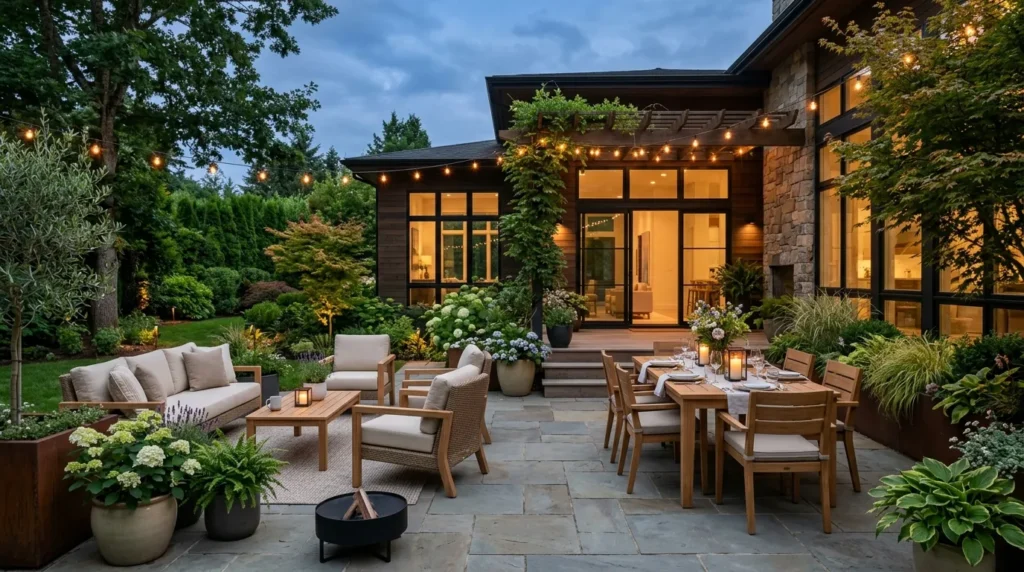
A well-designed patio turns an ordinary backyard into an outdoor room. Buyers often respond positively to spaces that already provide a comfortable place for dining, relaxing, and entertaining.
The patio should feel connected to the house rather than looking like an isolated platform placed somewhere in the lawn. Proportion and placement matter just as much as the material.
How To Style It
Choose a durable paving material that complements the home’s architecture. Depending on the property, this could include concrete pavers, natural stone, brick, or a well-finished concrete surface.
Add comfortable outdoor furniture, a dining table, planters, and an outdoor rug where appropriate. Keep enough open space for people to move comfortably between the patio, house, and yard.
3. Layered Planting Beds
Quick Benefits
- Adds visual depth
- Creates seasonal interest
- Softens hardscape
- Improves the overall appearance
- Can make the yard feel established
Why It Works
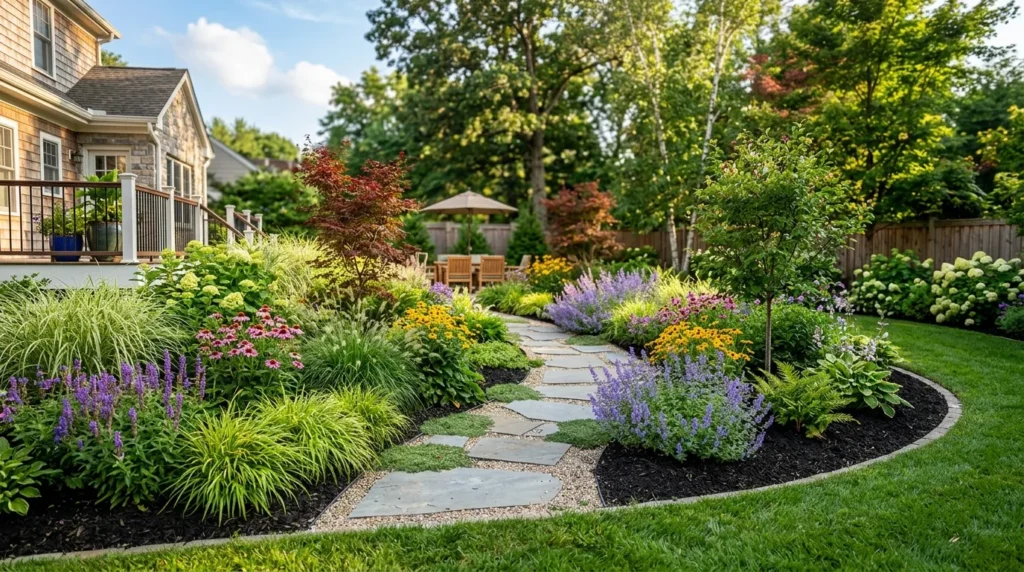
Planting beds create structure around the lawn and hardscape while introducing color, texture, and movement. A layered approach generally looks more natural and sophisticated than placing individual plants randomly throughout the yard.
The most effective beds often combine plants with different heights and textures. Evergreen structure can provide year-round interest while flowering plants add seasonal color.
How To Style It
Start with taller shrubs or small trees toward the back of the bed. Add medium-height perennials or ornamental grasses in the middle, then finish with lower plants or groundcovers near the edge.
Choose plants suited to your USDA hardiness zone, soil, sunlight, and available water. Repeating several plant varieties throughout the yard creates cohesion and makes the landscape feel intentionally designed.
4. Mature Shade Trees
Quick Benefits
- Adds natural beauty
- Provides outdoor shade
- Creates visual structure
- Can improve comfort
- Offers long-term landscape benefits
Why It Works
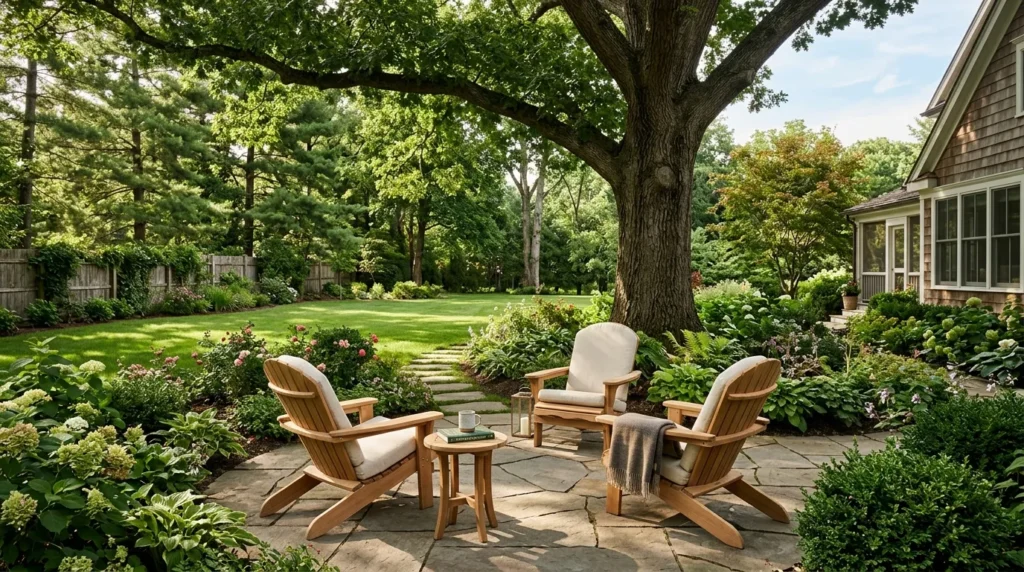
A healthy, appropriately placed tree can become one of the most valuable visual features in a backyard. Mature trees provide shade, scale, seasonal interest, and a sense of permanence that smaller decorative plants can’t easily reproduce.
However, tree placement requires careful planning. Roots, mature canopy size, proximity to structures, utilities, and local conditions should all be considered before planting.
How To Style It
Choose species appropriate for your region and property size. Place trees where they can eventually provide useful shade without interfering with structures or utility lines.
A tree can also become an anchor for a seating area. Position a bench, lounge chairs, or a small patio beneath or near the canopy while leaving enough space for healthy root and canopy development.
5. Outdoor Lighting
Quick Benefits
- Improves evening usability
- Highlights landscaping
- Adds ambiance
- Enhances pathways
- Makes outdoor areas feel finished
Why It Works
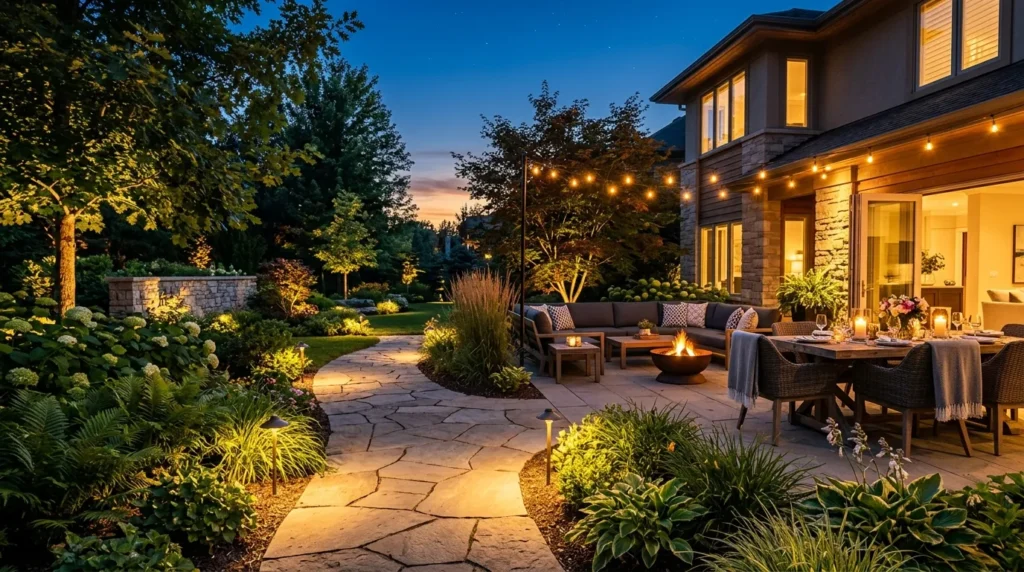
Outdoor lighting allows the backyard to remain useful after sunset while highlighting architectural and landscape features. It can also make pathways and steps easier to navigate.
Rather than flooding the entire yard with bright light, a layered approach creates a more sophisticated effect. Different levels of illumination can highlight trees, planting beds, seating areas, and walkways.
How To Style It
Use low-level path lights along walkways and subtle accent lighting around trees or architectural features. Add appropriate lighting around dining and seating areas.
Choose fixtures that complement the home’s exterior style. Keep the lighting warm and restrained rather than overly bright, and make sure installations are suitable for outdoor conditions.
6. Privacy Landscaping
Quick Benefits
- Creates a secluded atmosphere
- Makes outdoor areas more comfortable
- Reduces visual exposure
- Adds greenery
- Improves the feeling of a backyard retreat
Why It Works
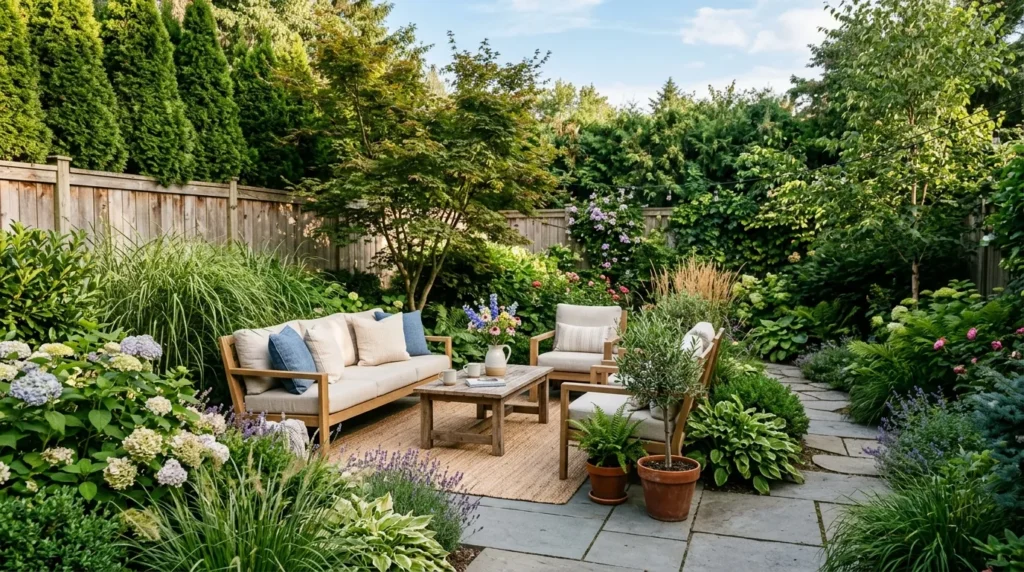
Privacy can dramatically affect how comfortable a backyard feels. A beautiful outdoor space may go unused if it feels exposed to neighboring homes or busy streets.
Plants can provide privacy while looking more natural than solid barriers. Evergreen shrubs, hedges, ornamental grasses, and appropriately placed trees can create visual separation while still allowing light into the yard.
How To Style It
Identify the specific sightlines that need screening rather than surrounding the entire yard with dense planting. Layer plants at different heights for a more natural appearance.
For smaller spaces, consider tall planters, trellises with suitable vines, or narrow evergreen plants. Make sure mature plant sizes are considered before installation.
7. Well-Planned Walkways
Quick Benefits
- Improves movement
- Connects outdoor zones
- Adds architectural structure
- Protects planting beds
- Creates a finished appearance
Why It Works
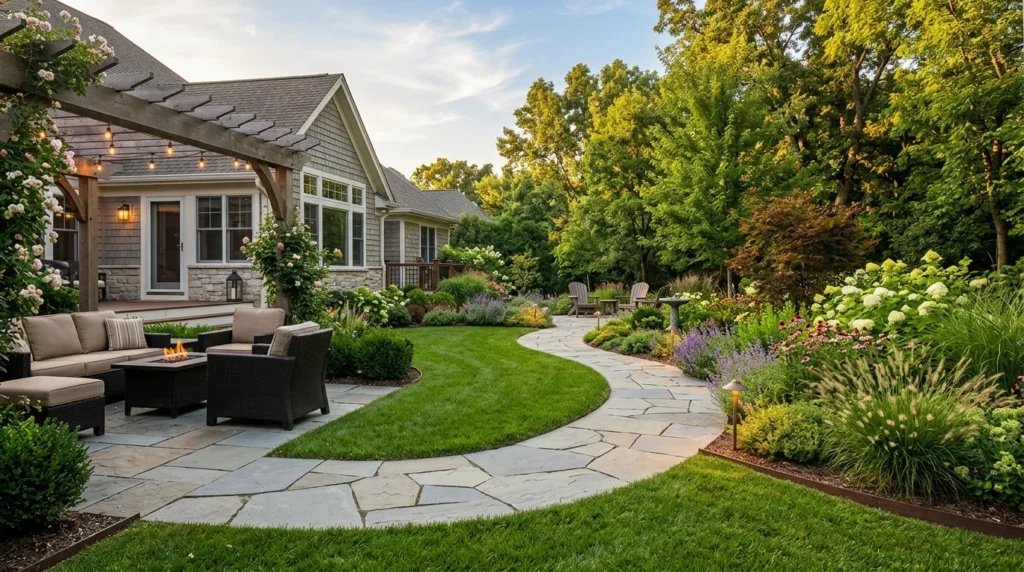
A pathway gives the backyard a sense of direction. Instead of walking across lawn or planting beds, people naturally follow a defined route between the patio, garden, fire pit, pool, or other outdoor areas.
Well-designed paths also create visual structure and can make a yard feel more established.
How To Style It
Use materials that relate to existing hardscape. Pavers, brick, gravel, natural stone, and stepping stones can all work depending on the home’s style and drainage needs.
Keep the path wide enough for comfortable use and provide a stable, level surface where appropriate. Border the walkway with low planting, grasses, or simple lighting to make it feel intentional.
8. Low Maintenance Planting
Quick Benefits
- Reduces ongoing work
- Creates consistent appearance
- Appeals to busy homeowners
- Can conserve resources
- Makes the landscape easier to manage
Why It Works
A beautiful landscape that requires constant maintenance may not appeal to every homeowner. Low-maintenance planting can provide a better balance between appearance and practicality.
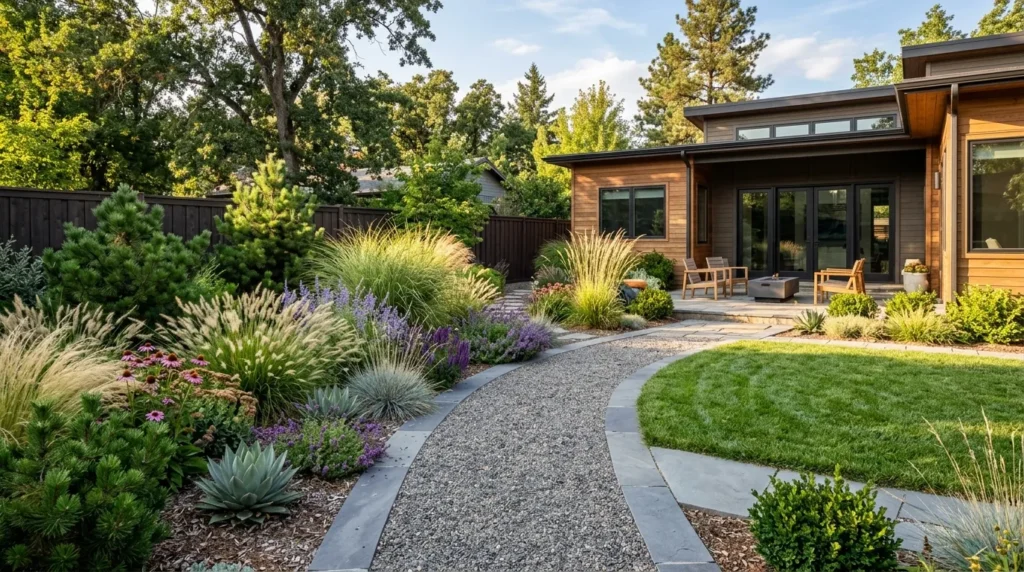
The right choices depend heavily on your climate and site conditions. Native and well-adapted plants are often useful starting points because they are suited to local growing conditions.
How To Style It
Group plants with similar water and sunlight requirements together. Use mulch or appropriate groundcover to reduce exposed soil and help manage weeds.
Incorporate evergreen structure with a manageable number of flowering plants rather than creating a yard filled with species that require constant attention. A professional landscape designer or local extension service can help identify suitable regional plants.
9. Outdoor Dining Area
Quick Benefits
- Encourages entertaining
- Creates usable living space
- Makes patios more functional
- Supports family meals
- Adds lifestyle appeal
Why It Works
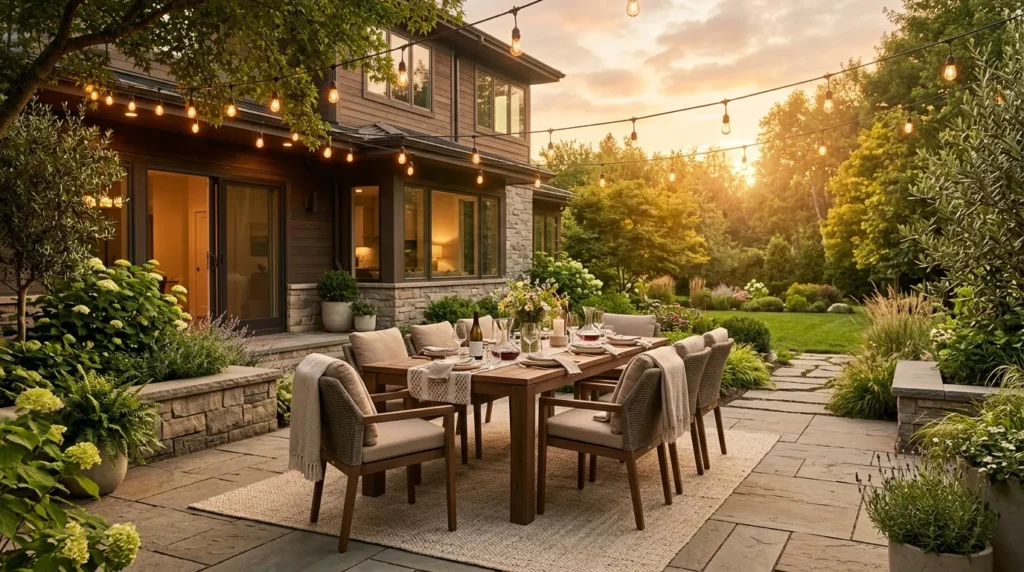
An outdoor dining area makes it easier to imagine everyday life in the backyard. Morning coffee, weekend lunches, summer dinners, and casual gatherings all become part of the property’s appeal.
The best outdoor dining spaces feel like natural extensions of the home’s kitchen or living area. Convenience and comfort are just as important as appearance.
How To Style It
Position the dining area near the house when possible, especially if food will frequently be carried between the kitchen and patio.
Choose durable furniture designed for outdoor conditions. Add an umbrella, pergola, or shade structure if appropriate, and use planters or low planting beds to frame the area without blocking movement.
10. Polished Lawn Edges
Quick Benefits
- Makes the yard look maintained
- Defines planting areas
- Creates visual contrast
- Improves landscape structure
- Provides an affordable refresh
Why It Works
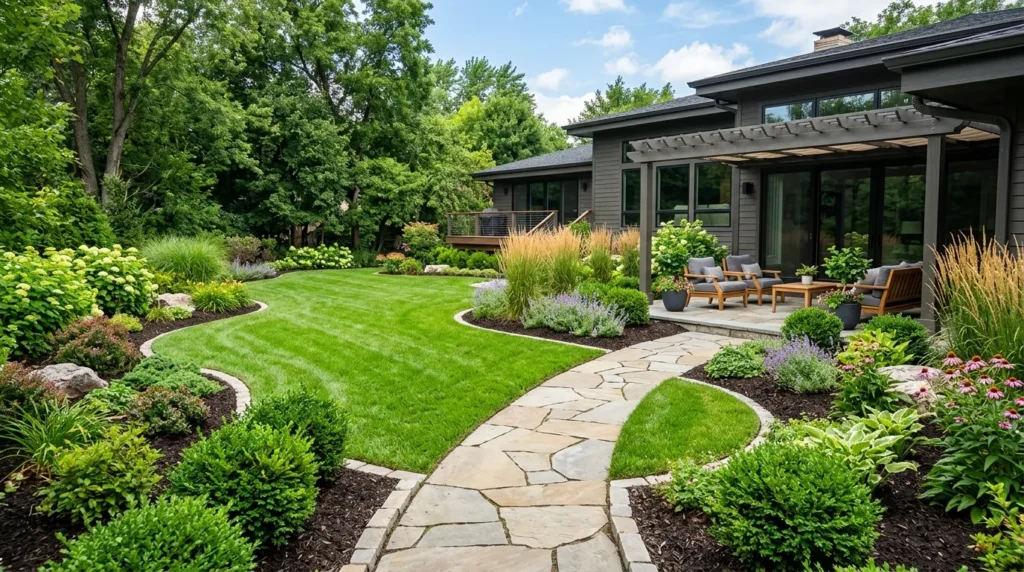
Sometimes the most noticeable improvement comes from simple maintenance details. Clean lawn edges create a crisp boundary between grass, planting beds, patios, and pathways.
This small detail makes the entire landscape appear more intentional. It can be particularly effective when combined with fresh mulch and neatly maintained plants.
How To Style It
Create smooth, consistent curves or clean lines that complement the architecture of the home. Avoid overly complicated shapes that make mowing and maintenance difficult.
Refresh mulch as needed and keep grass from creeping into planting beds. Maintain the edges regularly so the landscape continues to look polished throughout the growing season.
Frequently Asked Questions
Which landscaping improvements add the most value to a home?
The most useful improvements are generally those that enhance appearance while adding practical outdoor function. Defined patios, attractive planting, healthy trees, outdoor lighting, privacy features, and usable seating or dining areas can all improve buyer appeal, although actual return on investment varies by location and property.
Does backyard landscaping really increase property value?
Quality landscaping can contribute to a home’s overall appeal and perceived value, but there is no universal dollar amount that every project will add. Local market conditions, neighborhood standards, installation quality, maintenance requirements, and buyer preferences all influence the outcome.
What backyard landscaping is easiest to maintain?
Well-adapted plants, simple planting beds, appropriate mulch, efficient irrigation, and clearly defined lawn areas can reduce maintenance. Choosing plants suited to your local climate is generally more sustainable than forcing species that require intensive care.
Should I install a patio before selling my home?
A patio can make a backyard more functional, but whether it is worthwhile depends on the property, local buyer expectations, existing outdoor space, and project cost. The best improvements generally solve a clear usability problem rather than being added solely for resale.
Are trees good for property value?
Healthy, appropriately placed trees can enhance the appearance and comfort of a property. However, poor placement or unhealthy trees can create maintenance and safety concerns. Consider mature size, roots, utilities, structures, and local growing conditions before planting.
How can I make my backyard look expensive on a budget?
Focus on structure and maintenance first. Clean lawn edges, fresh mulch, healthy plants, attractive outdoor furniture, simple pathway lighting, and a defined seating area can create a polished appearance without requiring a major landscape renovation.
Conclusion
A valuable backyard doesn’t have to be enormous or filled with expensive features. The most appealing landscapes usually succeed because they are functional, cohesive, and easy to understand.
Start by creating a clear outdoor zone where people can sit, dine, or relax. Then build around it with layered planting, appropriate trees, attractive pathways, practical lighting, and privacy where needed. Even simple details such as clean lawn edges and well-maintained planting beds can make a dramatic difference in how finished the property feels.
If resale is part of your long-term plan, think beyond trends. Choose durable materials, regionally appropriate plants, timeless colors, and features that make everyday outdoor living easier. A backyard should feel like an extension of the home rather than a collection of disconnected landscaping projects.
The best approach is to improve the space gradually. Start with the feature that will have the greatest practical impact, then add layers of planting, lighting, and furnishings over time. You’ll create a backyard that is enjoyable for your family now while potentially making the property more attractive to future buyers.
Related Articles
- 10 Backyard Landscape Ideas for a Beautiful Outdoor Retreat
- 10 Outdoor Patio Ideas for Stylish Entertaining
- 10 Backyard Privacy Ideas for a More Relaxing Yard
- 10 Garden Design Ideas for a Beautiful Backyard
- 10 Outdoor Lighting Ideas for a Cozy Backyard